Sheet metal fabrication involves more than cutting and bending metal.
After laser cutting, punching, welding, or forming, the workpiece may still contain burrs, welds, oxide, scratches, and uneven surface marks. These defects often need to be removed before painting, coating, assembly, or final finishing.
This means abrasive selection should follow the production process.
A heavy grinding product may work well for weld removal but leave scratches that are too deep for final finishing. A fine sanding disc may create a better surface, but it will work too slowly if heavy burrs still remain.
For sheet metal fabrication, a more practical process is:
Heavy Removal → Deburring → Scratch Refinement → Surface Conditioning → Final Finish
At Aozhong, Grinding & Cutting Products, Sanding Discs, Abrasive Belts, Non-Woven Abrasives, and Polishing Products can be used at different stages of this process rather than expecting one abrasive to complete every task.
Different fabrication processes create different surface problems.
For example, laser-cut parts may require edge deburring. Welded assemblies may need weld removal and blending. Stainless steel decorative panels may require a brushed finish.
The abrasive should therefore be selected according to the defect and required final surface.
The key point is simple:
Do not choose an abrasive only by grit. First identify what needs to be removed and what surface needs to remain.
Welding is common in fabricated steel, stainless steel, and aluminum parts.
After welding, the weld bead may need to be reduced before the component moves to finishing or coating.
Grinding products are normally used during this heavier material-removal stage.
The objective is to bring the weld closer to the surrounding surface without unnecessarily removing the base metal.
Common problems during weld grinding include:
Once most of the weld has been removed, the process should normally move to a more controlled abrasive.
Trying to achieve the final surface with an aggressive grinding product often creates extra finishing work.
A useful process is:
Weld Removal → Coarse Scratch Refinement → Fine Sanding → Surface Blending
Aozhong's current Metalworking range includes grinding products alongside sanding discs, abrasive belts, and surface-conditioning products, allowing the abrasive structure to change as the finishing requirement changes.
Burrs can appear after:
Not every burr requires aggressive grinding.
A thin edge burr may only need controlled sanding or surface conditioning, while a heavier burr may require more material removal first.
| Burr Condition | Abrasive Direction | Main Goal |
|---|---|---|
| Heavy Burr | Grinding product | Fast material removal |
| Medium Burr | Coarse sanding disc / abrasive belt | Remove burr with better control |
| Light Burr | Fine sanding abrasive | Edge refinement |
| Small Edge Defect | Non-woven abrasive | Light deburring |
| Finished Edge | Surface conditioning | Improve consistency |
This distinction is important because aggressive grinding on a light burr can create a new problem: too much base material is removed.
For sheet metal manufacturers producing thin components, controlled material removal is especially important.
Non-woven products are useful when the objective is no longer heavy cutting.
Aozhong's Non-Woven Abrasives use a flexible open-web structure and are positioned for surface conditioning, cleaning, brushing, oxide removal, finishing, and light deburring. Available formats include pads, rolls, discs, and wheels.
This makes non-woven products useful later in the deburring process, especially when sharp edges need to be softened without aggressively changing the shape of the part.
Removing the weld or burr is only the first step.
Grinding usually leaves a visible scratch pattern.
Those scratches need to be refined before painting, coating, brushing, or polishing.
A general grit progression might look like this:
| Finishing Stage | Reference Grit Range | Main Purpose |
|---|---|---|
| Heavy Scratch Removal | P40–P60 | Reduce deep grinding marks |
| Initial Refinement | P60–P80 | Refine coarse scratches |
| General Metal Sanding | P80–P120 | Level the surface |
| Intermediate Refinement | P120–P180 | Reduce scratch depth |
| Fine Surface Preparation | P180–P240+ | Prepare for coating or finishing |
| Surface Conditioning | Non-woven grade | Blending and appearance control |
These are general working ranges rather than fixed rules.
The required progression depends on:
The most important rule is:
Each abrasive stage should remove the scratch pattern from the previous stage.
Skipping from an aggressive grinding stage directly to a very fine abrasive may leave deeper scratches underneath the finer surface.
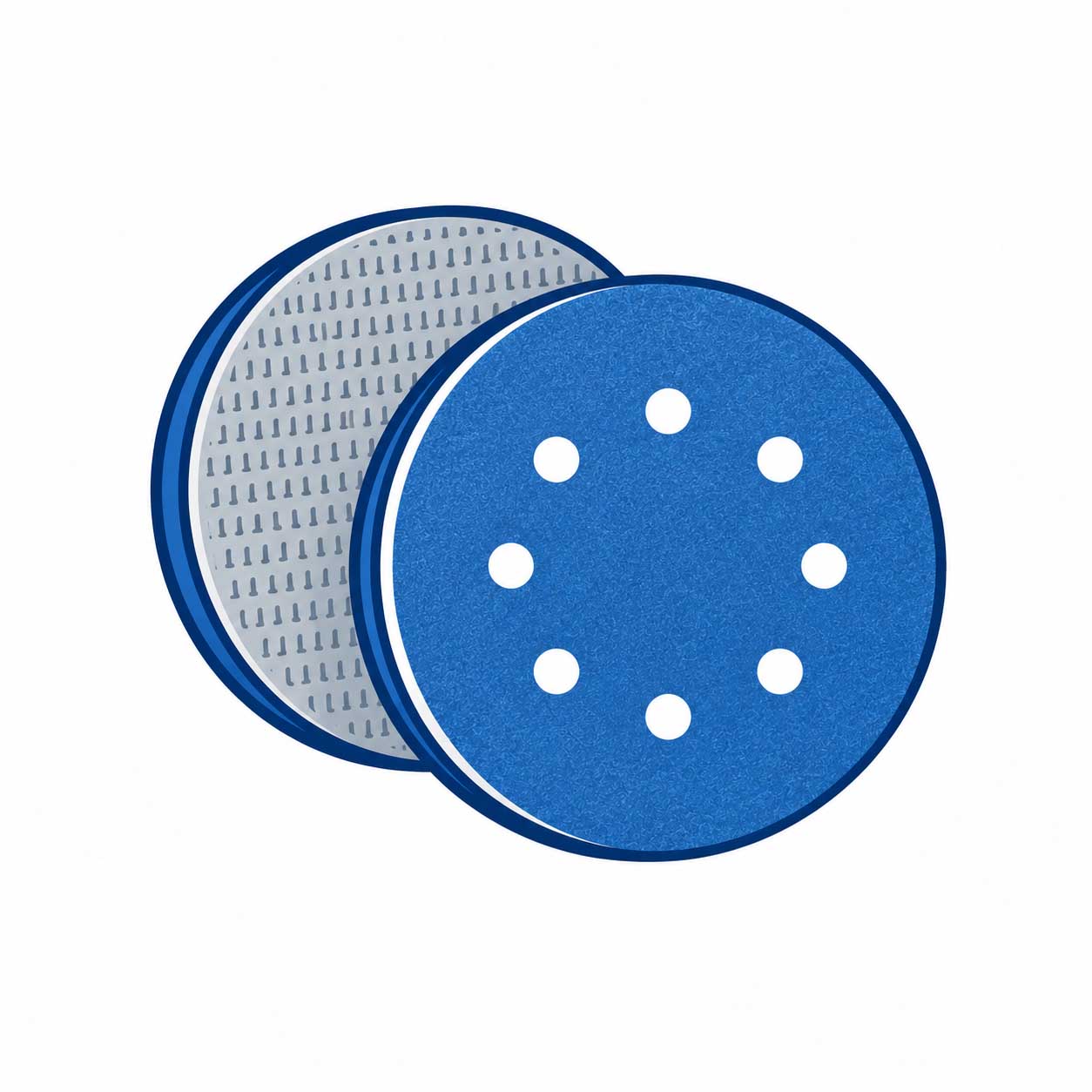
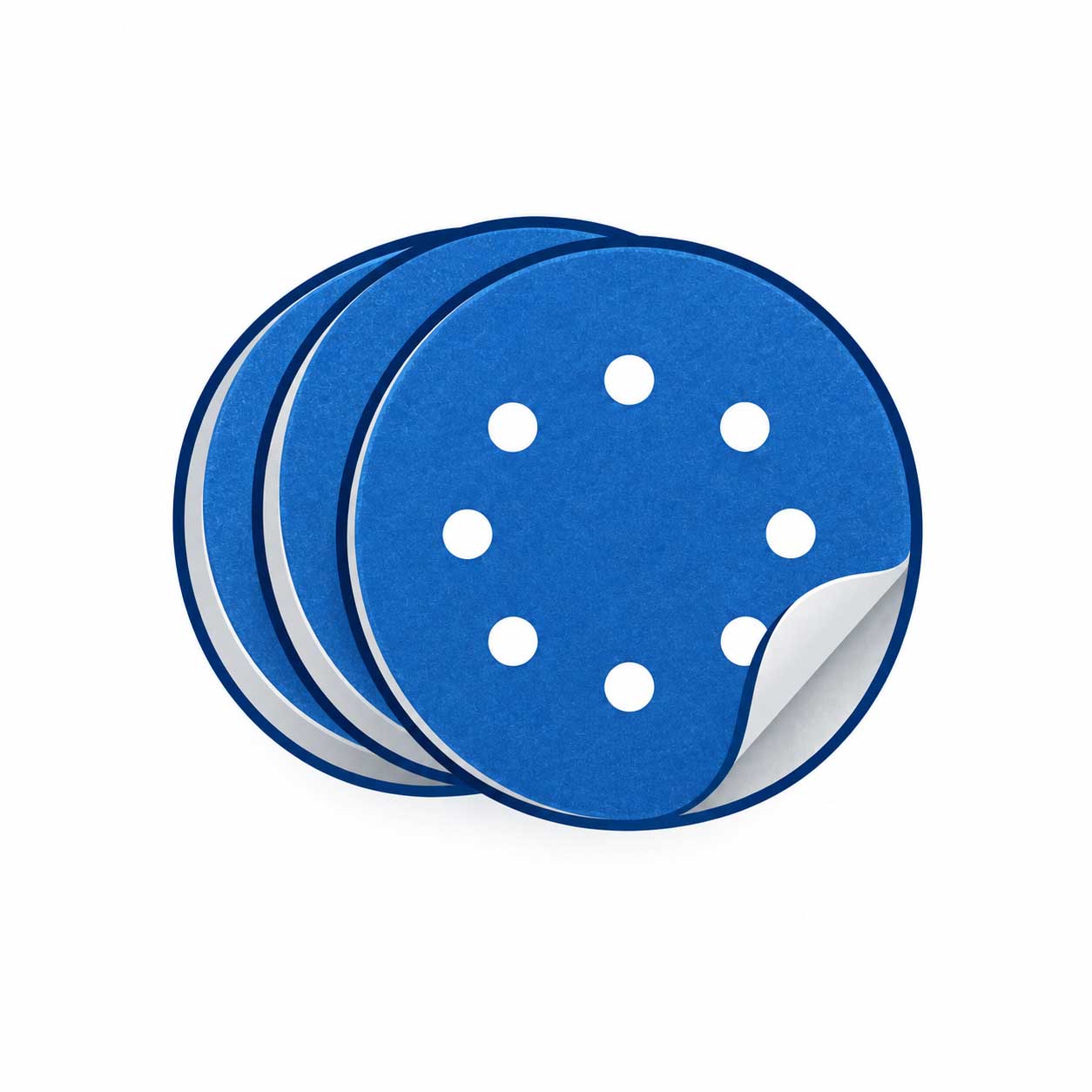
Sanding discs work well for localized areas, flat panels, weld zones, and general surface refinement.
Abrasive belts are more suitable for continuous production, narrow metal parts, edges, or machines designed around belt sanding.
Aozhong currently supplies both sanding-disc and abrasive-belt formats for metal surface finishing, allowing buyers to match the abrasive to their production equipment.
There is an important point where the objective changes from:
removing material
to:
controlling the surface appearance.
This is where non-woven abrasives become useful.
They can be used for:
Aozhong's non-woven range uses an open nylon-fiber structure designed for controlled surface contact. The current product line includes hand pads, rolls, discs, and non-woven wheels for industrial surface-conditioning applications.
| Comparison | Sanding Disc / Sandpaper | Non-Woven Abrasive |
|---|---|---|
| Main Function | Material removal and scratch refinement | Surface conditioning |
| Cutting Level | Medium–High | Low–Medium |
| Deep Scratch Removal | Suitable | Limited |
| Light Deburring | Suitable | Suitable |
| Surface Blending | Possible | Strong application |
| Brushed Finish | Limited | Strong application |
| Curved Surface Conformity | Depends on backing | Good |
| Cleaning / Oxide Removal | Secondary use | Common use |
One important mistake to avoid is treating non-woven grades as direct equivalents to coated-abrasive P-grits.
A Fine non-woven abrasive and P240 sandpaper have different structures and should not be treated as identical products.
“Sheet metal” includes several materials.
A sanding process suitable for carbon steel may not be the best choice for aluminum or stainless steel.
Stainless steel finishing often requires good control over scratch direction and final appearance.
After heavy grinding, the process may move through sanding discs and then into non-woven surface conditioning.
Aluminum can load abrasive products more easily because sanding debris can collect between abrasive grains.
The process should focus on correct grit selection, controlled pressure, and abrasive structures suitable for the application.
Carbon steel fabrication often involves weld removal, rust removal, scale removal, and coating preparation.
More aggressive abrasive products may be needed earlier in the process before moving to surface refinement.
This material-based approach also fits naturally into Aozhong's Applications → Metal structure, which currently organizes metalworking solutions around weld grinding, rust removal, stainless steel finishing, and general metal surface preparation.
For metalworking distributors and industrial buyers, the best abrasive range is usually not the largest one.
It is the one that covers the main fabrication stages without creating too many overlapping SKUs.
A practical structure could look like this:
| Fabrication Stage | Aozhong Product Direction | Main Function |
|---|---|---|
| Heavy Weld Removal | Grinding & Cutting Products | Material removal |
| General Metal Sanding | Sanding Discs | Surface leveling |
| Continuous Production Sanding | Abrasive Belts | Production finishing |
| Scratch Refinement | Medium / Fine Sanding Discs | Reduce scratch depth |
| Light Deburring | Non-Woven Abrasives | Controlled edge finishing |
| Surface Blending | Non-Woven Discs / Wheels | Finish consistency |
| Hand Finishing | Non-Woven Pads / Rolls | Corners and irregular parts |
| Final Appearance | Polishing Products | Fine finishing |
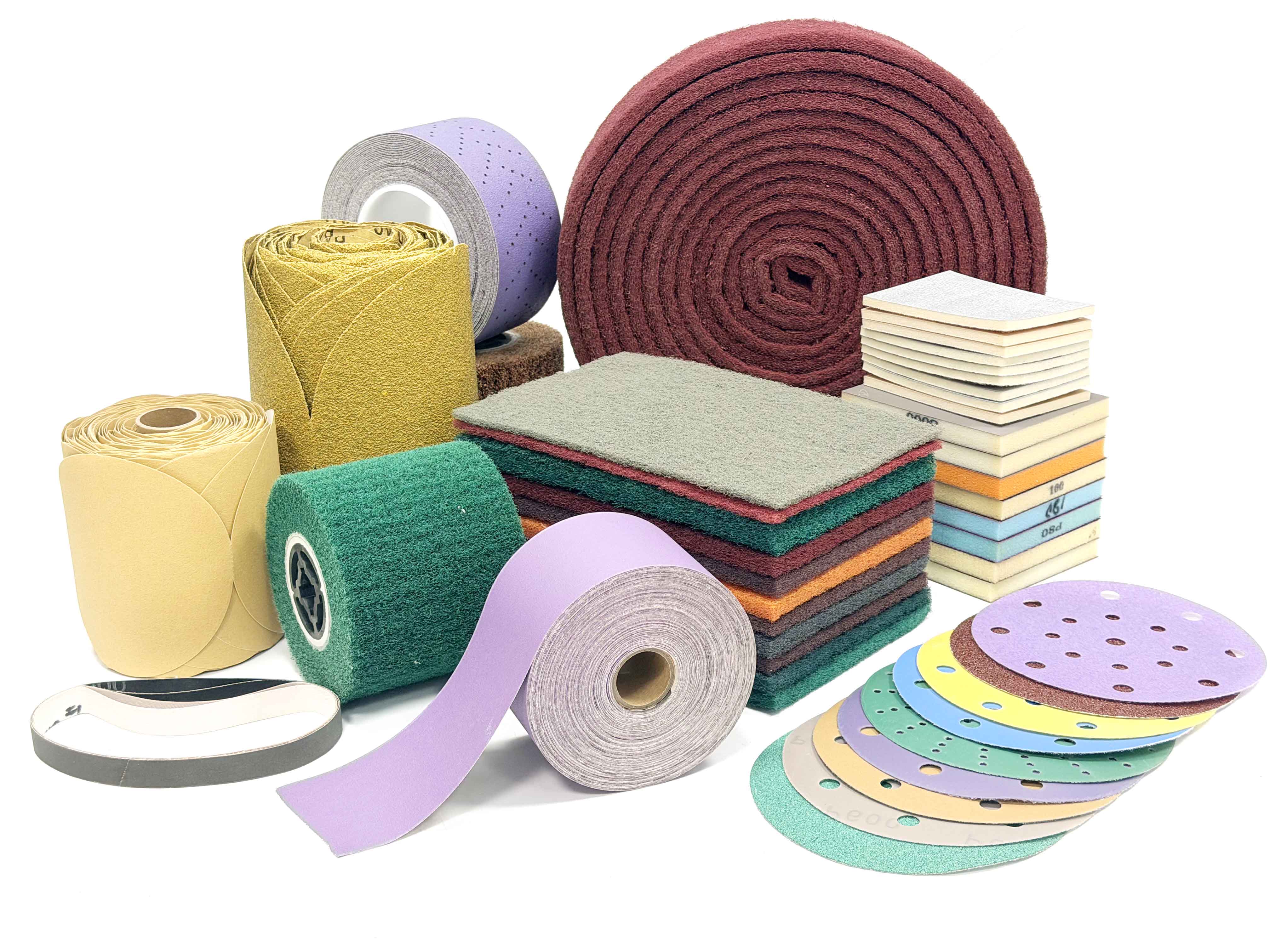
Aozhong's current product system includes Sandpaper & Sanding Discs, Abrasive Belts, Non-Woven Abrasives, Precision Abrasives, Grinding & Cutting, and Polishing Products. Custom options across the abrasive range include different sizes, grits, backing structures, shapes, and packaging for B2B applications.