Marine sanding covers much more than simply sanding a boat hull.
During boat building, repair, and refinishing, technicians may work on fiberglass, filler, primer, gelcoat, painted surfaces, and molded composite parts. Each stage requires a different balance of cutting power, scratch control, dust extraction, and surface flexibility.
A sanding disc that works well for filler leveling may be too aggressive for gelcoat refinement. A fine finishing abrasive may create a clean surface but work too slowly for old paint removal.
For marine sanding, a practical selection method is:
Surface Material → Repair Stage → Dust Level → Surface Shape → Final Finish
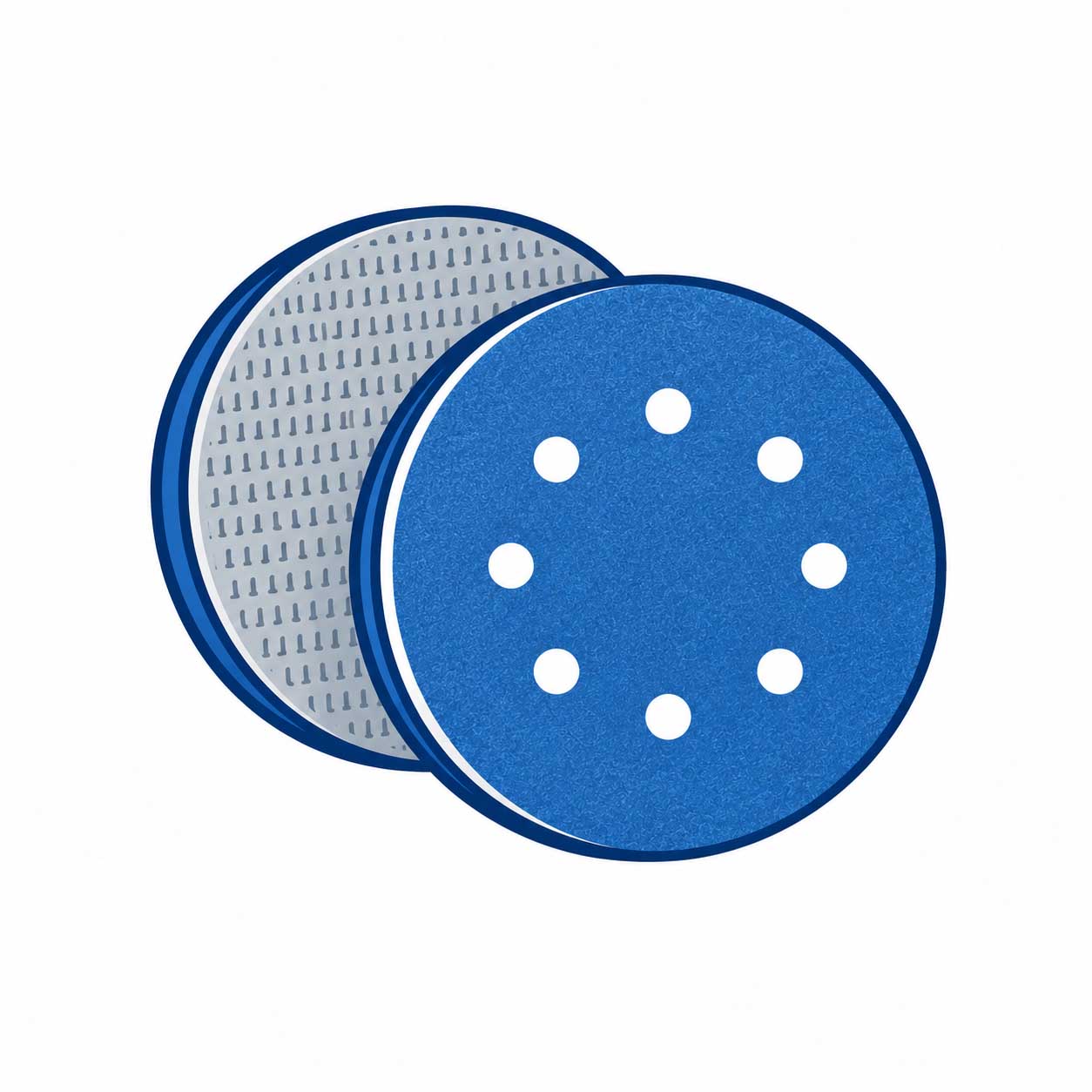
Aozhong’s abrasive range includes Hook & Loop Sanding Discs, Mesh Sanding Discs, Multi-Hole Discs, Film Sanding Discs, Wet & Dry Sandpaper, Foam Sanding Discs, Sanding Sponges, and polishing products that can be used across different marine finishing stages.
Boat repair involves several different surface materials.
The abrasive should be selected according to what is actually being sanded.
| Marine Surface | Main Sanding Challenge | Abrasive Direction |
|---|---|---|
| Fiberglass / FRP | Dust and fiber exposure | Controlled sanding + extraction |
| Repair Filler | Heavy dust and leveling | Coarse sanding disc |
| Gelcoat | Scratch depth and coating thickness | Fine film / wet & dry abrasive |
| Primer | Fine dust and loading | Mesh / multi-hole / fine disc |
| Painted Hull | Coating removal and refinement | Sanding disc |
| Molded Curves | Uneven contact | Foam / sponge abrasive |
| Final Finish | Fine scratches | Fine abrasive + polishing |
The same grit does not always perform the same job.
For example, P240 on repair filler is used differently from P240 on a primered fiberglass panel.
This is why marine abrasive selection should be based on the surface and sanding stage, not grit alone.
Fiberglass repair often includes resin, repair filler, or laminate that needs to be leveled before primer or coating.
The first stage focuses on removing excess repair material.
Later stages focus on reducing scratch depth.
A general working range can look like this:
| Sanding Stage | Reference Grit Range | Main Purpose |
|---|---|---|
| Heavy Repair Leveling | P40–P80 | Reduce excess filler or repair material |
| Initial Refinement | P80–P120 | Remove coarse scratches |
| Intermediate Refinement | P120–P180 | Smooth repair transition |
| Pre-Primer Preparation | P180–P320 | Prepare repair area |
| Primer Refinement | P320–P600 | Refine coating surface |
| Fine Gelcoat / Finish Work | P800+ | Fine surface correction |
These ranges are general references.
The exact sequence depends on:
The most important rule is:
Each abrasive stage should remove the scratch pattern from the previous stage.
Skipping directly from a coarse repair grit to a very fine abrasive can leave deep scratches underneath the finished surface.
For frequent grit changes, Aozhong Hook & Loop Sanding Discs are a practical option.
For sanding blocks or processes where one grit stays in use longer, PSA abrasive formats may also be considered.
Marine fiberglass repair can generate large amounts of fine sanding dust.
Dust remaining between the abrasive and surface may contribute to:
This makes dust extraction an important part of marine sanding.
Aozhong offers several abrasive structures that can be used in dust-control sanding systems.
| Abrasive Type | Dust Structure | Typical Marine Use |
|---|---|---|
| Standard Hole Disc | Fixed extraction holes | General hull sanding |
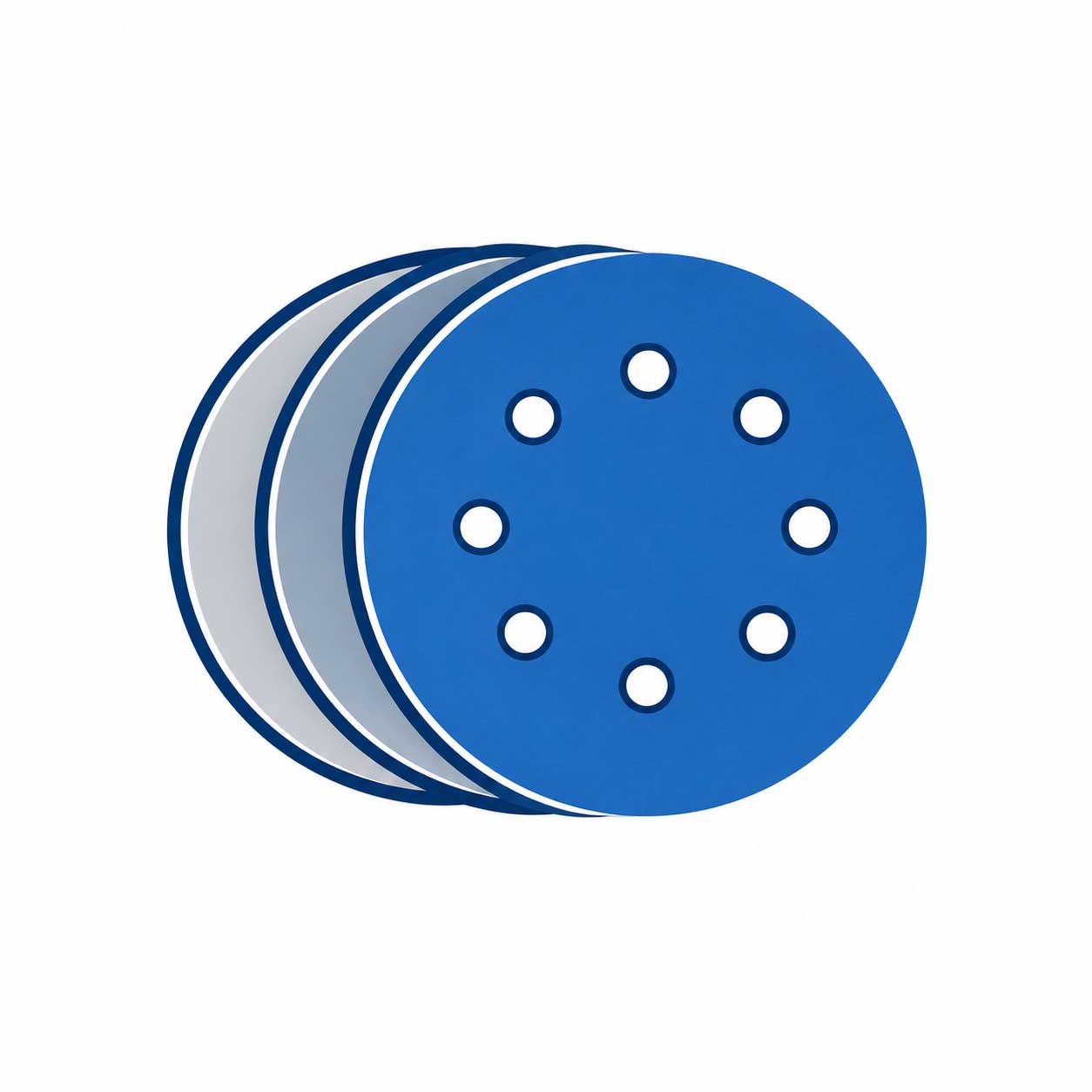
| Multi-Hole Disc | Multiple extraction paths | Filler and primer sanding |
| Mesh Sanding Disc | Open backing structure | High-dust sanding |
| Film Multi-Hole Disc | Stable backing + extraction holes | Primer and fine preparation |
| Hand Sanding Sheet | No integrated extraction | Local repair and details |
Mesh uses an open structure that allows sanding dust to move through much of the abrasive surface.
Multi-Hole discs keep a conventional coated-abrasive backing but add more extraction paths.
A simple selection rule is:
Mesh → prioritize open dust flow
Multi-Hole → combine conventional abrasive structure with dust extraction
Neither one is automatically better.
The disc, backing pad, sander, hose, and dust collector all need to work together.
Gelcoat finishing is different from heavy fiberglass repair sanding.
The objective may be to correct:
Because gelcoat is a surface layer, unnecessary aggressive sanding can remove more material than required.
As the process becomes finer, the focus should move from material removal toward scratch refinement.
A general direction may be:
| Gelcoat Condition | Abrasive Direction | Main Goal |
|---|---|---|
| Local Repair | Medium-to-fine progression | Blend repair |
| Moderate Surface Defect | Fine sanding | Reduce scratches |
| Surface Texture | Fine film / wet sanding | Level texture |
| Pre-Polishing | Fine / ultra-fine abrasive | Refine sanding marks |
| Final Appearance | Polishing compound | Restore surface finish |
Aozhong Film Sanding Discs and Wet & Dry Sandpaper are better suited to fine refinement stages than aggressive coarse discs.
Dry sanding is useful when:
Wet sanding is more commonly used when:
Only use abrasives that are designed for wet sanding when water is involved.
Boat hulls, fairings, corners, and molded fiberglass components rarely consist only of flat surfaces.
A firm sanding disc can provide good leveling on flat repair areas, but the same backing may create uneven contact on curved parts.
This is where Foam Sanding Discs and Sanding Sponges become useful.
| Marine Area | Main Requirement | Abrasive Direction |
|---|---|---|
| Flat Repair Area | Level surface | Firm sanding disc / block |
| Broad Hull Curve | Follow contour | Foam sanding disc |
| Edge | Pressure control | Sanding sponge |
| Corner | Flexible access | Sponge / hand abrasive |
| Molded Profile | Surface conformity | Foam-backed abrasive |
| Fine Primered Curve | Scratch refinement | Fine foam / film abrasive |
A simple rule is:
Firm abrasive = leveling
Flexible abrasive = contour following
Flexible abrasives should not replace a firm block when an uneven repair still needs to be leveled.
They become more useful once the surface shape is already correct.
Marine repair may also involve old:
Not every job requires removing the complete coating system.
If the existing coating is unstable, it needs to be removed.
If the coating remains sound, the repair process may only require sanding and feathering before applying the next layer.
A typical process can be:
Coating Removal → Edge Blending → Scratch Refinement → Primer Preparation
| Paint / Coating Stage | Product Direction |
|---|---|
| Heavy Coating Removal | Coarse Sanding Disc |
| General Paint Removal | Hook & Loop Sanding Disc |
| Dust-Heavy Coating Sanding | Mesh / Multi-Hole Disc |
| Edge Blending | Medium / Fine Sanding Disc |
| Primer Preparation | Film / Fine Disc |
| Curved Area Preparation | Foam Abrasive |
| Final Coating Refinement | Fine Wet & Dry Abrasive |
The final grit should follow the coating manufacturer’s technical requirements.
This is especially important for marine primers and topcoats, because different coating systems may require different surface profiles.
Marine sanding should be treated as a multi-stage surface preparation process.
Coarse sanding discs are useful for fiberglass repair and filler leveling. Mesh and Multi-Hole Sanding Discs support dust-heavy filler and primer sanding. Film and Wet & Dry Abrasives are better suited to gelcoat and fine surface refinement. Foam Sanding Discs and Sanding Sponges help follow curved hulls and molded parts.
For marine manufacturers, repair shops, and abrasive distributors, a practical selection method is:
Surface → Repair Stage → Dust Requirement → Shape → Required Finish
The goal is not to find one sanding disc for every boat-repair process.
It is to use the right abrasive structure at each stage so the next sanding, coating, or polishing step becomes easier.
Common questions about marine abrasive selection, custom disc specifications, sample testing, private-label supply and application requirements.
Yes. These stages require different abrasive structures. AoZhong can supply Hook & Loop Sanding Discs, Mesh and Multi-Hole products, Film Sanding Discs, Wet & Dry Sandpaper and flexible foam or sponge abrasives according to the sanding stage and required finish.
Yes. For applicable sanding-disc products, AoZhong supports customization of diameter, grit, abrasive grain, backing, hole pattern, attachment, printing and packaging. For dust-extraction products, providing the backing-pad specification or hole-pattern drawing helps improve compatibility.
Yes. Sample testing is recommended for marine abrasive projects because fiberglass filler, gelcoat, primer and coatings can behave differently during sanding. Buyers can evaluate cutting performance, loading, scratch pattern, extraction performance and final surface quality before confirming the bulk specification.
Yes. AoZhong supports OEM and private-label orders for distributors and industrial buyers. Depending on the product, customization can include grit range, size, backing, hole pattern, print, labels and packaging. New programs should normally confirm abrasive performance before finalizing packaging.
Provide the surface material, sanding stage, defect type, grit range, tool, disc size, backing-pad structure, dry or wet sanding method and final surface requirement. This allows the abrasive to be selected around the actual boat-building or repair process rather than only by grit.