Scratches, damaged paint, and worn clear coats are common problems on alloy wheels. However, choosing the wrong sanding abrasive can leave visible scratches, damage the coating, or create unnecessary work before repainting.
For wheel refinishing shops and automotive abrasive distributors, selecting the right abrasive is important for both surface quality and working efficiency.
What abrasives should you use for alloy wheel refinishing?
For approved cosmetic coating work, film sanding discs are useful for controlled paint and primer sanding, foam sanding discs help follow curved spokes, and wet and dry sandpaper supports detailed hand sanding. Fine abrasives and polishing pads can also be used for suitable coating-finishing processes.
The correct choice depends on the wheel finish, damage condition, sanding stage, and coating requirements.
Aozhong provides Film Sanding Discs, Foam Sanding Discs, Hook & Loop Sanding Discs, Wet & Dry Sandpaper, and Polishing Products for automotive surface preparation.
This guide explains how to select abrasives for alloy wheel refinishing, avoid common sanding problems, and build a practical abrasive product range.
Important: This article covers cosmetic coating preparation only. Structural wheel damage, cracks, bending, or deep metal damage must not be treated as ordinary sanding repairs. Always follow the vehicle manufacturer's approved refinishing procedures.
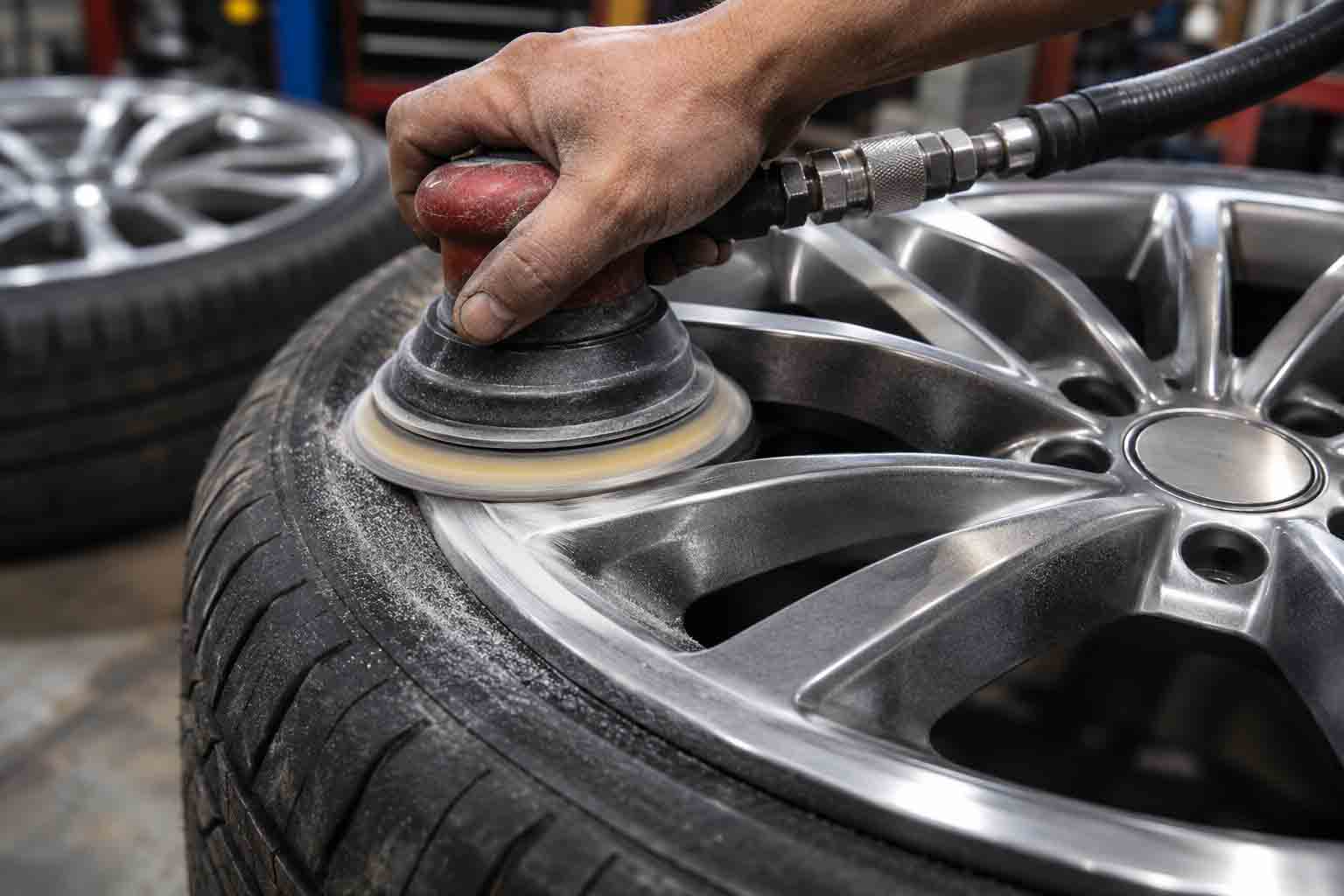
Before choosing sandpaper or sanding discs, identify the wheel finish and the type of damage.
Not every scratch can be safely removed by sanding.
Some defects affect only the paint or clear coat. Others extend into the metal or indicate possible structural damage.
| Wheel Condition | Main Problem | Recommended Action |
|---|---|---|
| Light Clear-Coat Scratches | Minor coating defects | Fine coating refinement if permitted |
| Paint Scuffs | Damaged paint surface | Approved coating preparation |
| Minor Coating-Level Curb Rash | Local surface marks | Controlled coating sanding |
| Peeling Clear Coat | Unstable coating | Follow approved coating-removal process |
| Primer Imperfections | Uneven primer surface | Fine abrasive refinement |
| Deep Metal Gouges | Possible metal damage | Professional assessment |
| Cracked or Bent Wheel | Structural damage | Do not refinish as a cosmetic repair |
Alloy wheels are structural vehicle components. Their shape and material condition affect vehicle safety.
Abrasives used for wheel refinishing should prepare coatings, not remove wheel metal to change its shape.
Painted, polished, machined, and chrome-finished wheels can also require different repair procedures.
The first step is to determine whether cosmetic refinishing is permitted for the specific wheel.
For additional technical guidance, buyers can refer to published vehicle manufacturer wheel refinishing recommendations.
Different sanding stages require different abrasive structures.
Using coarse sandpaper for every task may remove material quickly, but it can also leave scratches that require additional finishing.
A more efficient approach is to match each abrasive to the surface and coating stage.
| Abrasive Product | Main Feature | Suitable Application |
|---|---|---|
| Film Sanding Disc | Stable polyester film backing | Primer and paint refinement |
| Foam Sanding Disc | Flexible contact surface | Curved spokes and rounded edges |
| Hook & Loop Sanding Disc | Easy disc replacement | General coating preparation |
| Wet & Dry Sandpaper | Flexible hand sanding, wet-use options | Narrow areas and fine details |
| Fine Finishing Abrasive | Controlled surface refinement | Minor coating defects |
| Foam Polishing Pad | Works with compatible polishing compounds | Final coating appearance |
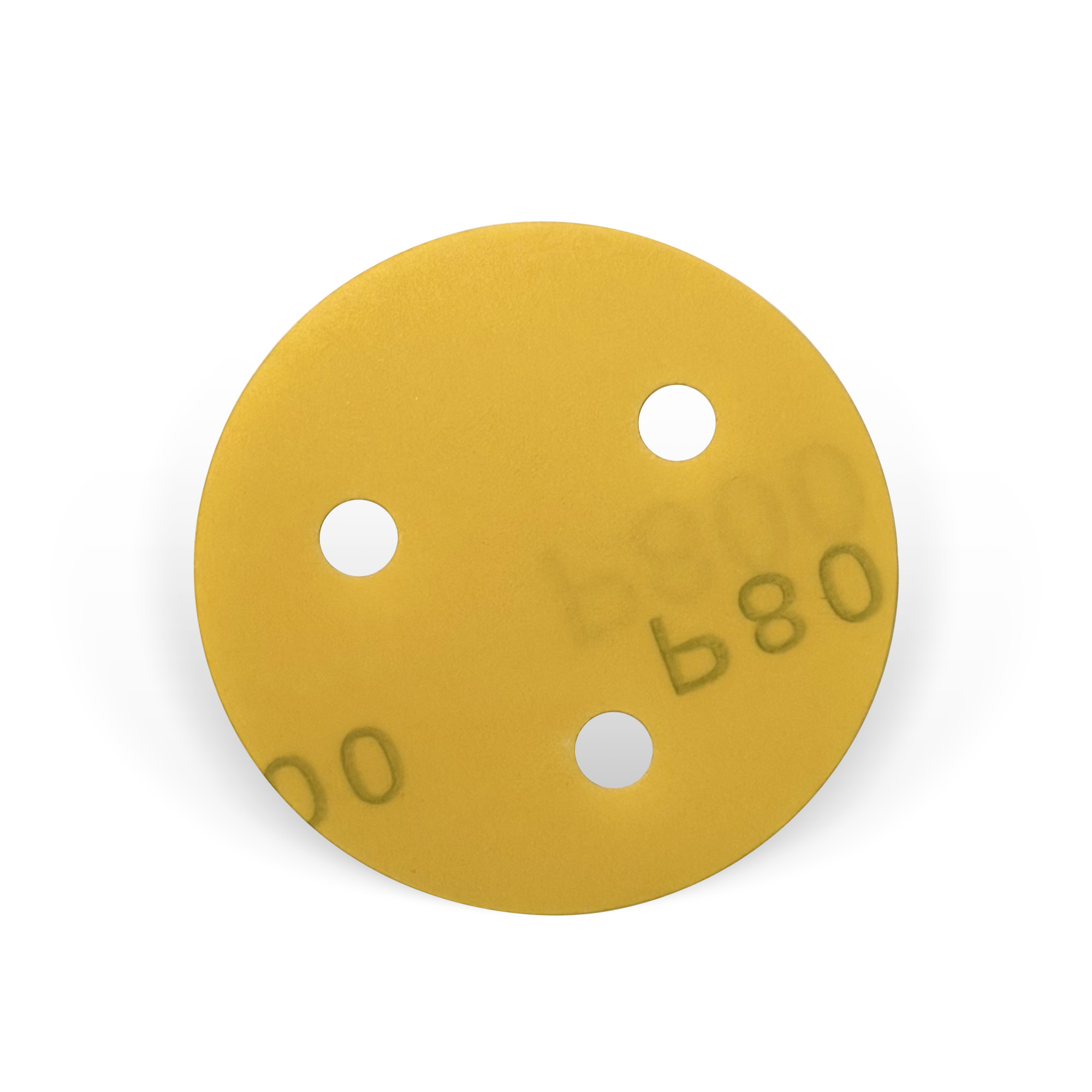
Film Sanding Discs are useful when a controlled scratch pattern is important.
The polyester film backing supports a stable abrasive surface during sanding.
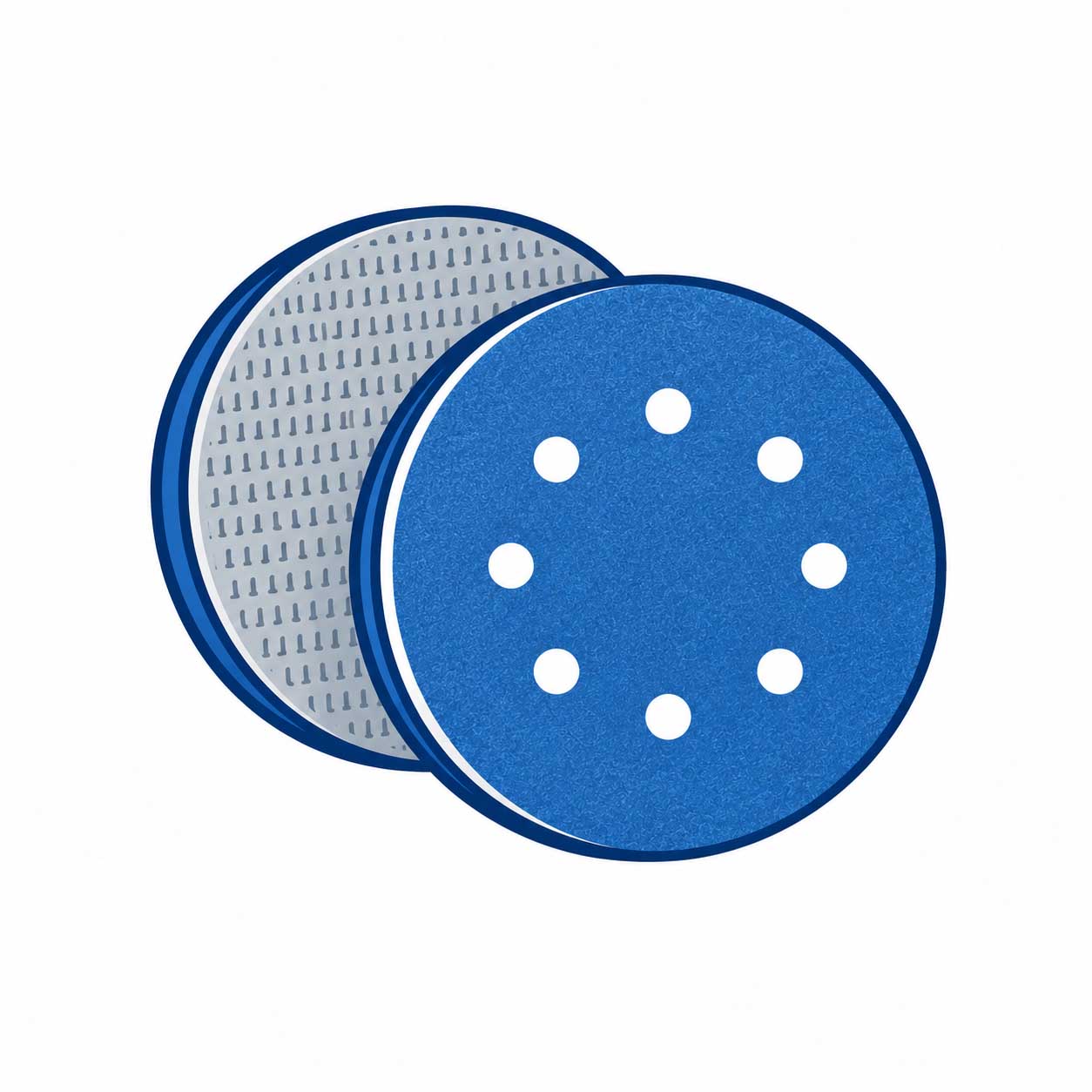
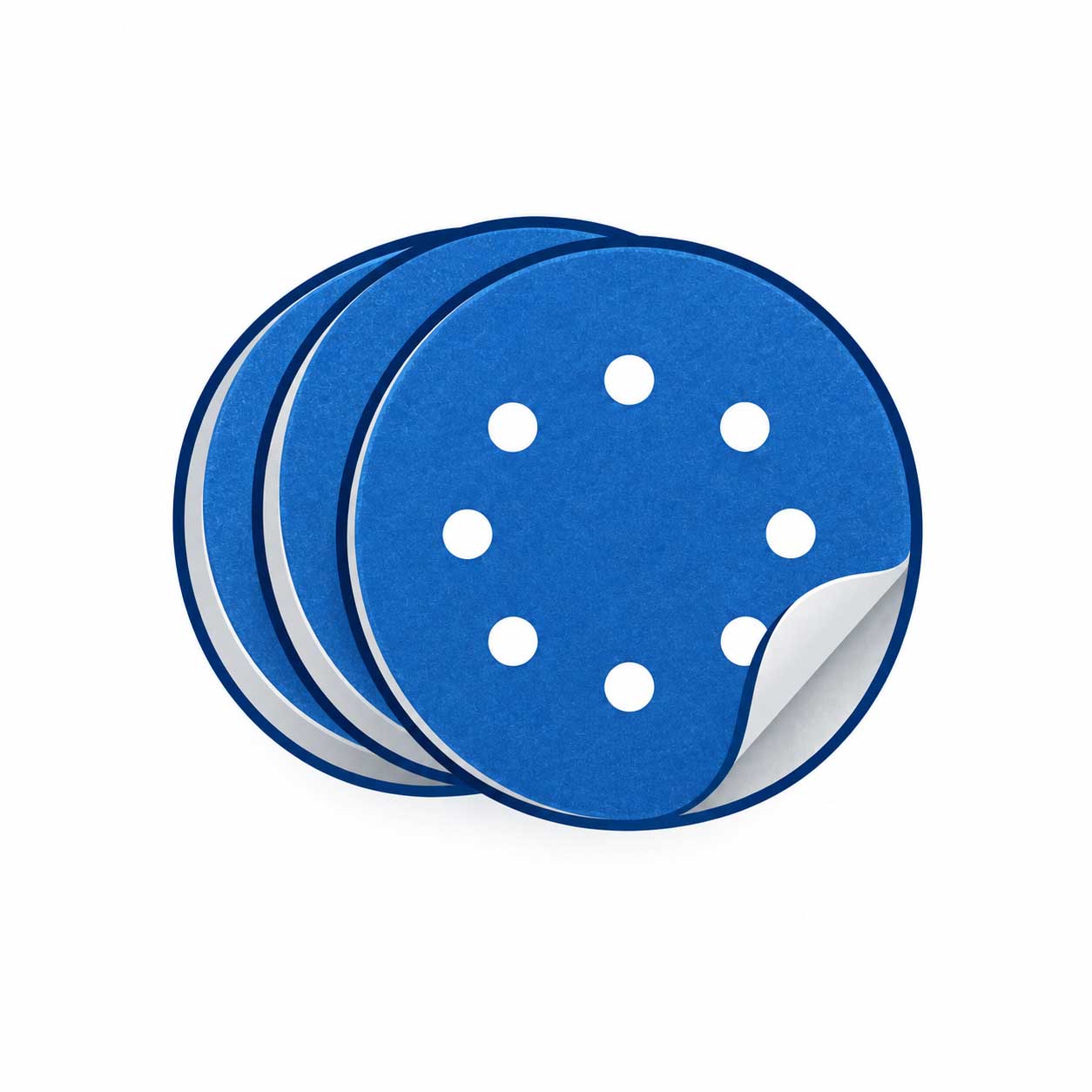
Aozhong offers a 3-Inch P800 Gold Polyester Film Sanding Disc with Hook & Loop backing and a three-hole extraction pattern.
Its small diameter is suitable for localized automotive coating work when used with compatible equipment.
View Aozhong 3-Inch Film Sanding Disc
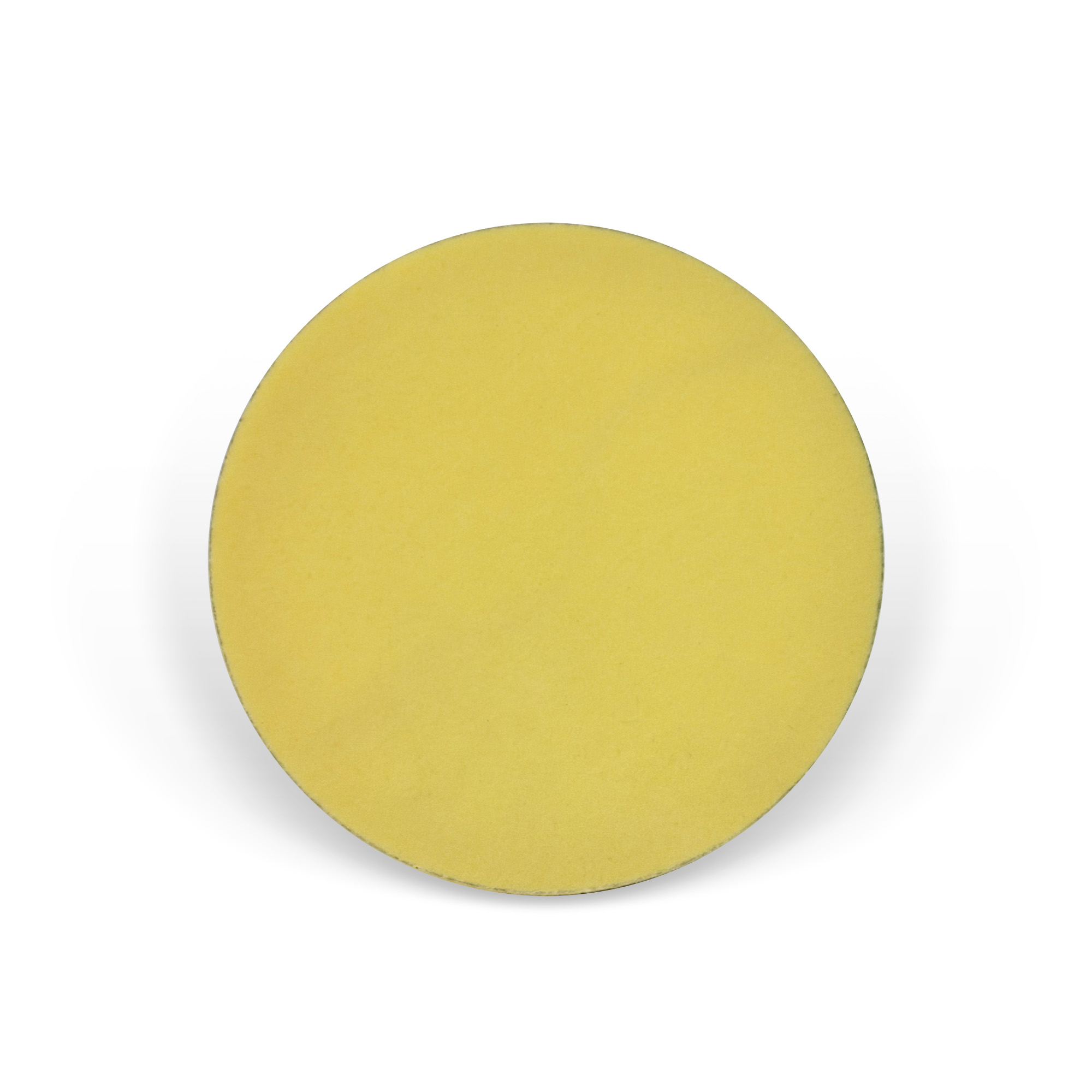
Alloy wheel spokes often contain curves, grooves, and rounded edges.
Foam-backed abrasives help distribute sanding contact across these shapes.
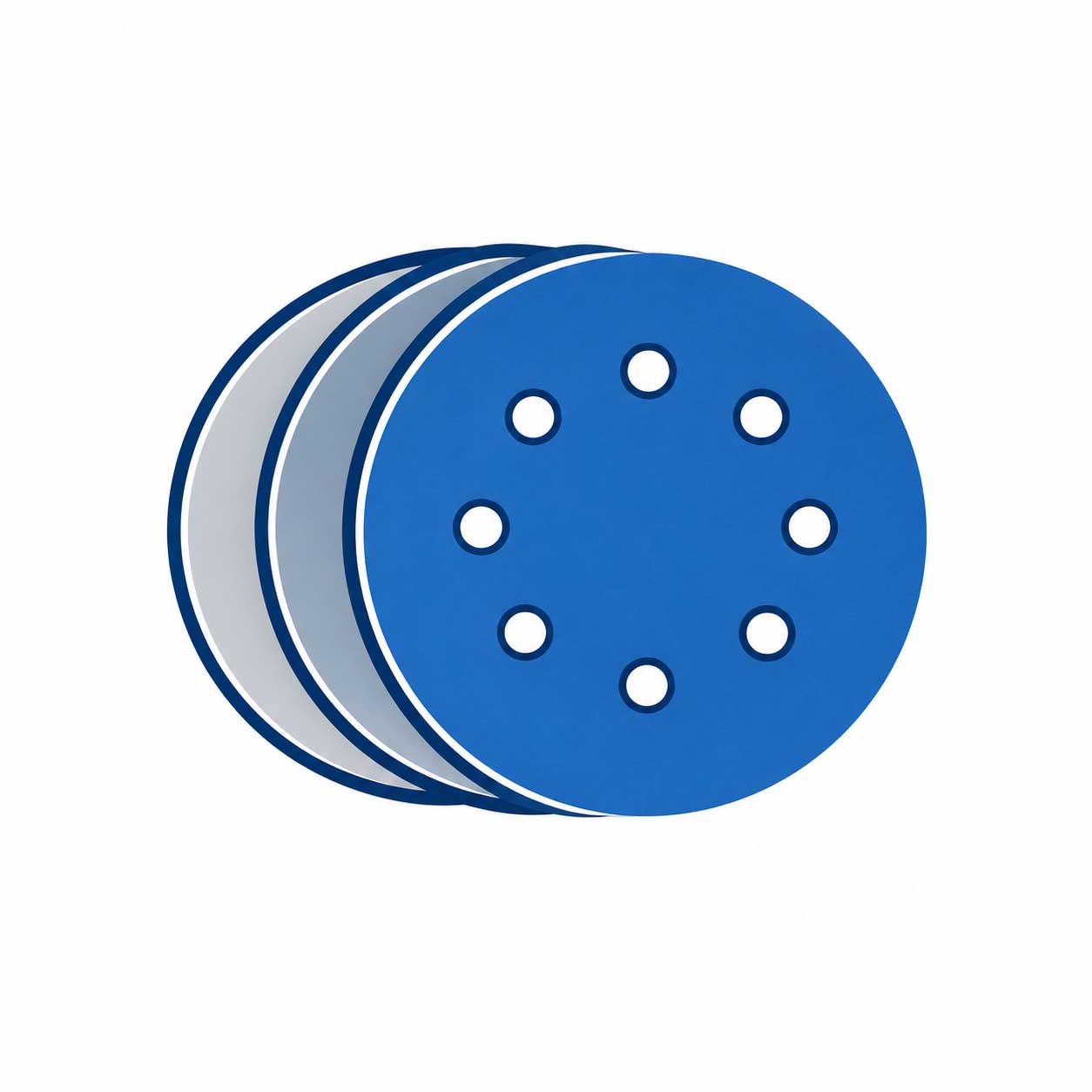
Aozhong's 3-Inch Automotive Refinishing Foam Sanding Disc is available in several fine grit options, with customizable foam thickness and density.
View Aozhong Foam Sanding Disc
For flat coating surfaces, film abrasives are a useful option. For curved wheel surfaces, foam abrasives often provide better contact control.
Sanding grit determines how aggressively the abrasive works and the type of scratch pattern it leaves.
Using a grit that is too coarse can create deep sanding marks.
Using a grit that is too fine may not provide the surface preparation required by the next coating.
For wheel refinishing, the correct grit should be selected according to the approved process and the coating manufacturer's instructions.
| Sanding Stage | Reference Grit | Main Purpose |
|---|---|---|
| Coating Defect Preparation | P240–P320 | Controlled treatment of suitable coating defects |
| Coating Edge Refinement | P320–P400 | Reduce visible coating transitions |
| Primer Sanding | P400–P600 | Refine the primer surface |
| Fine Paint Preparation | P600–P800 | Fine refinement where specified |
| Clear-Coat Defect Refinement | P1500–P3000 | Controlled correction of minor coating defects |
These grit ranges are general references for coating-related work, not a universal wheel repair procedure. Use only the stages permitted by the wheel and coating manufacturers.
Every sanding stage leaves a scratch pattern.
The next grit must be suitable for refining the marks left by the previous abrasive.
If the grit progression is too aggressive, coarse scratches may remain visible after repainting.
For example, a fine film disc may be useful during primer preparation, but it should not be expected to correct deep scratches left by an unsuitable earlier abrasive.
A practical principle is:
Use the finest grit that can complete the current approved sanding task efficiently.
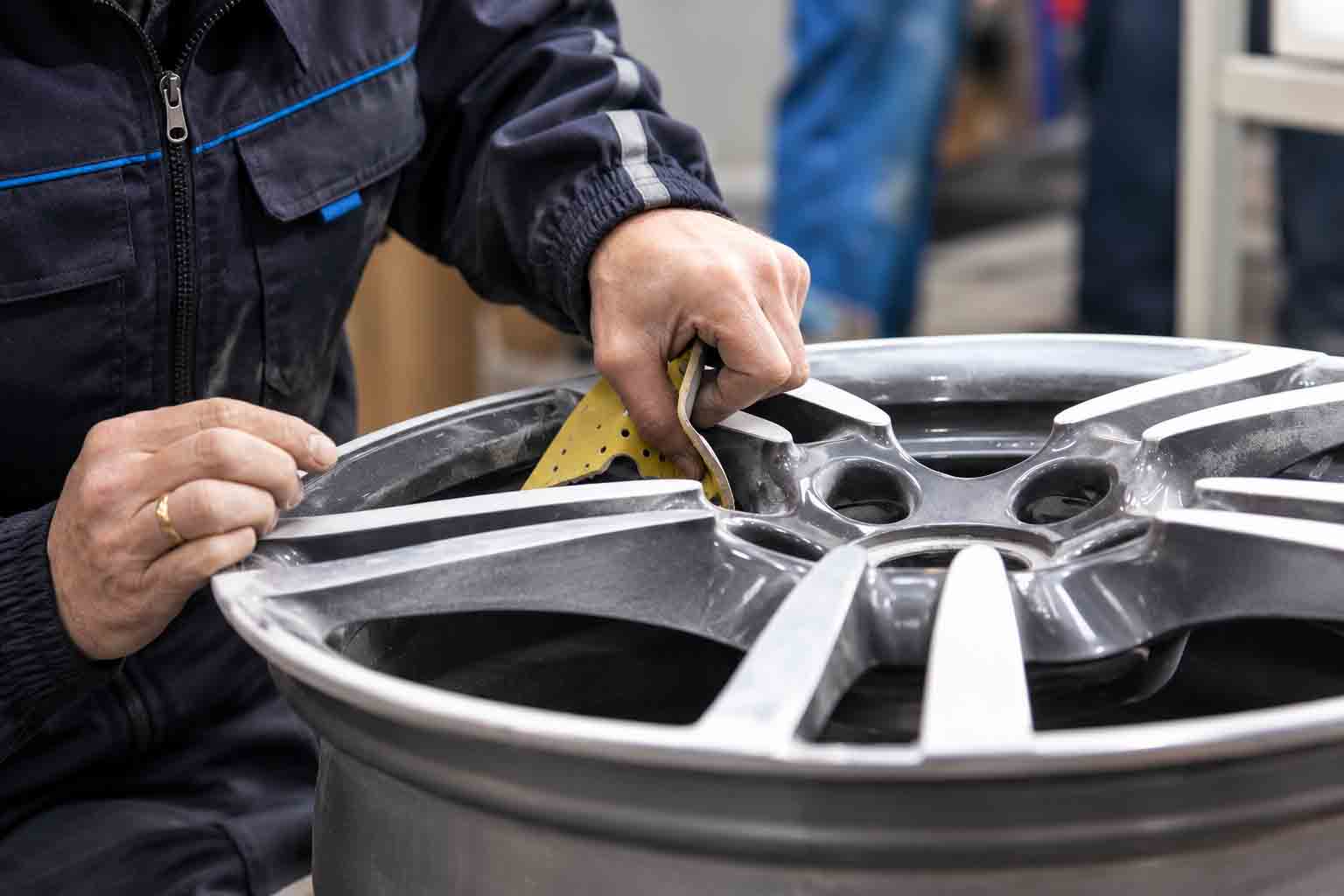
Curved surfaces are one of the main challenges in alloy wheel refinishing.
A wheel may include narrow spokes, recessed channels, rounded outer edges, and small decorative details.
These areas are difficult to sand evenly with a large rigid sanding pad.
The main problem is uneven contact pressure.
When an abrasive contacts only a small part of a curved surface, the operator may create concentrated sanding marks or remove too much coating.
| Wheel Area | Sanding Challenge | Recommended Product |
|---|---|---|
| Flat Painted Face | Even scratch refinement | Film Sanding Disc |
| Curved Spokes | Surface conformity | Foam Sanding Disc |
| Narrow Recesses | Limited access | Wet & Dry Sandpaper |
| Rounded Outer Edge | Pressure control | Sanding Sponge |
| Small Coating Defect | Local sanding | 3-Inch Film or Foam Disc |
| Detailed Corners | Manual precision | Flexible Sandpaper |
Smaller sanding discs help operators work on limited areas without covering unnecessary surrounding surfaces.
Aozhong offers 3-inch film and foam sanding discs for automotive spot repair and paint preparation.
These products can be matched with suitable sanding pads for controlled localized work.
For hand sanding, Wet & Dry Sandpaper and flexible sanding products can be used in narrow areas where a machine cannot maintain safe, even contact.
Always maintain control of the abrasive contact area. Do not use sanding to reshape the wheel's metal contours.
Aozhong provides abrasive manufacturing, converting, and OEM/ODM services for industrial distributors and private-label buyers.
Depending on the product, our manufacturing and converting capabilities support:
Film sanding discs are useful for controlled primer and coating preparation, while foam sanding discs provide flexible contact on curved spokes. Wet and dry sandpaper is suitable for detailed sanding when the process allows it. The correct product depends on the wheel coating, sanding stage, and approved repair procedure.
The correct grit depends on the primer, paint system, and approved wheel refinishing procedure. P400–P600 may be used for certain primer-refinement processes, while finer grades may be specified for additional coating preparation. Always follow the relevant technical data sheet.
Yes. Aozhong supports different disc diameters, grit ranges, backing materials, hole patterns, and foam structures on applicable products. Buyers can provide sanding equipment information or reference samples to confirm product specifications.
Yes. Aozhong provides samples for B2B evaluation. Buyers can assess cutting performance, abrasive loading, scratch pattern, attachment compatibility, and surface finish before confirming a bulk order.
Yes. Aozhong supports OEM and private-label abrasive programs for automotive refinishing distributors, industrial suppliers, and abrasive brands. Depending on the product, customization may include size, grit, backing, printing, labeling, and packaging.