Wholesale automotive sanding discs should be selected as a product system, not as individual grit numbers.
A useful range should cover material removal, body filler shaping, primer sanding, dust extraction, paint preparation, curved surfaces, and finishing.
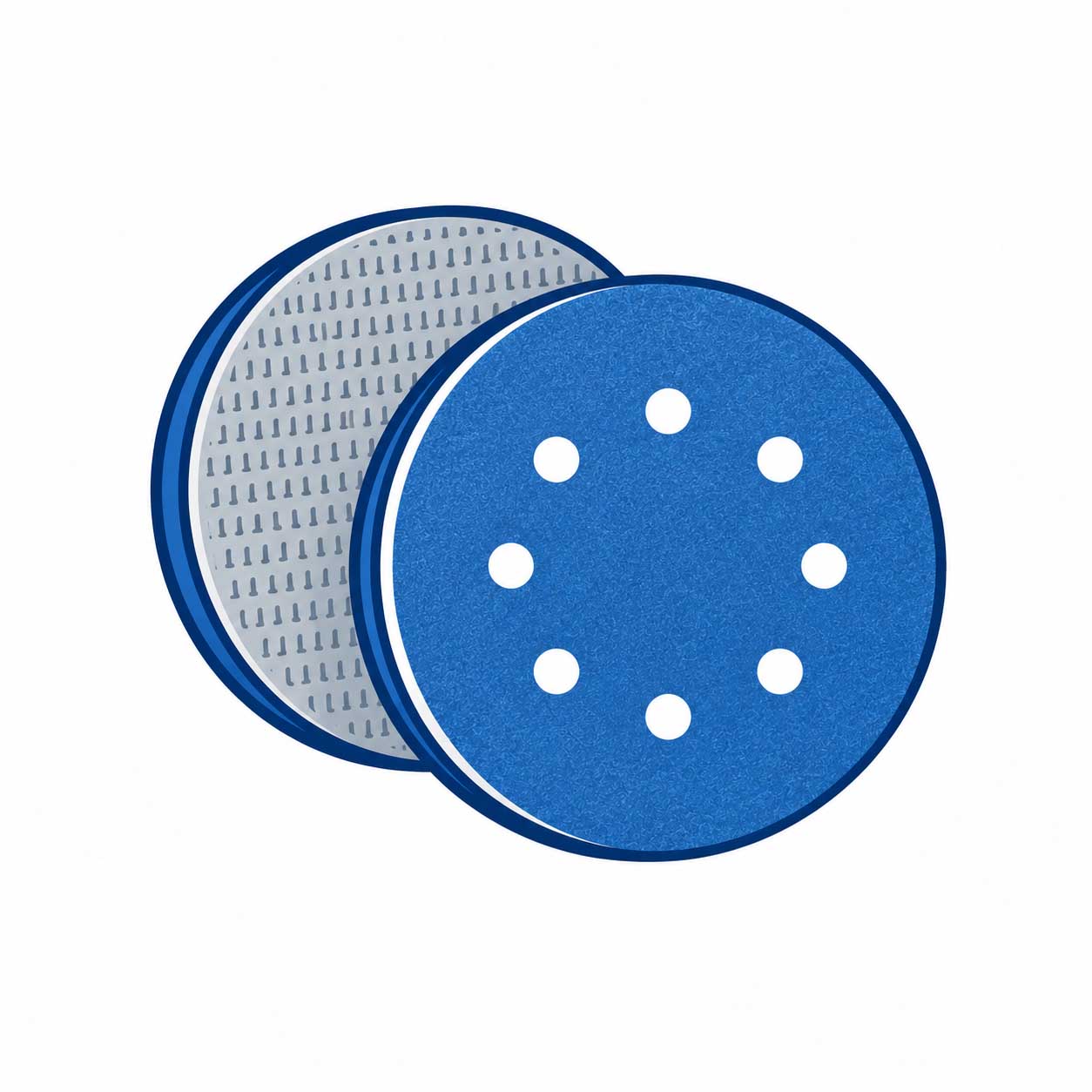
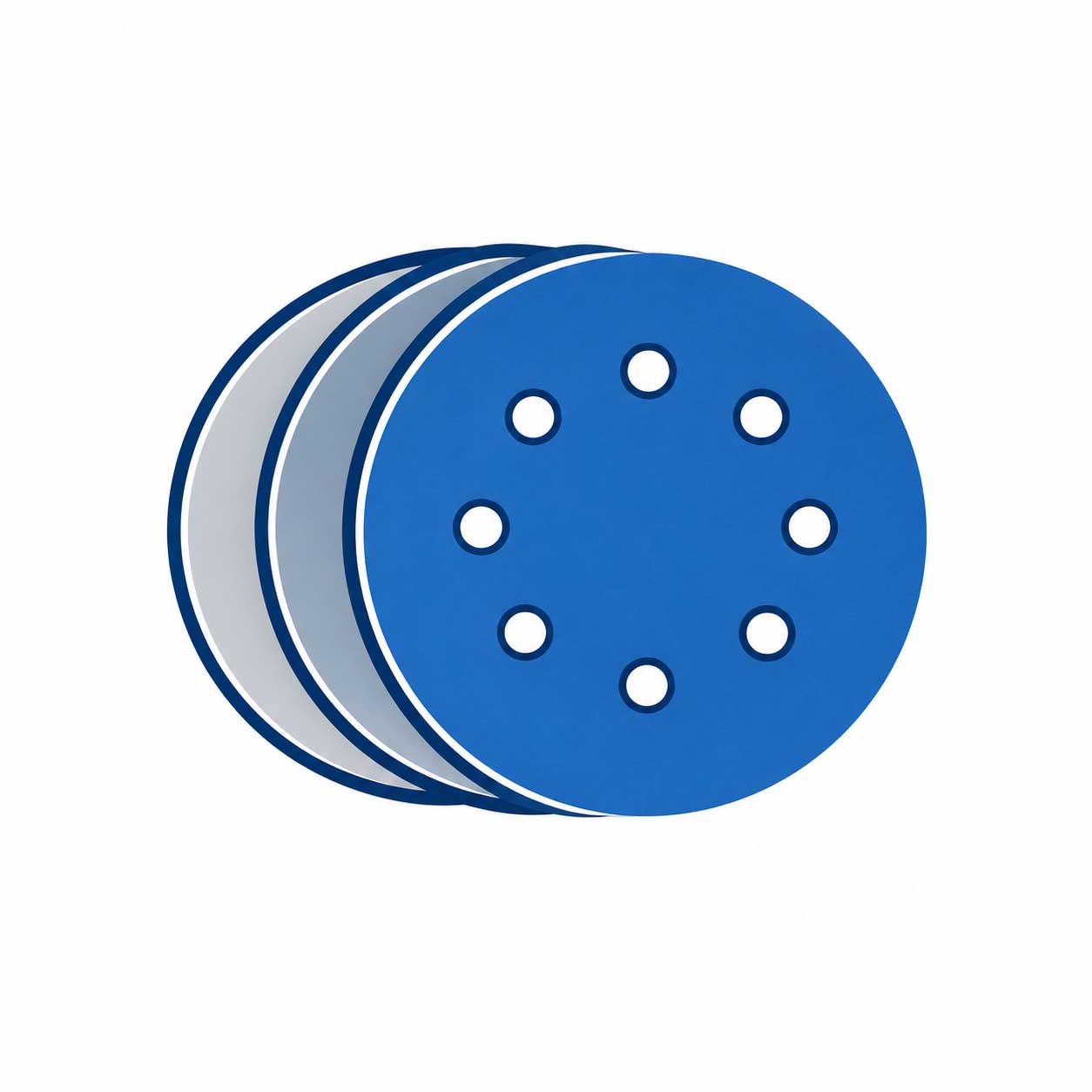
For most distributors, this means combining Hook & Loop paper discs, PSA abrasives, film sanding discs, multi-hole or mesh products, and foam-backed abrasives.
At Aozhong, our role is to help buyers match grit, backing, abrasive type, hole pattern, size, and packaging to the actual automotive sanding process. We recommend testing the product structure first and expanding the range based on customer demand.
Automotive sanding discs are used during surface preparation and paint repair.
They can be used before primer, before paint, between preparation stages, or during paint defect correction, depending on the grit and product structure.
Common applications include:
The same sanding disc should not be expected to handle every stage.
A P80 disc used for filler shaping has a different job from a P600 film disc used for coating preparation.
That is why wholesale buyers should build their inventory around the automotive sanding process, not only around a list of grit numbers.
Aozhong's automotive abrasive range can be divided into several product systems. Each one serves a different workflow.
| Sanding Disc Type | Main Use | Main Advantage | Main Limitation |
|---|---|---|---|
| Hook & Loop Sanding Disc | Multi-stage automotive sanding | Fast grit changes | Requires compatible hook backing pad |
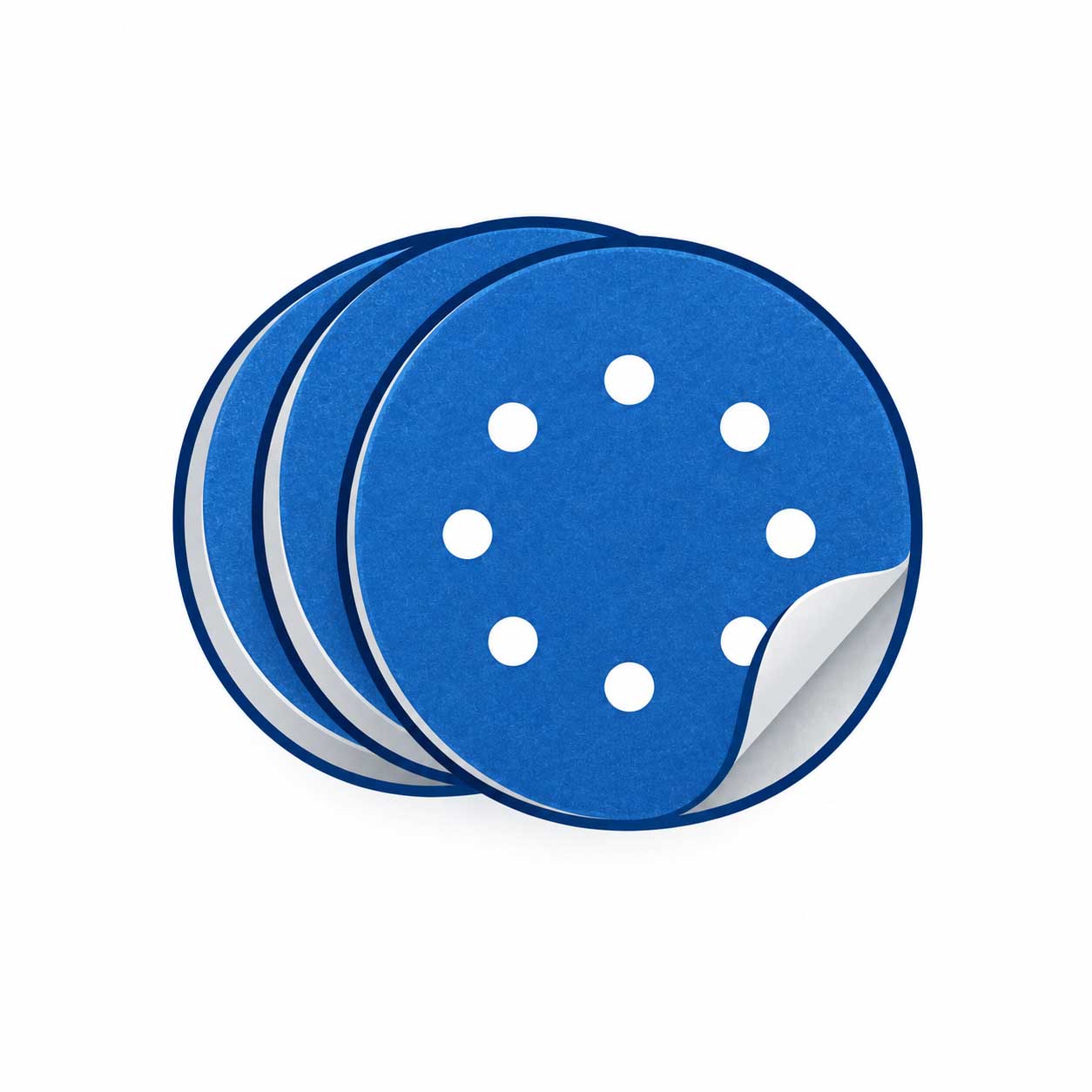
| PSA Sanding Disc | Longer single-grit sanding stages | Direct adhesive attachment | Limited reuse after removal |
| Film Sanding Disc | Primer, paint, and fine surface preparation | Backing stability and scratch control | Cost is usually above standard paper |
| Mesh Sanding Disc | Filler and primer sanding with extraction | Dust passes through open mesh | Not required for every sanding stage |
| Multi-Hole Sanding Disc | Dust-controlled dry sanding | More extraction channels | Hole pattern must match pad |
| Foam-Backed Sanding Disc | Curves, edges, and fine sanding | Follows surface contours | Not intended for heavy leveling |
| Wet & Dry Abrasive | Paint and clear coat refinement | Supports wet finishing processes | Requires a suitable wet-sanding process |
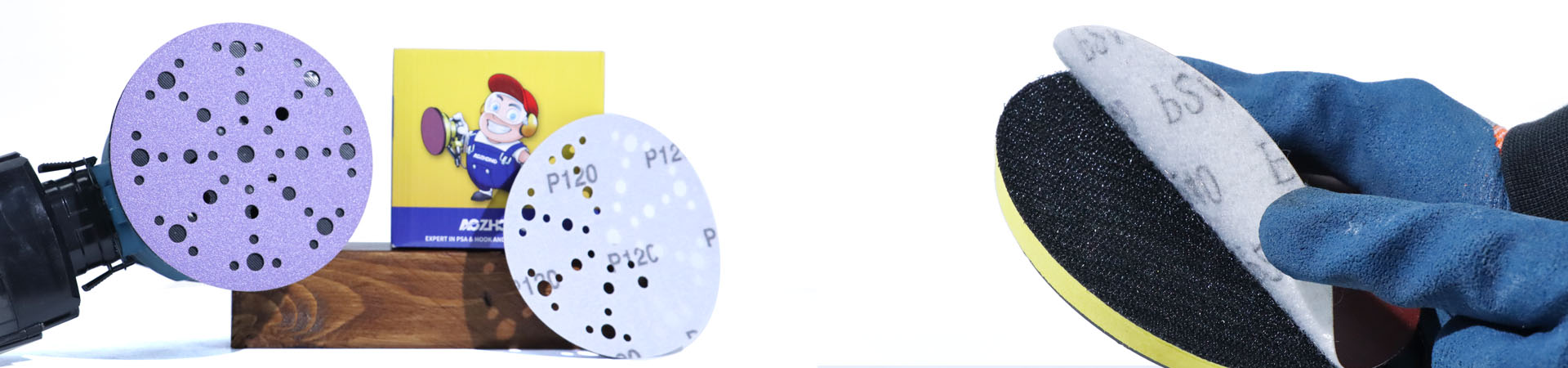
Hook & Loop is a useful core product for automotive distributors because technicians often change from one grit to another during repair work.
Aozhong Hook & Loop sanding discs can be supplied with aluminum oxide, ceramic, zirconia, silicon carbide and film-backed structures, as well as different sizes, grits and hole patterns.
They are a practical choice for:
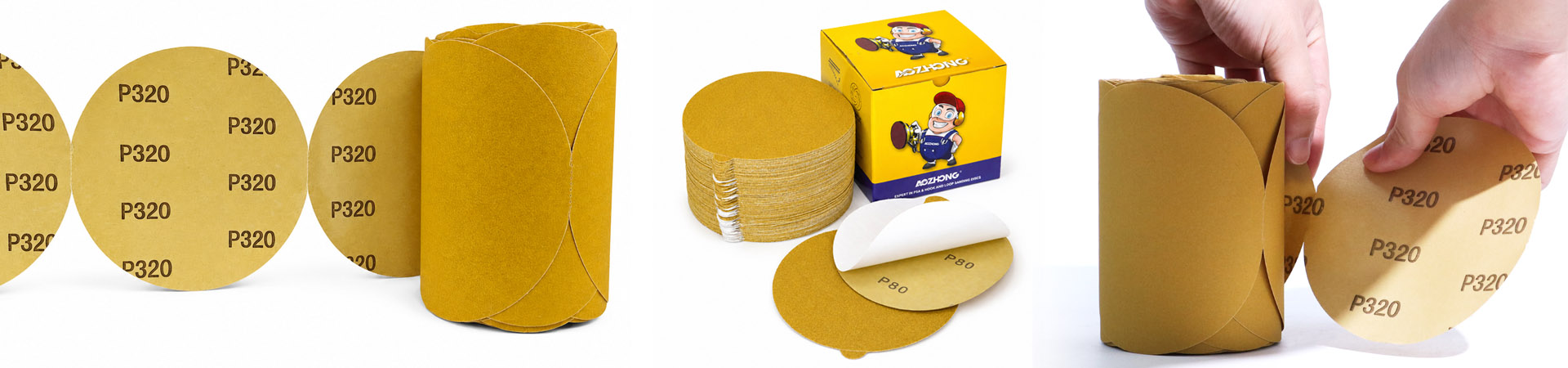
PSA stands for Pressure-Sensitive Adhesive.
Instead of using a hook backing, the abrasive attaches directly to a compatible smooth pad through an adhesive layer.
PSA works well where one grit remains on the tool for a longer sanding stage. It can also be useful on sanding blocks and fixed sanding tools.
Aozhong supplies PSA discs, PSA disc rolls and other adhesive-backed abrasive formats.
For wholesale buyers, PSA and Hook & Loop should usually be treated as complementary product systems rather than substitutes.
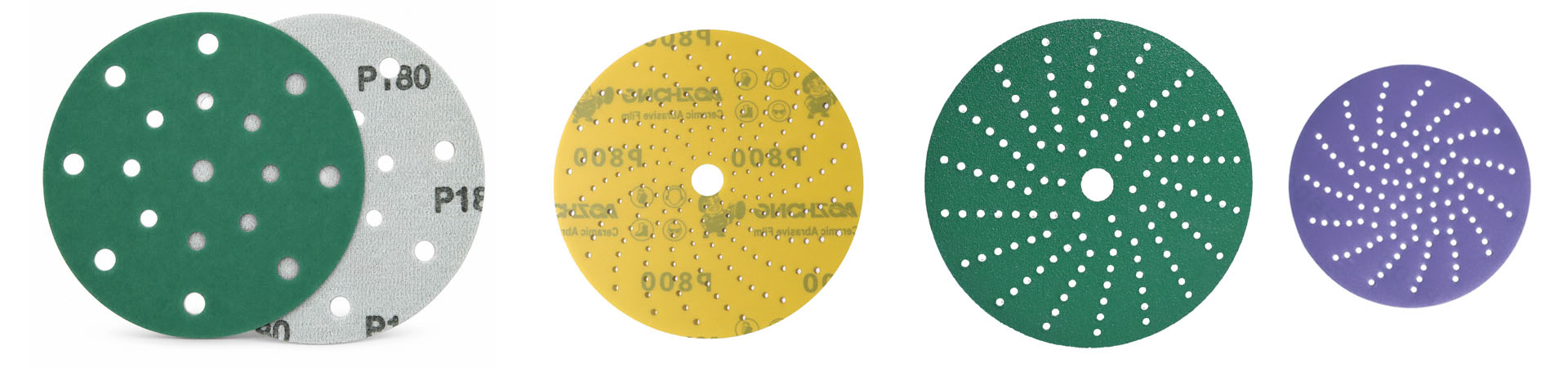
Film backing is often used when surface consistency matters.
Aozhong film sanding discs use polyester film backing, and the current product range includes several automotive-oriented sizes, hole patterns and grit configurations. Film backing helps maintain disc shape and backing stability during sanding.
Typical applications include:
Film sanding discs are therefore worth including in a professional automotive refinishing range.
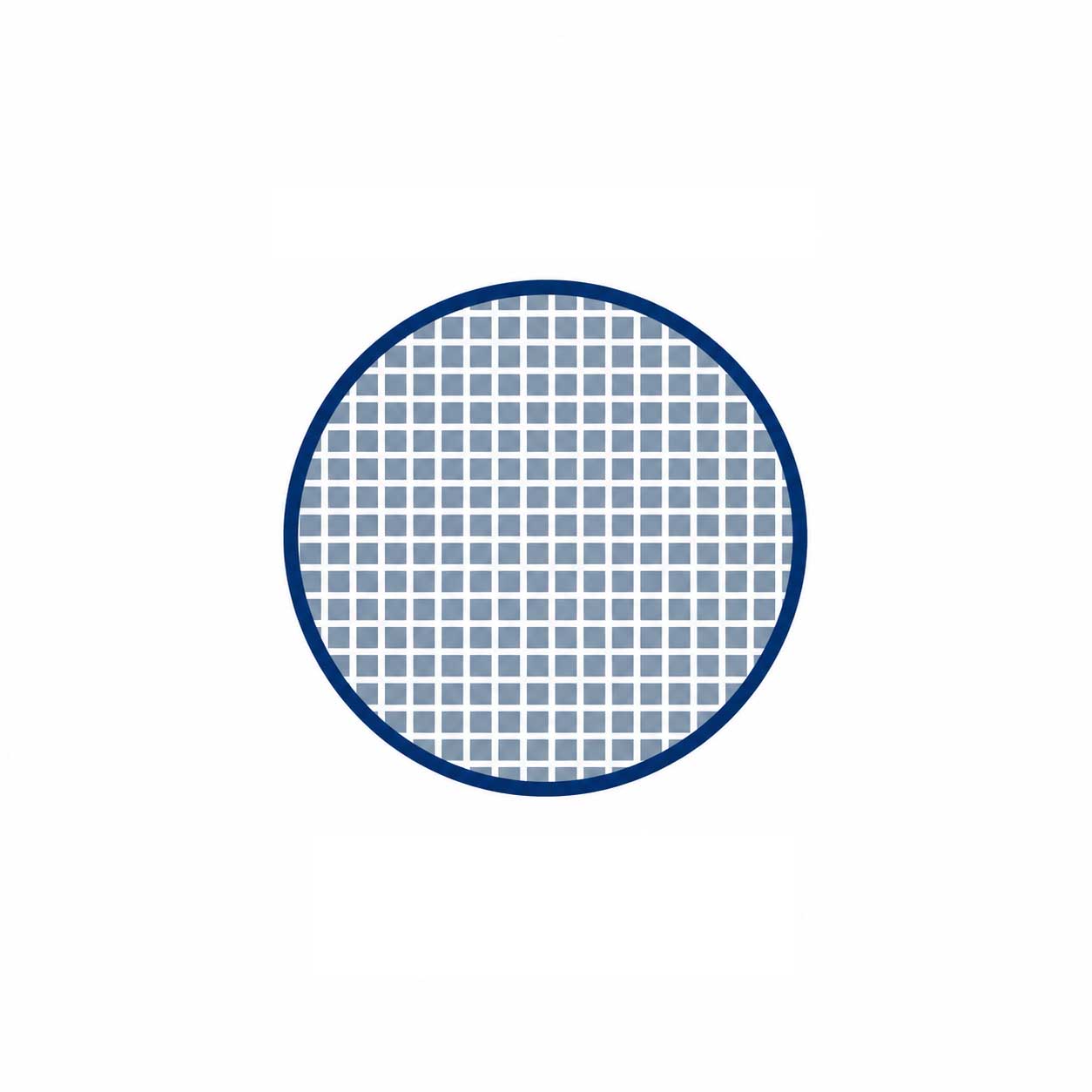
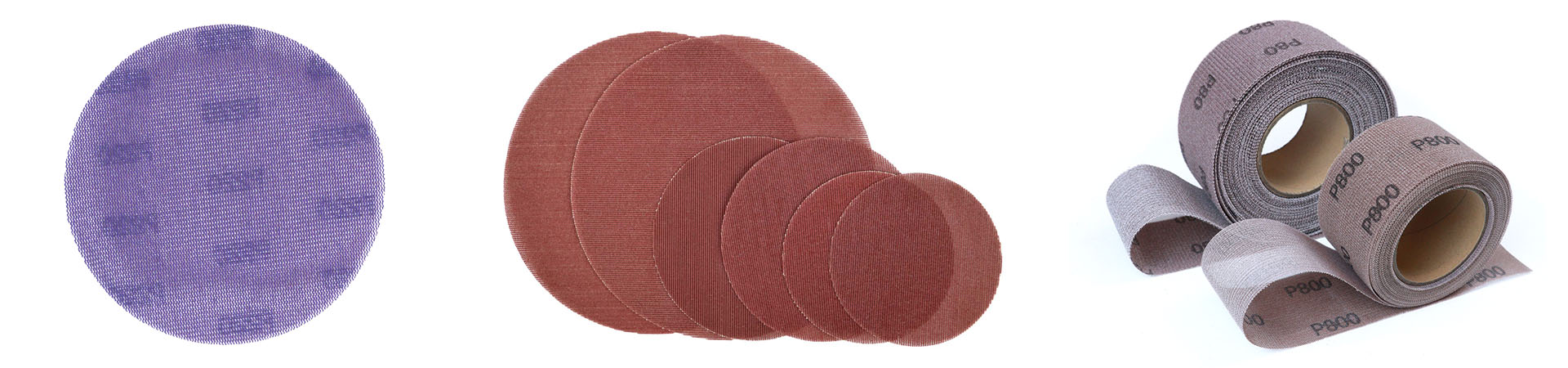
Mesh abrasives use an open structure instead of a small number of fixed dust holes.
This allows sanding dust to move through more of the abrasive surface when used with a compatible extraction system.
Aozhong mesh sanding products are available with fiber or polyester mesh backing and several abrasive options.
They are particularly relevant when customers frequently sand:
Not every automotive surface is flat.
Bumpers, fenders, curves, edges and body lines require a different type of contact.
Aozhong foam sanding discs use a sponge layer to follow curves and distribute sanding pressure. Current configurations include multi-hole extraction structures and several abrasive options.
They are useful for:
They should not replace a firm disc or block when the job requires flat leveling.
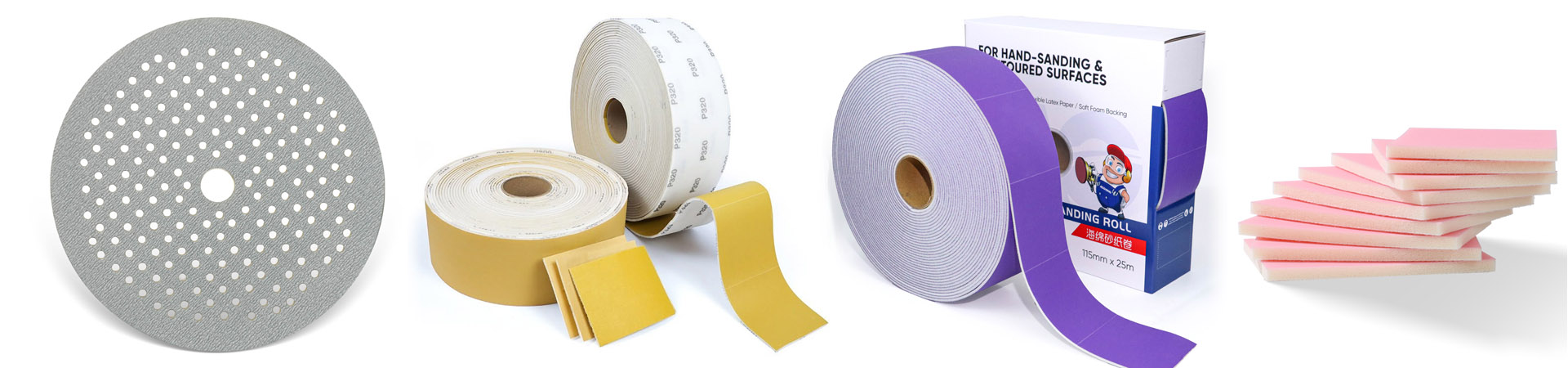
A successful wholesale automotive sanding line should follow the repair process.
If you stock only popular fine grits, customers cannot complete filler work. If you stock only P80 and P120, the line stops before primer and paint preparation.
| Automotive Stage | Common Grit Range | Typical Product Direction |
|---|---|---|
| Old Paint / Heavy Material Removal | P40–P80 | Paper or ceramic sanding disc |
| Body Filler Shaping | P60–P80 | Hook & Loop or PSA sanding disc |
| Filler Refinement | P120–P180 | Automotive sanding disc |
| Featheredge Sanding | P180–P240 | Paper or film disc |
| Before Primer | P240–P320 | Film / paper sanding disc |
| Primer Leveling | P320–P400 | Multi-hole or film disc |
| Final Primer Preparation | P400–P600 | Film / multi-hole sanding disc |
| Fine Paint Preparation | P600–P800 | Film or foam-backed abrasive |
| Paint Refinement | P800–P1200 | Film sanding disc |
| Clear Coat / Finishing Stages | P1500–P3000 | Foam-backed or wet sanding abrasive |
Aozhong's own automotive grit guidance follows the same progression logic: coarse abrasives shape filler, intermediate grits remove the previous scratch pattern, and finer grits prepare primer and coatings for the next stage.
The exact final grit should still follow the paint, primer or clear coat manufacturer's technical data sheet.
Not necessarily.
The better approach is to identify the grit ranges used most often by your target customers and then build enough intermediate steps to support proper grit progression.
For example, a body shop product line could start with:
P80 → P120 → P180 → P240 → P320 → P400 → P600 → P800
A finishing-focused line may also add:
P1000 → P1200 → P1500 → P2000 → P3000
Backing is another purchasing decision that should not be ignored.
| Backing Type | Best Fit | Advantages | Limitation |
|---|---|---|---|
| Paper | General dry sanding | Cost control, broad grit coverage | Lower resistance to tearing |
| Polyester Film | Primer and fine paint preparation | Shape stability, scratch consistency | Higher unit cost |
| Foam / Sponge | Curves and finishing | Surface conformity, pressure distribution | Less suitable for flat leveling |
| Mesh | Dust-controlled sanding | Airflow and dust removal | Different sanding feel from coated paper/film |
Aozhong's film sanding disc range uses polyester film backing for dimensional stability, while foam products use sponge backing for curved surfaces. Mesh products use an open fiber or polyester structure to support dust removal.
That depends on your customer base.
If most customers perform body filler and general primer work, paper-backed discs should remain part of the range.
If your market includes automotive paint specialists and refinishing shops, film-backed products become more important.
If your customers work on bumpers, curves and finish sanding, add foam-backed abrasives.
The hole pattern affects dust extraction.
This is particularly important when sanding body filler, primer and coatings because dust can build up on the abrasive surface and reduce cutting performance.
Aozhong currently supplies no-hole, 6-hole, 8-hole, multi-hole and cyclone-style sanding disc configurations, as well as mesh products.
| Hole Pattern | Best Use | Wholesale Buyer Note |
|---|---|---|
| No Hole | General sanding without extraction | Basic format |
| 6 Hole | Compatible 6-hole pads | Check equipment compatibility |
| 8 Hole | Compatible 8-hole pads | Common fixed-hole option |
| 15 / 17 / Other Multi-Hole | Dust extraction sanding | Match pad pattern |
| Multi-Hole | Filler and primer dust control | Useful for body shop channels |
| Cyclone Pattern | Distributed dust extraction | Suitable for dust-focused product lines |
| Mesh | Open-surface extraction | Useful when clogging is a major issue |
The most important rule is simple:
The sanding disc must match the backing pad.
More holes do not automatically mean better sanding if the pad and extraction channels do not align. Aozhong's hole-pattern guidance also recommends checking the backing pad, extraction system and sanding material before choosing the disc layout.
For wholesale buyers, the product itself is only one part of the order.
Packaging, labels and product assortment also affect how the line is sold.
Aozhong supports OEM and private-label projects for distributors, wholesalers and abrasive brands, including customization of grit, size, hole pattern, backing, printing and packaging. Product pages also list options such as barcode labels and carton marking.
Common customization requests include:
Usually, no.
A better sourcing process is:
This reduces the chance of building packaging around the wrong abrasive specification.
A wholesale supplier should be evaluated as a production partner rather than only as a quotation source.
Check the following areas:
Can the supplier provide paper, film, PSA, Hook & Loop, mesh and foam sanding products?
A broader product range makes it easier to build one automotive refinishing program without managing several factories.
Aozhong currently manufactures Hook & Loop sanding discs, PSA sandpaper, mesh products, film sanding discs, sanding sponges and other abrasive formats.
Can the supplier change:
This matters because local markets do not always use the same machine or backing pad.
A sample should be tested before a large private-label order.
Aozhong states that samples are available for evaluation and customized product testing.
Check whether the supplier has systems for incoming materials, converting, inspection and repeat production.
Aozhong's current company information lists ISO 9001, ISO 14001 and ISO 45001 among its certifications.
Wholesale buyers should ask whether the same grit, backing, hole pattern and packaging specification can be repeated across future production.
For distributors, consistency often matters more than one good sample.
Common questions about stocking automotive sanding discs, grit range planning, paper and film disc selection, Hook & Loop versus PSA, dust extraction, OEM quotations, and private label support.
Start with Hook & Loop sanding discs covering common body filler and primer grits, then add film discs for paint preparation, multi-hole or mesh discs for dust extraction, and foam-backed products for finishing.
A broad automotive range may run from P80 through P3000, but distributors do not need equal inventory at every grit. P80–P600 covers many body preparation stages, while finer grits support paint refinement and finishing.
They serve different purposes. Paper discs work well for general sanding and cost control. Film discs are useful when backing stability and scratch consistency are more important.
Both can be useful. Hook & Loop works well when technicians change grits often. PSA is useful when the same grit remains on the tool for longer.
For customers sanding filler, primer, and coatings with dust extraction systems, multi-hole discs can be an important part of the product line. The hole pattern must match the backing pad.
Provide the disc diameter, grit range, abrasive grain, backing type, attachment, hole pattern, application, packaging style, and estimated quantity.
Yes. Aozhong supports custom printing, packaging, labels, barcode requirements, and other private-label options for B2B customers.