Dust extraction plays an important role in automotive sanding.
Body filler, primer, old paint, and coating layers can generate dust during sanding. If the dust stays between the sanding disc and the panel, it can contribute to abrasive loading, reduce cutting action, and make it harder to inspect the sanding surface.
For powered sanding in vehicle repair, workplace guidance also recommends using sanding tools with built-in extraction or suitable local exhaust ventilation to reduce dust exposure.
This leads to an important question for body shops and abrasive buyers:
Should you use a multi-hole sanding disc or a mesh sanding disc for automotive dust extraction?
Both are designed to improve dust removal, but they use different structures.
At Aozhong, we manufacture both conventional coated sanding discs with multi-hole patterns and open-structure mesh abrasives. The better choice depends on the material being sanded, the backing pad, the dust extraction system, and the required surface finish.
Automotive preparation involves several materials that create sanding dust.
Common examples include:
When sanding dust remains on the abrasive surface, the disc can begin to load. Instead of exposing abrasive grain to the panel, dust and sanding residue collect between the abrasive and the workpiece.
This may lead to:
Dust extraction is therefore not only about keeping the body shop clean.
It is part of the sanding system.
The abrasive, hole pattern, backing pad, sander, extraction hose, and dust collector all need to work together.
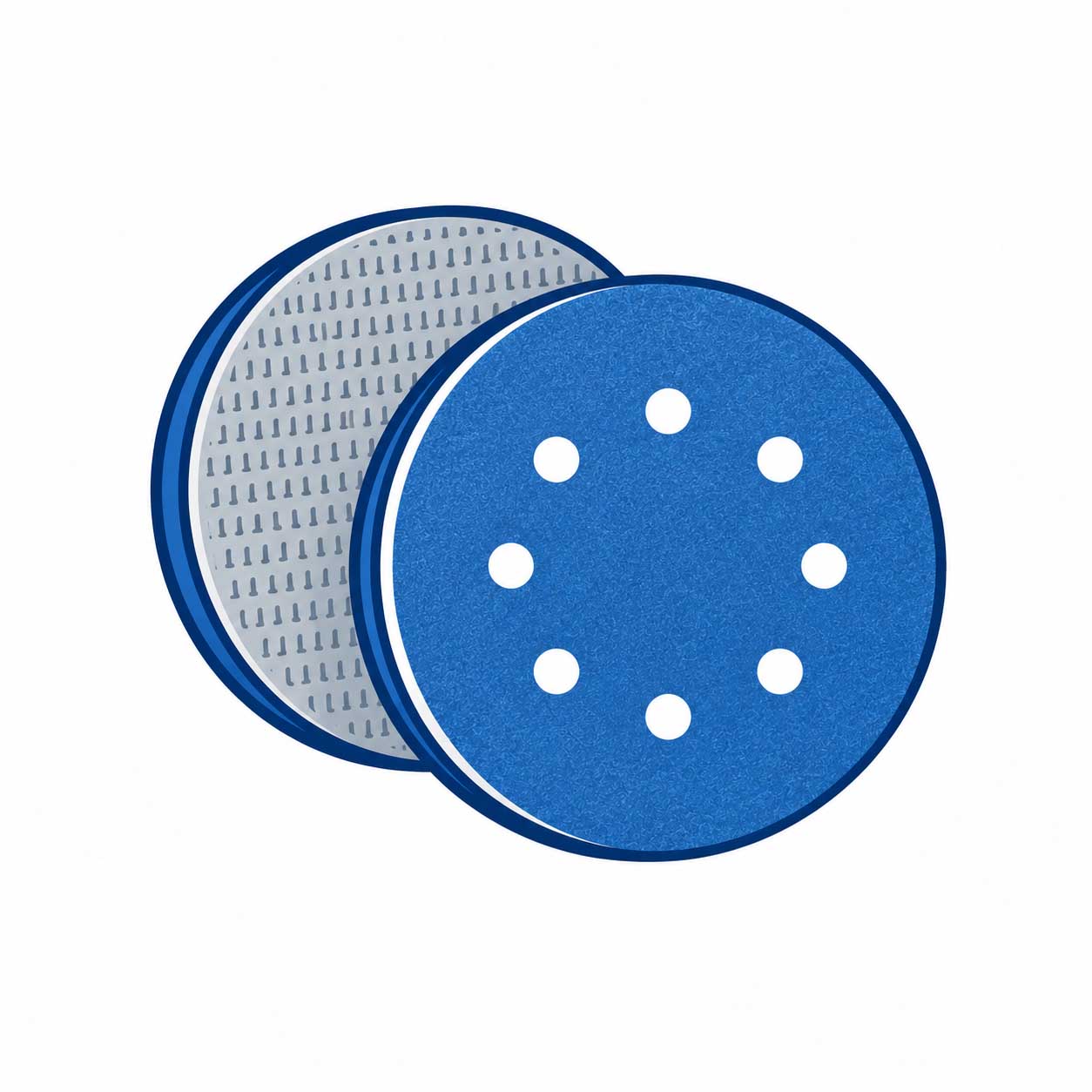
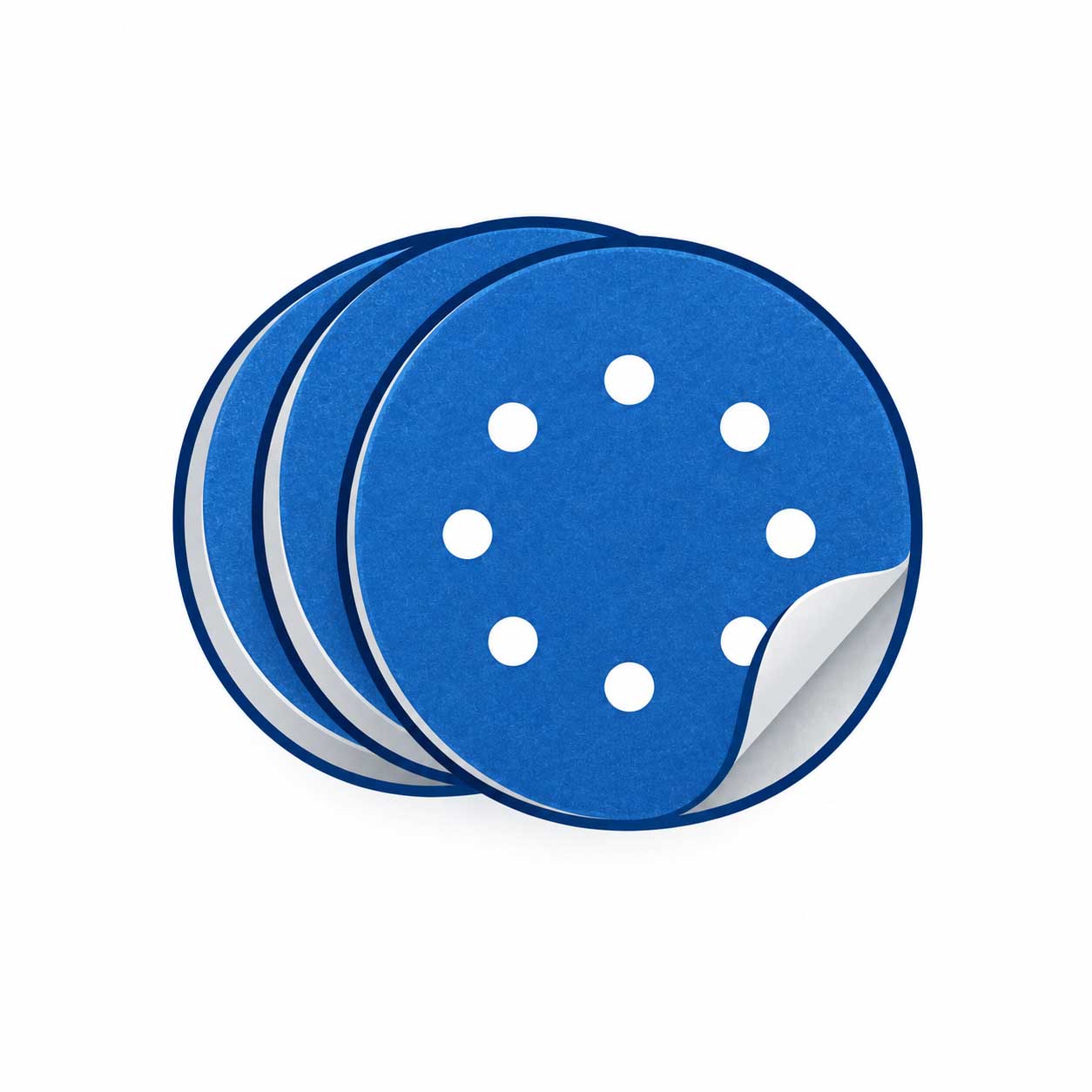
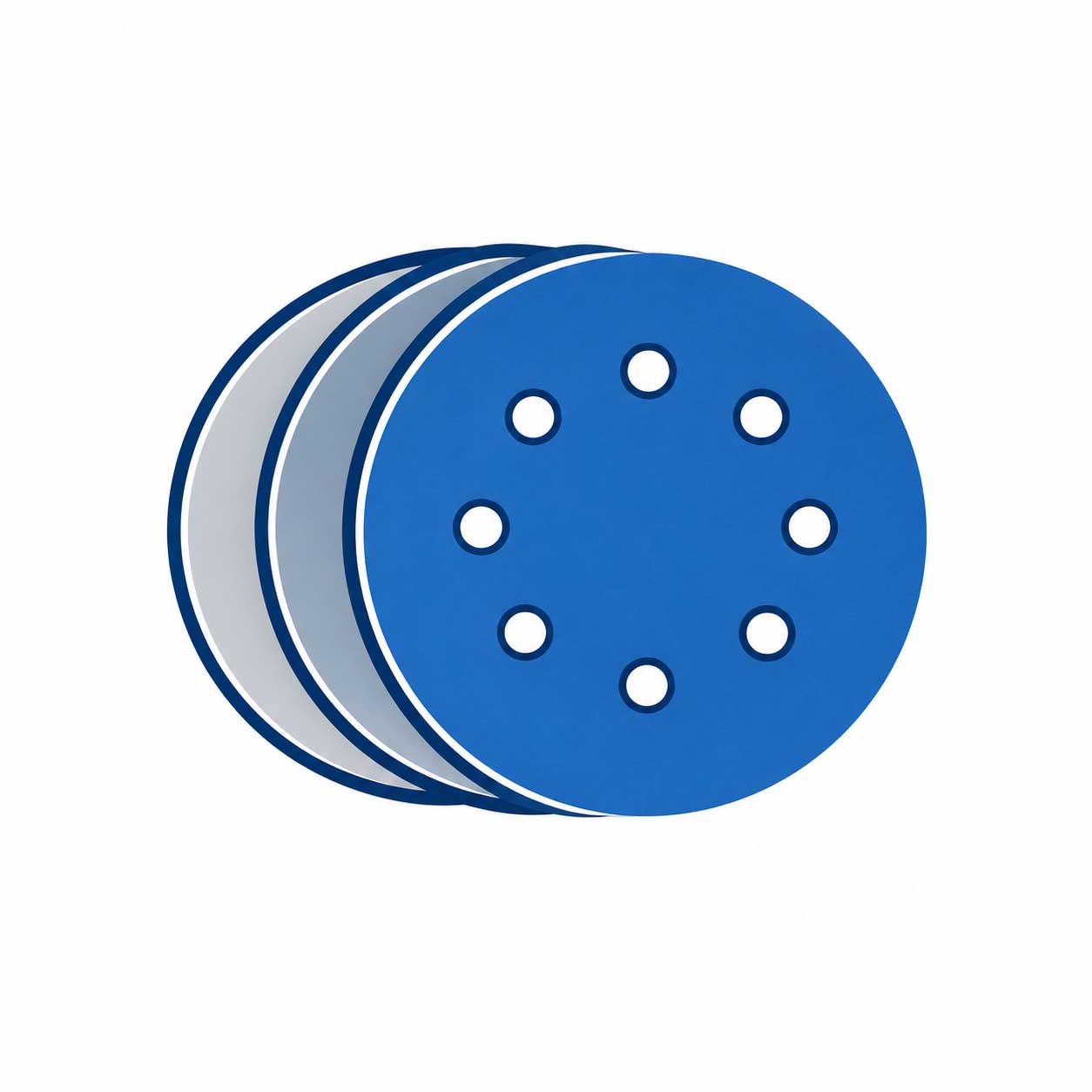
A multi-hole sanding disc starts with a conventional coated abrasive structure.
The backing may be:
Multiple extraction holes are then added across the disc.
Instead of relying on six or eight extraction points, a multi-hole pattern creates more paths for sanding dust to move from the work surface into the backing pad and dust extraction system.
Aozhong currently produces sanding discs with 6-hole, 8-hole, 15-hole, 17-hole, 41-hole, 49-hole, multi-hole, and cyclone-style patterns across different product structures.
The process is:
Sanding surface → extraction hole → backing pad → sander extraction channel → vacuum system
This means hole alignment matters.
If the holes in the sanding disc do not line up with the backing pad, part of the extraction path may be blocked.
Aozhong's sanding-disc hole-pattern guidance therefore recommends checking the backing pad before selecting the abrasive. If the pad uses a fixed hole pattern, the sanding disc should be selected around that configuration.

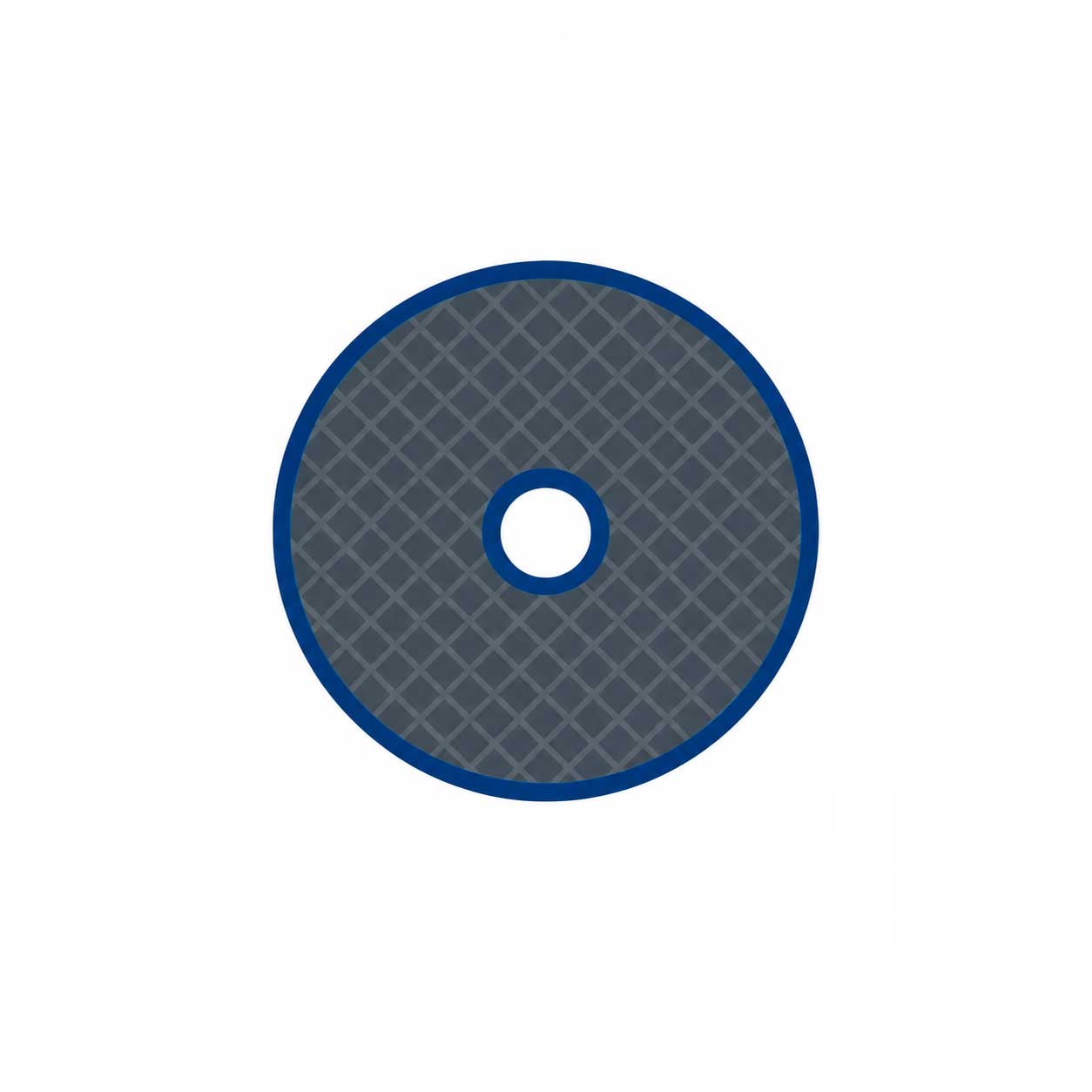
A mesh sanding disc works differently.
Instead of taking a closed paper or film backing and punching extraction holes into it, the backing itself has an open mesh structure.
Dust can move through many areas of the abrasive rather than depending on several fixed extraction holes.
This makes mesh abrasives particularly relevant when dust loading is one of the main sanding problems.
Aozhong's 150 mm mesh sanding discs, for example, use an open backing structure and Hook & Loop attachment and are positioned for primer sanding, paint preparation, coating refinement, and random orbital sanding.
The basic dust path is:
Sanding surface → open mesh structure → backing pad → extraction system
Because the abrasive surface itself is open, mesh discs are less dependent on matching a small number of individual holes.
However, they still need a suitable backing pad and working extraction system.
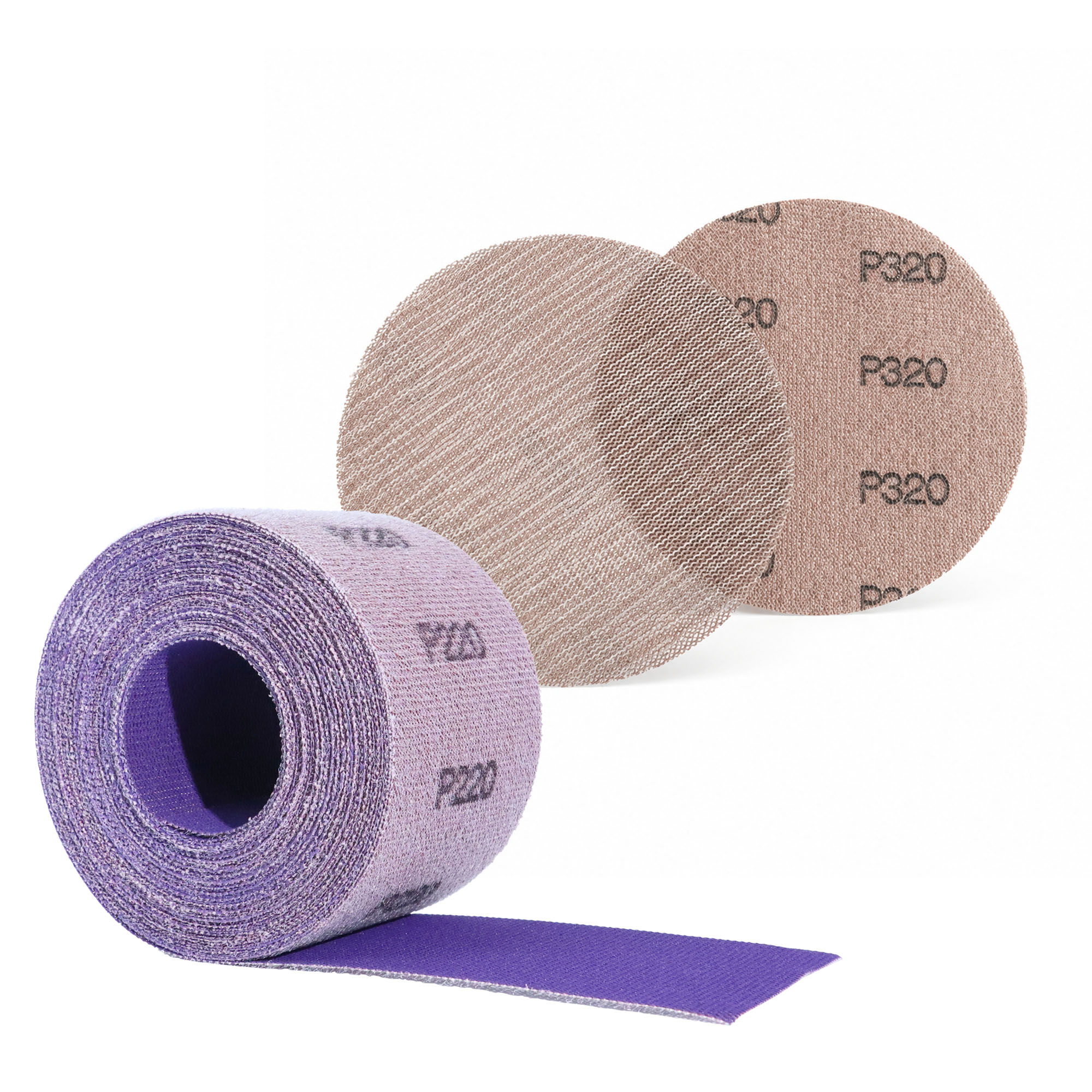
The main difference is the backing structure.
| Comparison | Multi-Hole Sanding Disc | Mesh Sanding Disc |
|---|---|---|
| Abrasive Structure | Coated abrasive with multiple holes | Abrasive on open mesh structure |
| Dust Path | Through fixed extraction holes | Through the mesh surface |
| Hole Alignment | Important | Less dependent on individual hole positions |
| Backing Options | Paper, film, and other coated abrasive backings | Mesh backing |
| Surface Support | More continuous backing area | Open structure |
| Dust Extraction | Designed for extraction systems | Designed around open dust flow |
| Body Filler Sanding | Suitable | Suitable |
| Primer Sanding | Suitable | Suitable |
| Fine Paint Preparation | Film multi-hole discs can be useful | Depends on required finish |
| Clogging Control | Improved through additional extraction holes | Open structure helps remove sanding dust |
| Pad Compatibility | Hole pattern should match backing pad | Still requires an extraction-compatible pad |
| Main Selection Question | Does the hole pattern match the tool? | Is dust loading the main problem? |
Neither structure is automatically better.
The right choice depends on the sanding stage.
Primer sanding is one of the most useful applications for this comparison.
Primer dust can build up on a sanding disc, especially when the material is not fully cured or when extraction is poor.
If loading is the main problem, mesh becomes worth considering.
If the customer also wants backing stability and a controlled coated-abrasive surface, a multi-hole film sanding disc may be the better direction.
Aozhong offers polyester film sanding discs with several extraction configurations, including 15-hole, 17-hole, 41-hole, 49-hole and cyclone formats. Film-backed products are used in automotive paint preparation and primer refinement, while multi-hole patterns provide dust extraction paths.
A simple way to understand the choice is:
Mesh focuses on open dust flow.
Multi-hole film discs combine dust extraction holes with a continuous film-backed abrasive surface.
For primer work, the final choice depends on whether the customer gives more priority to dust loading or to the abrasive backing and scratch pattern.
As the sanding process moves closer to paint, material removal becomes less important and scratch control becomes more important.
For example:
At the finer stages, buyers should not choose a sanding disc only because it removes more dust.
They should also consider:
Aozhong polyester film sanding discs are used for automotive paint surface preparation and primer refinement, making film-backed multi-hole products one option when both dust extraction and surface control are required.
For final paint preparation, always follow the technical data sheet for the primer, sealer, basecoat, or coating system being used.
This is where many sanding-disc selection problems begin.
A customer may ask:
“Should I buy a 15-hole, multi-hole, cyclone-hole, or mesh sanding disc?”
The first question should actually be:
“What backing pad are you using?”
Aozhong's hole-pattern selection guidance recommends matching fixed-hole sanding discs to the backing plate. A 6-hole pad should generally use a matching 6-hole disc, while multi-hole backing systems can use corresponding multi-hole or mesh-type products.
Before choosing a disc, confirm:
| Question | Why It Matters |
|---|---|
| What is the disc diameter? | Disc and pad must match |
| What hole pattern is on the backing pad? | Fixed holes need alignment |
| Is a dust extractor connected? | Determines whether extraction design is useful |
| What material is being sanded? | Filler and primer create different loading conditions |
| What grit range is used? | Coarse and fine sanding have different priorities |
| Does the customer use Hook & Loop? | Attachment must match the pad |
| Is the panel flat or curved? | Backing stiffness affects contact |
Common questions about mesh sanding discs, multi-hole sanding discs, dust extraction, body filler sanding, primer sanding, backing pad compatibility, and distributor product planning.
Not in every application. Mesh provides an open structure for dust extraction, while multi-hole discs maintain a coated abrasive backing with multiple extraction points. The better choice depends on the sanding stage, backing pad, and surface requirement.
Yes. Mesh sanding discs are suitable for high-dust applications such as body filler and primer sanding when used with a compatible extraction system.
Yes. Multi-hole paper or film sanding discs can be used for primer sanding, especially when the hole pattern matches the backing pad and extraction system.
No. Hole alignment, backing pad design, vacuum airflow, blocked extraction channels, and sanding technique all affect dust removal.
Not automatically. Disc diameter, Hook & Loop attachment, backing pad, and extraction system still need to be compatible.
It combines a film-backed coated abrasive surface with multiple dust-extraction paths. This can be useful when the process requires both dust control and surface refinement.
If customers include body shops with different sanding systems, stocking both allows the distributor to serve high-dust sanding users as well as customers who prefer paper or film coated abrasives.