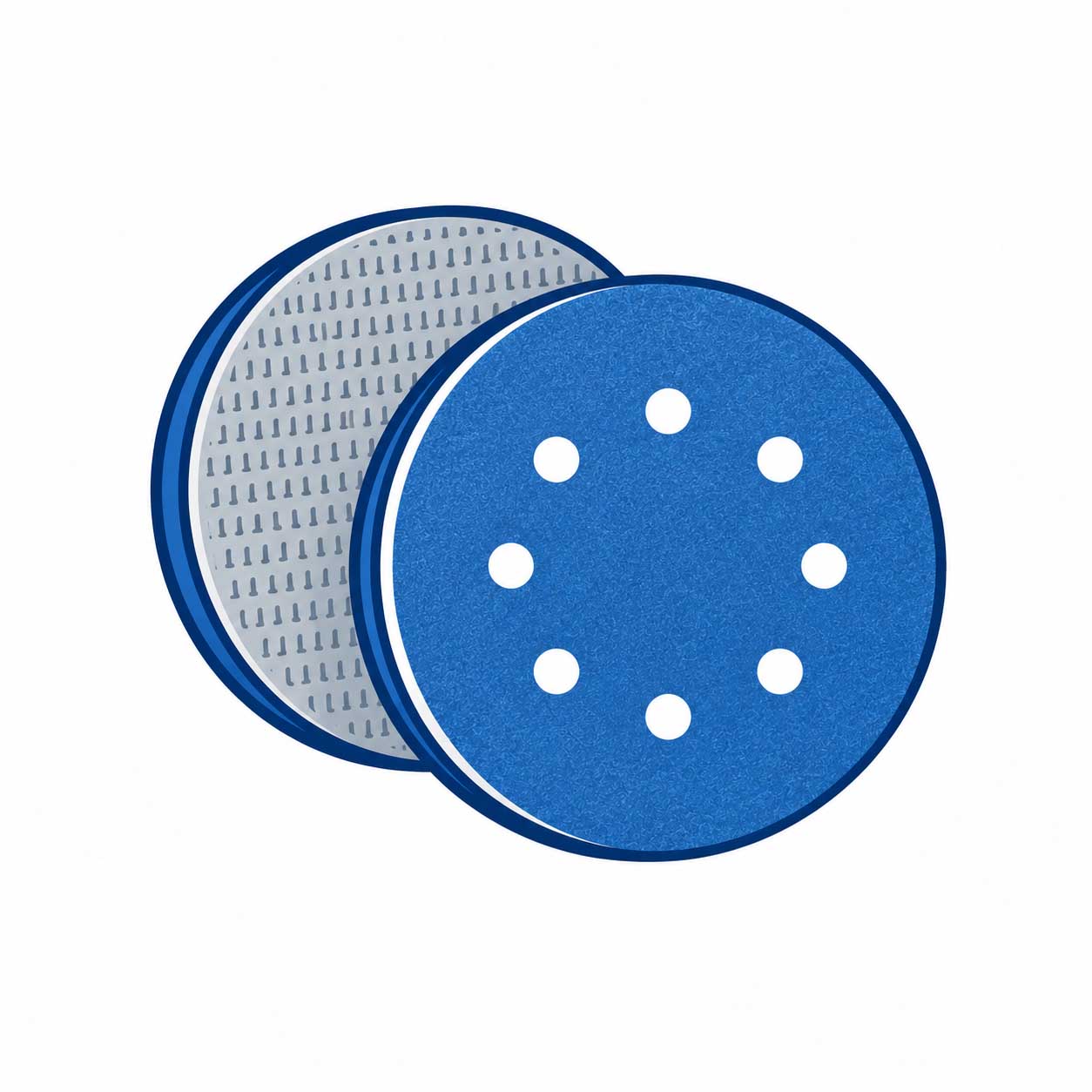
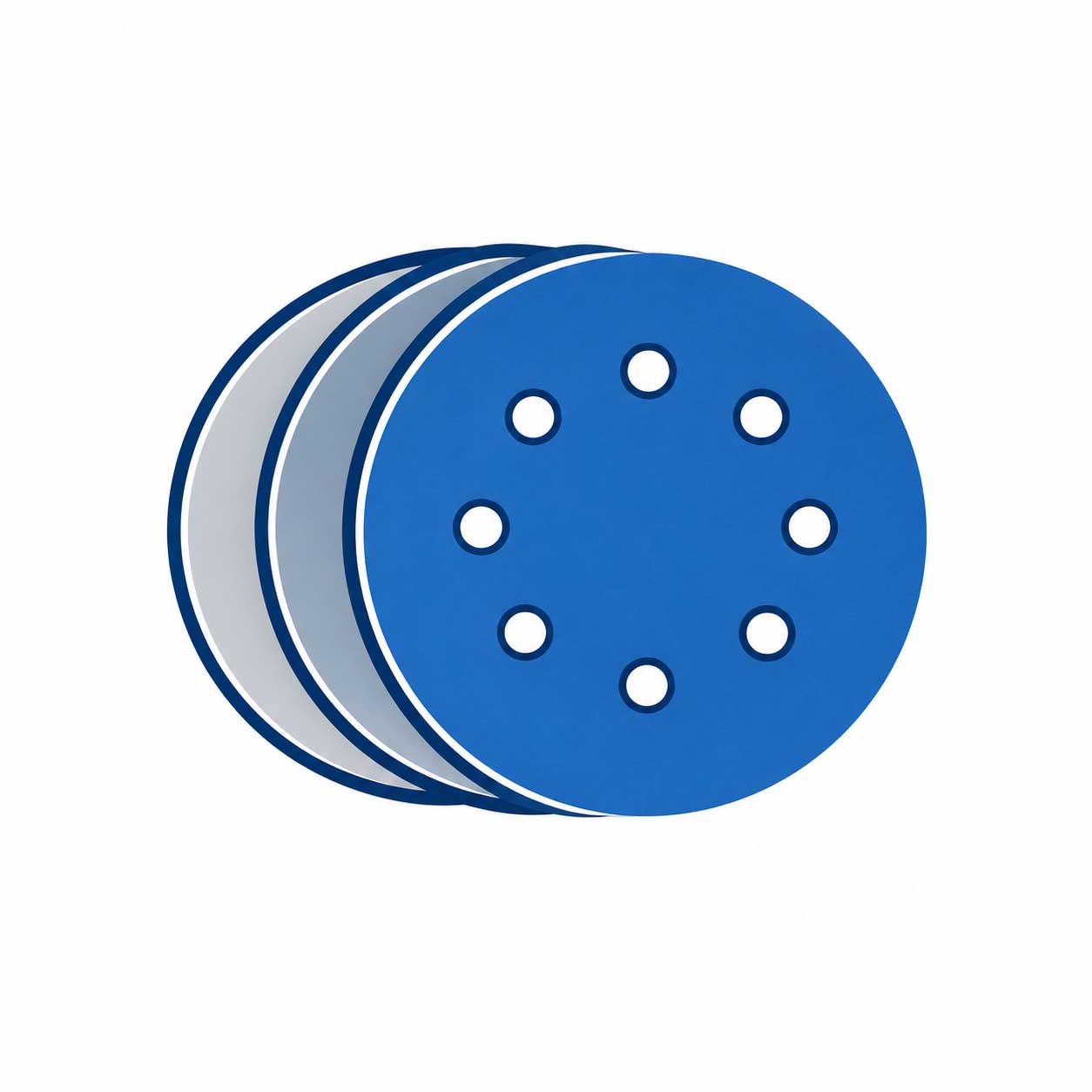
Automotive sanding discs are consumables, but high disc consumption is not always caused by poor abrasive quality.
In body filler sanding, primer preparation, old paint removal, and paint refinement, the life of a sanding disc is affected by the complete sanding process.
The wrong grit can make sanding slower. Poor dust extraction can cause early loading. Too much pressure can increase heat and abrasive wear. A worn backing pad can also reduce sanding efficiency.
For automotive body shops and abrasive buyers, the better question is not simply:
“How long does one sanding disc last?”
It is:
“How can we reduce sanding disc consumption while keeping the required surface finish?”
At Aozhong, we normally look at seven factors when selecting automotive sanding discs for different repair stages.
Using a grit that is too fine for the job can increase sanding time.
For example, trying to shape body filler with P240 instead of starting with a suitable coarse grit means the abrasive needs to work much longer to remove the same amount of material.
At the same time, using a grit that is too coarse can leave deep scratches and create more work in the next sanding stage.
A practical automotive grit progression may look like this:
| Automotive Sanding Stage | Common Grit Range | Main Goal |
|---|---|---|
|
01 Heavy Material Removal
|
P40–P80 | Remove coating or shape material |
|
02 Body Filler Shaping
|
P60–P80 | Establish repair shape |
|
03 Filler Refinement
|
P120–P180 | Remove coarse scratches |
|
04 Featheredge / Pre-Primer
|
P180–P320 | Refine repair area |
|
05 Primer Leveling
|
P320–P400 | Level primer texture |
|
06 Final Primer Preparation
|
P400–P600 | Prepare for the next coating |
|
07 Fine Paint Refinement
|
P800+ | Surface refinement |
These are general working ranges rather than universal rules. The final grit should follow the coating system and technical data sheet.
When the grit matches the job, the abrasive spends less time trying to remove material it was not designed to remove. A correct grit progression can therefore be more important than simply choosing a more expensive sanding disc.
One of the most common reasons a sanding disc stops cutting is loading.
This happens when sanding dust collects between the abrasive grains.
It is particularly common when sanding:
A loaded sanding disc may still have abrasive grain remaining, but much of the cutting surface is covered by dust.
The technician may then replace the disc before the abrasive itself is fully worn.
For high-dust applications, Aozhong Mesh Sanding Discs and Multi-Hole Sanding Discs can be considered because both structures are designed to improve dust movement away from the sanding surface.
A dust extraction sanding disc does not work alone.
The sanding system includes:
Sanding Disc → Backing Pad → Sander → Extraction Hose → Dust Collector
If one part of the system is restricted, dust removal may decrease.
For example, a multi-hole disc may have many extraction holes, but if most of those holes are blocked by the backing pad, the potential benefit is reduced.
This is why buyers should not select sanding discs only by the number of holes.
| Dust Extraction Product | Main Structure | Important Selection Point |
|---|---|---|
|
01 6-Hole Disc
|
Fixed extraction holes | Match 6-hole backing pad |
|
02 8-Hole Disc
|
Fixed extraction holes | Match pad layout |
| More extraction points | Confirm pad compatibility | |
| Distributed extraction pattern | Match extraction pad | |
| Open backing structure | Use compatible extraction system |
Aozhong offers conventional hole patterns, multi-hole structures, cyclone-style designs, and mesh sanding products for different automotive sanding systems.
For distributors, asking customers about their backing pad before recommending a disc can prevent many compatibility problems.
Many operators press harder when a sanding disc begins to cut more slowly.
This does not always solve the problem.
Too much pressure may:
The sanding machine and abrasive should do most of the cutting.
If a technician needs to press much harder to maintain cutting performance, check:
Replacing the real cause is usually more effective than increasing pressure.
Not every sanding stage needs the same backing.
A paper disc, film disc, mesh disc, and foam-backed abrasive may use the same grit number but behave differently.
| Backing Type | Suitable Automotive Use | Main Reason to Select |
|---|---|---|
|
01 Paper
|
Filler, primer and general sanding | Cost-effective general use |
|
02 Polyester Film
|
Primer refinement and paint preparation | Stable backing and controlled surface contact |
|
03 Mesh
|
High-dust filler and primer sanding | Open dust extraction structure |
|
04 Foam
|
Curves, edges and fine sanding | Follows panel contours |
A common mistake is using one product structure for every stage because it simplifies inventory.
That can sometimes increase consumption instead.
For example, a foam-backed abrasive is useful on curves, but it is not the first choice for aggressive flat-panel leveling.
Likewise, fine film sanding discs are useful during primer and paint refinement, but using them for heavy body filler shaping may not be economical.
The backing should follow the task.
The backing pad is often overlooked when body shops evaluate abrasive performance.
A worn pad can change how the sanding disc contacts the panel.
Common problems include:
These problems can cause uneven sanding and may make the technician change discs more often.
A firmer backing pad provides more support during leveling.
A softer interface is useful when sanding curves and contours.
Using the wrong pad can make a good abrasive behave poorly.
For this reason, sanding disc evaluation should always include the machine and backing pad, not only the abrasive itself.
One of the easiest ways to reduce abrasive waste is to stop looking for a single “universal sanding disc.”
Different automotive repair stages create different requirements.
A practical product combination might look like this:
| Sanding Requirement | Product Direction |
|---|---|
|
01 Body Filler Shaping
|
Coarse Paper / Ceramic Sanding Disc |
|
02 General Filler Refinement
|
Hook & Loop Sanding Disc |
|
03 High-Dust Filler Sanding
|
Mesh or Multi-Hole Sanding Disc |
|
04 Primer Leveling
|
Paper or Multi-Hole Sanding Disc |
|
05 Primer Refinement
|
Polyester Film Sanding Disc |
|
06 Curved Panels and Edges
|
Foam Sanding Disc |
|
07 Fine Paint Preparation
|
Film or Fine Foam-Backed Abrasive |
This is also how Aozhong approaches automotive abrasive selection.
The purpose of having Paper, Film, Mesh, Multi-Hole, Foam, Hook & Loop, and PSA products is not to make the sanding process more complicated.
Each structure solves a different problem.
For distributors, this also creates a clearer product line because every product has a defined application instead of several similar SKUs competing for the same customer.
Wholesale buyers often compare sanding discs by price per piece.
But body shops should also consider cost per sanding job.
For example: