Primer sanding is one of the most important preparation stages in automotive refinishing.
Body filler may already be shaped correctly, but the surface is still not ready for paint. Primer surfacer needs to be leveled, previous sanding marks need to be refined, and the final surface needs to match the requirements of the next coating layer.
This creates a common question for body shops and abrasive buyers:
What sanding disc should be used for automotive primer sanding?
The answer should not be based on grit alone.
A P400 paper sanding disc, P400 film sanding disc, and P400 mesh sanding disc all have the same grit designation, but they do not provide exactly the same sanding structure or workflow.
At Aozhong, we look at primer sanding through four main factors:
Grit → Backing → Dust Extraction → Surface Requirement
Understanding these four factors makes it easier to select automotive sanding discs for both repair shops and wholesale product programs.
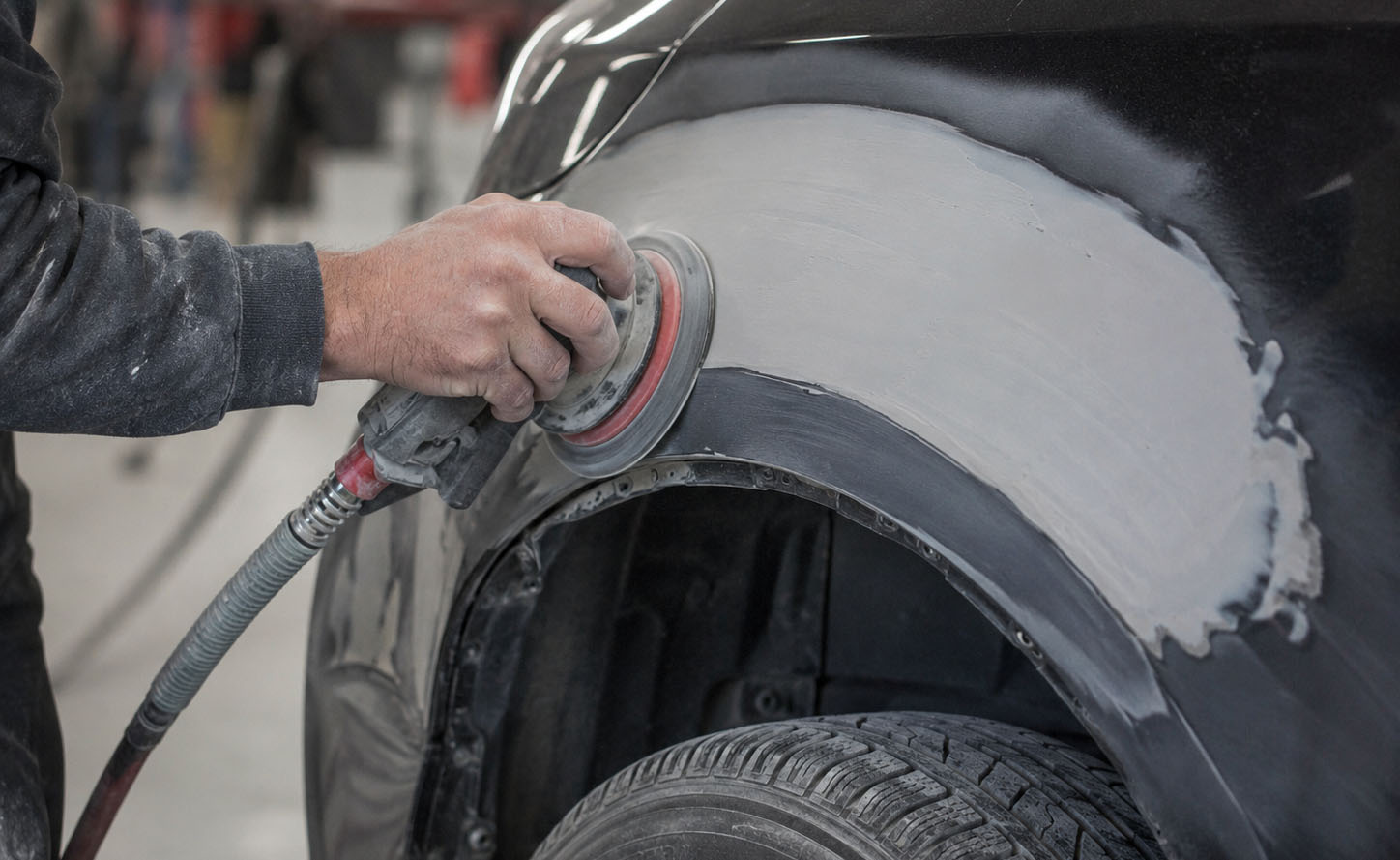
The main purpose is to create a controlled surface for the next refinishing stage.
Depending on the repair process, primer sanding may need to:
A guide coat can also be used during primer leveling to help identify low spots, remaining scratches, pinholes, and surface texture.
The sanding disc therefore has two jobs:
remove what should not remain and leave a surface suitable for the next coating.
This is why simply choosing the finest available grit is not the correct approach.
Primer sanding normally involves more than one grit stage.
A practical starting range for many automotive refinishing processes is shown below. The final grit should always follow the primer, sealer, basecoat, or paint manufacturer's technical data sheet.
| Primer Sanding Stage | Common Grit Range | Main Purpose | Typical Abrasive Direction |
|---|---|---|---|
| Initial Primer Leveling | P320–P400 | Reduce primer texture and level minor defects | Paper, film or multi-hole sanding disc |
| Scratch Refinement | P400–P500 | Remove marks from previous sanding | Film sanding disc |
| Final Preparation Before Paint | P500–P600 | Create a more controlled scratch pattern | Film or fine automotive sanding disc |
| Edges and Curves | P600–P800 where specified | Reduce cut-through risk and follow panel shape | Foam-backed abrasive |
| High-Dust Primer Sanding | P320–P600 | Improve dust removal and reduce loading | Mesh or multi-hole sanding disc |
Aozhong's current automotive sanding guidance also uses P320–P400 as a common primer-leveling range and P400–P600 as a common final-preparation range for many coating systems.
These numbers are working references rather than universal rules. Primer hardness, film build, paint color, basecoat system, sanding method, and repair size can all change the required final grit.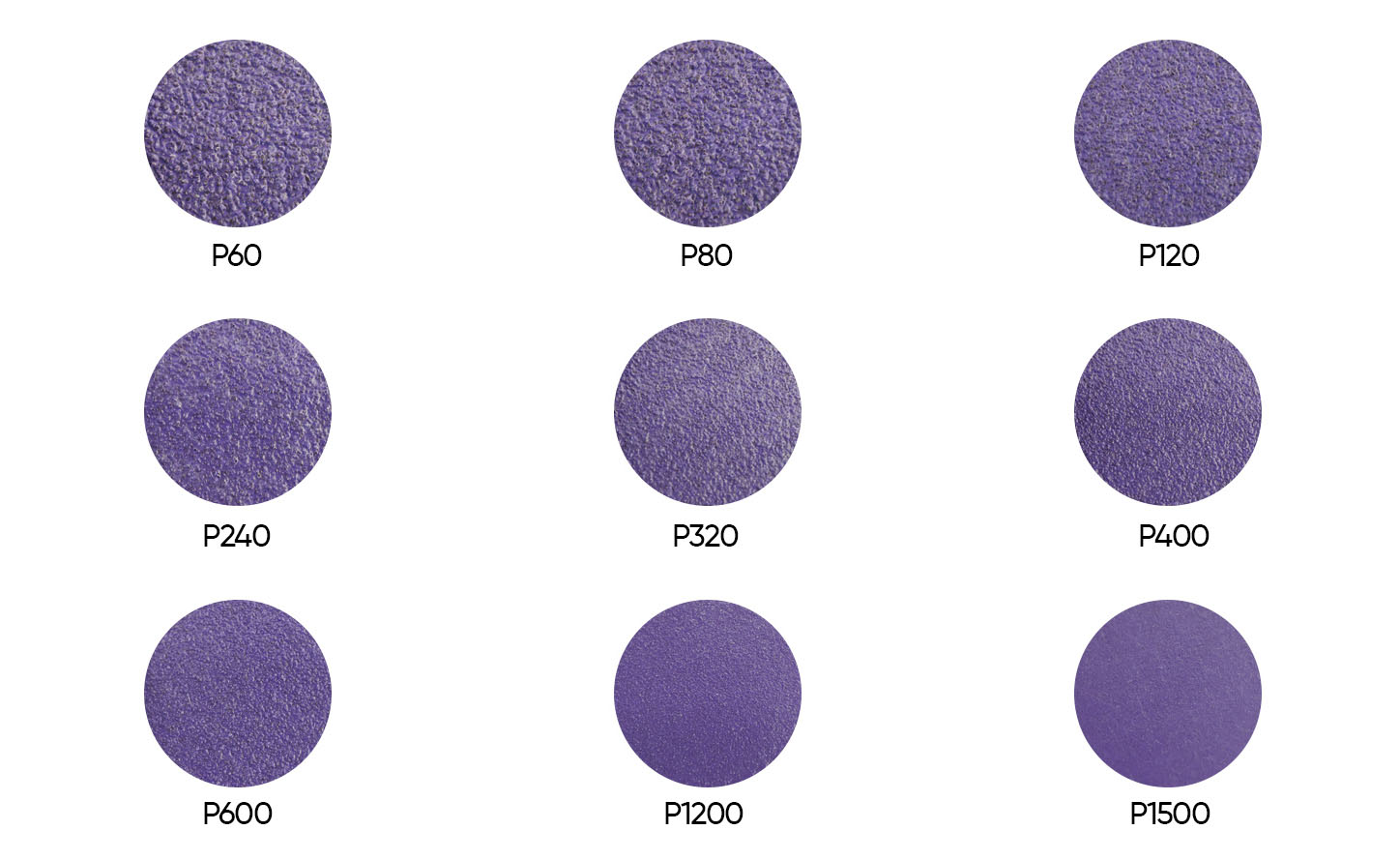
Suppose primer leveling starts with P320.
Moving directly from P320 to a very fine grit may make the surface feel smoother, but it does not guarantee that the P320 scratch pattern has been removed.
A safer sanding sequence may look like:
P320 → P400 → P500 → P600
Not every repair requires every step, but the basic rule is useful:
Each grit should remove the scratch pattern left by the previous stage.
If scratches remain under the basecoat or clear coat, they may become visible after painting.
For automotive sanding, grit progression should therefore be based on scratch removal rather than simply reaching the highest grit number.
Backing material has a direct effect on how a sanding disc behaves.
Paper and polyester film are two common choices for automotive primer sanding.
| Comparison | Paper Sanding Disc | Film Sanding Disc |
|---|---|---|
| Backing | Abrasive paper | Polyester film |
| General Primer Sanding | Suitable | Suitable |
| Initial Leveling | Good | Good |
| Fine Primer Refinement | Suitable | Often preferred |
| Backing Stability | Standard | Higher dimensional stability |
| Tear Resistance | Depends on paper grade | Generally stronger |
| Fine Scratch Control | Good | Useful for controlled finishing |
| Cost Position | Usually lower | Usually higher |
| Typical Position | General-purpose sanding | Refinement and paint preparation |
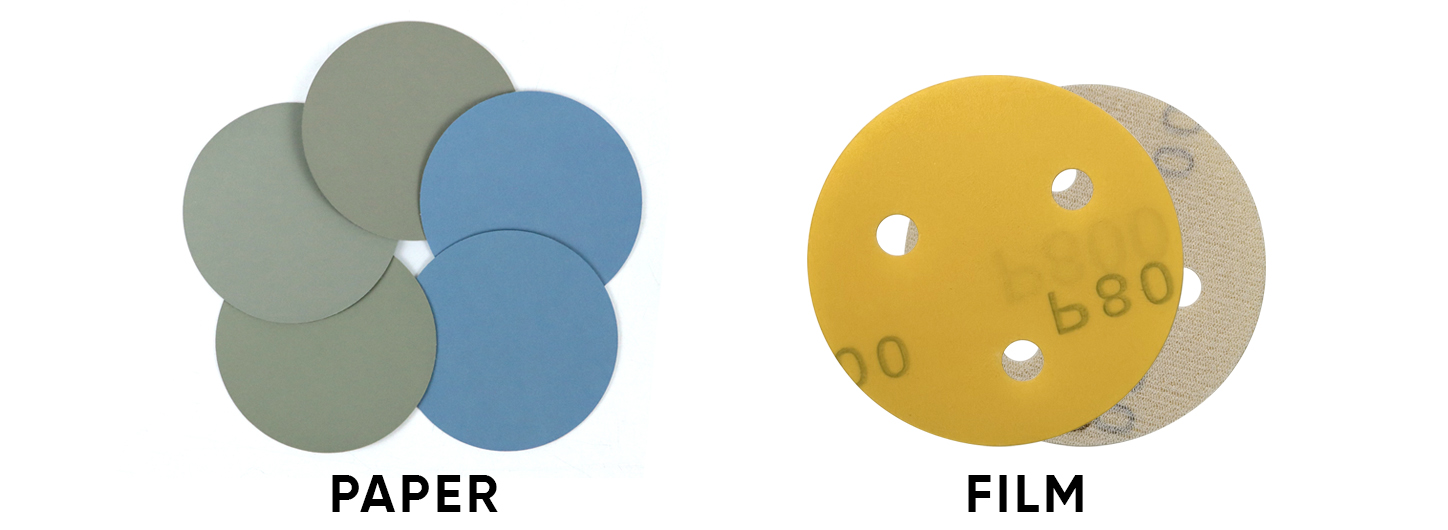
Paper-backed sanding discs are useful for general automotive primer work.
They are especially practical when:
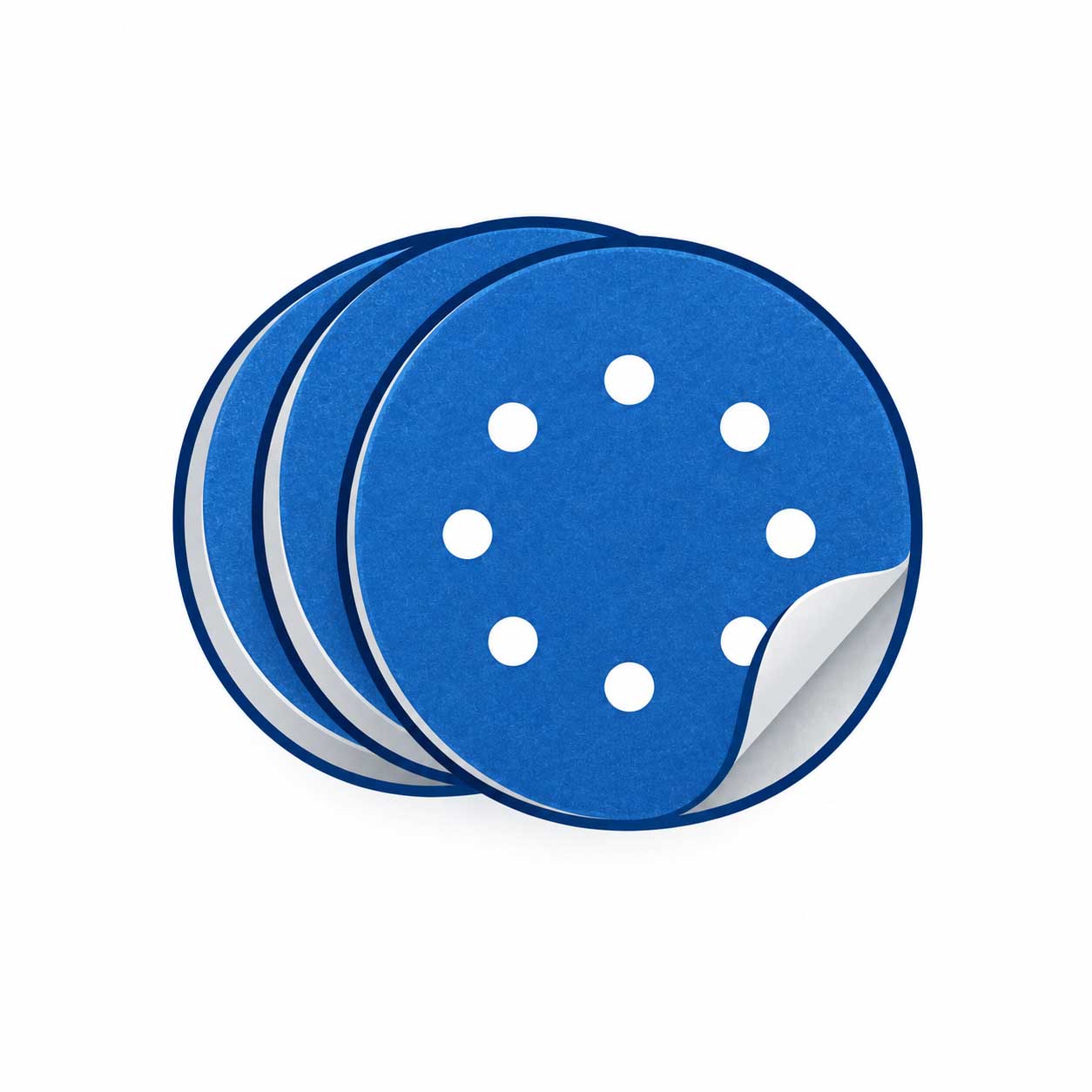
Aozhong currently supplies a 150 mm paper-backed aluminum oxide Hook & Loop sanding disc series covering coarse through fine grades and supporting several custom extraction-hole patterns.
For distributors, paper-backed sanding discs can form the basic primer sanding range.
Polyester film backing becomes useful as the process moves toward finer primer preparation.
Film provides a stable abrasive backing and can help maintain more consistent contact during surface refinement.
Typical applications include:
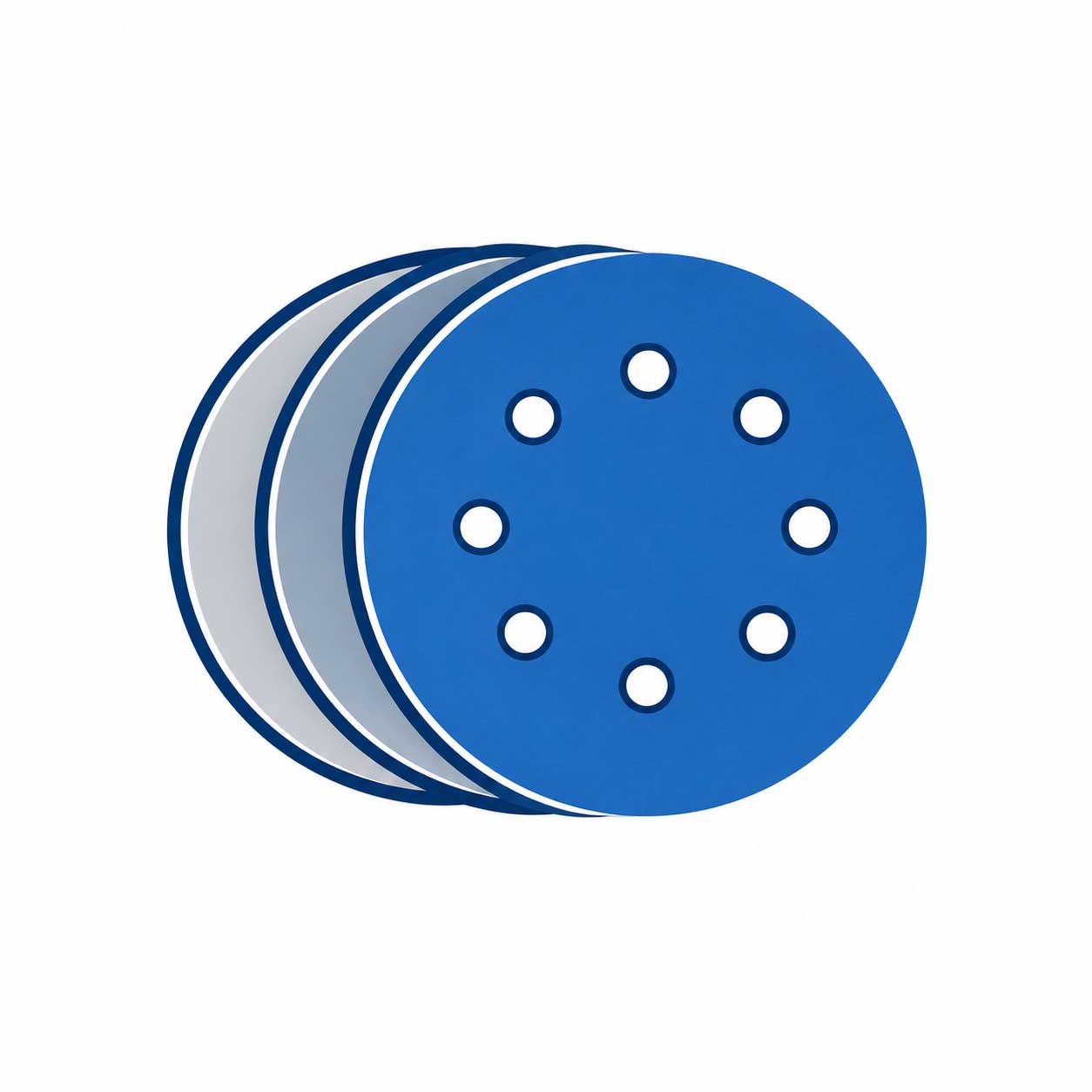
Aozhong's current film range includes polyester film Hook & Loop sanding discs for automotive primer, paint, and clear-coat sanding, with custom grit and hole-pattern options available for B2B programs.
A simple selection rule is:
Paper is a practical general sanding option.
Film becomes more important when surface refinement and backing stability become priorities.
Automotive primer can produce a large amount of fine sanding dust.
When dust remains between the abrasive and primer surface, it can contribute to loading and reduce cutting efficiency.
This is why hole pattern matters.
Traditional automotive sanding discs may use:
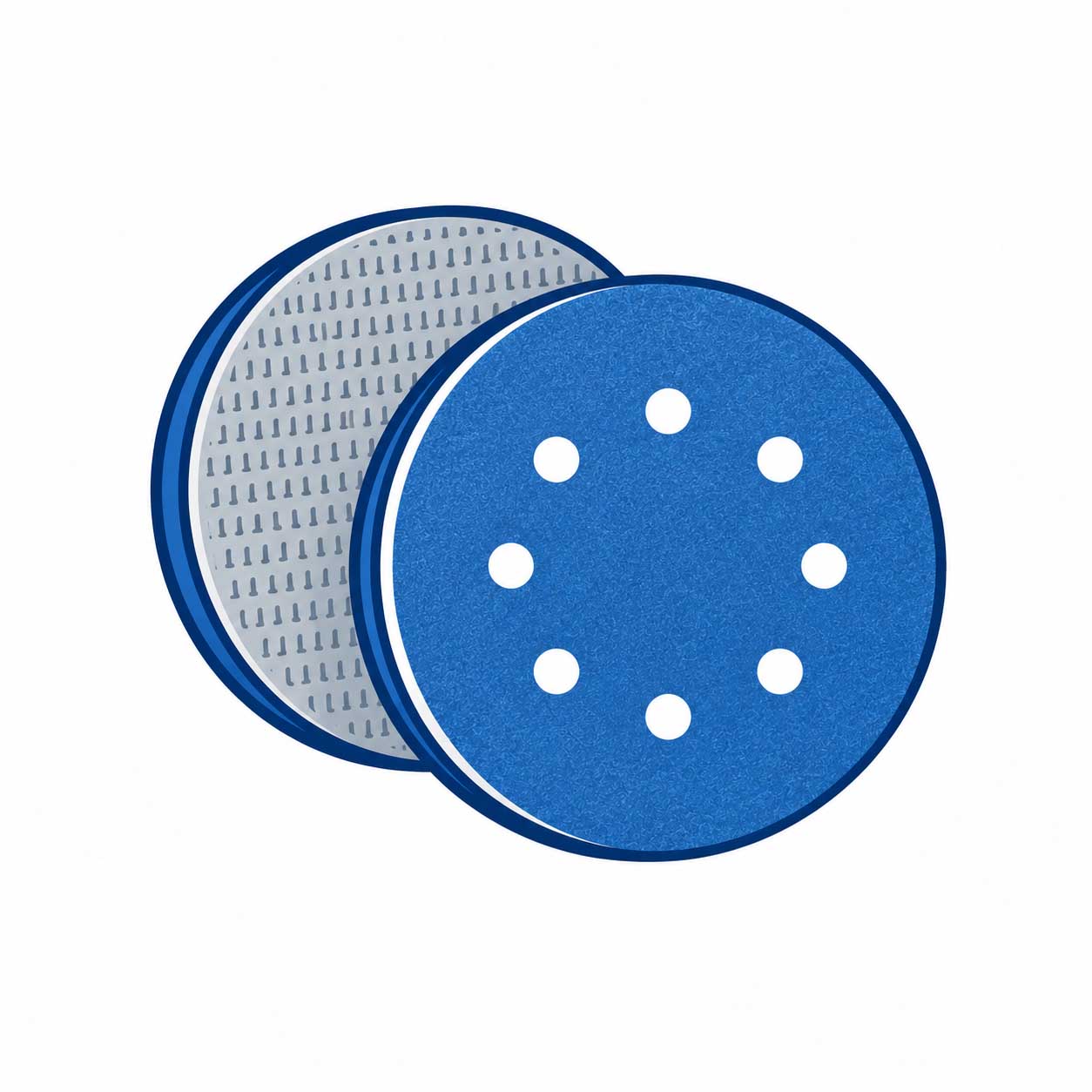
Multi-hole sanding discs provide more extraction paths across the abrasive surface.
The sanding process becomes:
Primer Surface → Sanding Disc Holes → Backing Pad → Extraction Channel → Dust Collector
However, more holes do not automatically guarantee better dust extraction.
The disc needs to match:
A multi-hole disc placed on an incompatible backing pad may block part of the extraction path.
For B2B buyers, the backing-pad drawing or sample should therefore be confirmed before ordering a custom hole pattern.

Mesh sanding discs approach dust control differently.
Instead of punching individual extraction holes through a paper or film backing, mesh uses an open backing structure.
This means sanding dust can move through much of the disc surface.
Aozhong's current mesh sanding disc range is designed for dust-extraction applications including primer sanding, putty sanding, coating preparation, and automotive repair. Current options include different disc sizes and abrasive-grain configurations.
Mesh can be useful when:
However, mesh is not automatically better than film or paper for every primer stage.
As the process approaches final paint preparation, the buyer may care more about:
That is why professional automotive abrasive systems often use more than one sanding-disc structure.
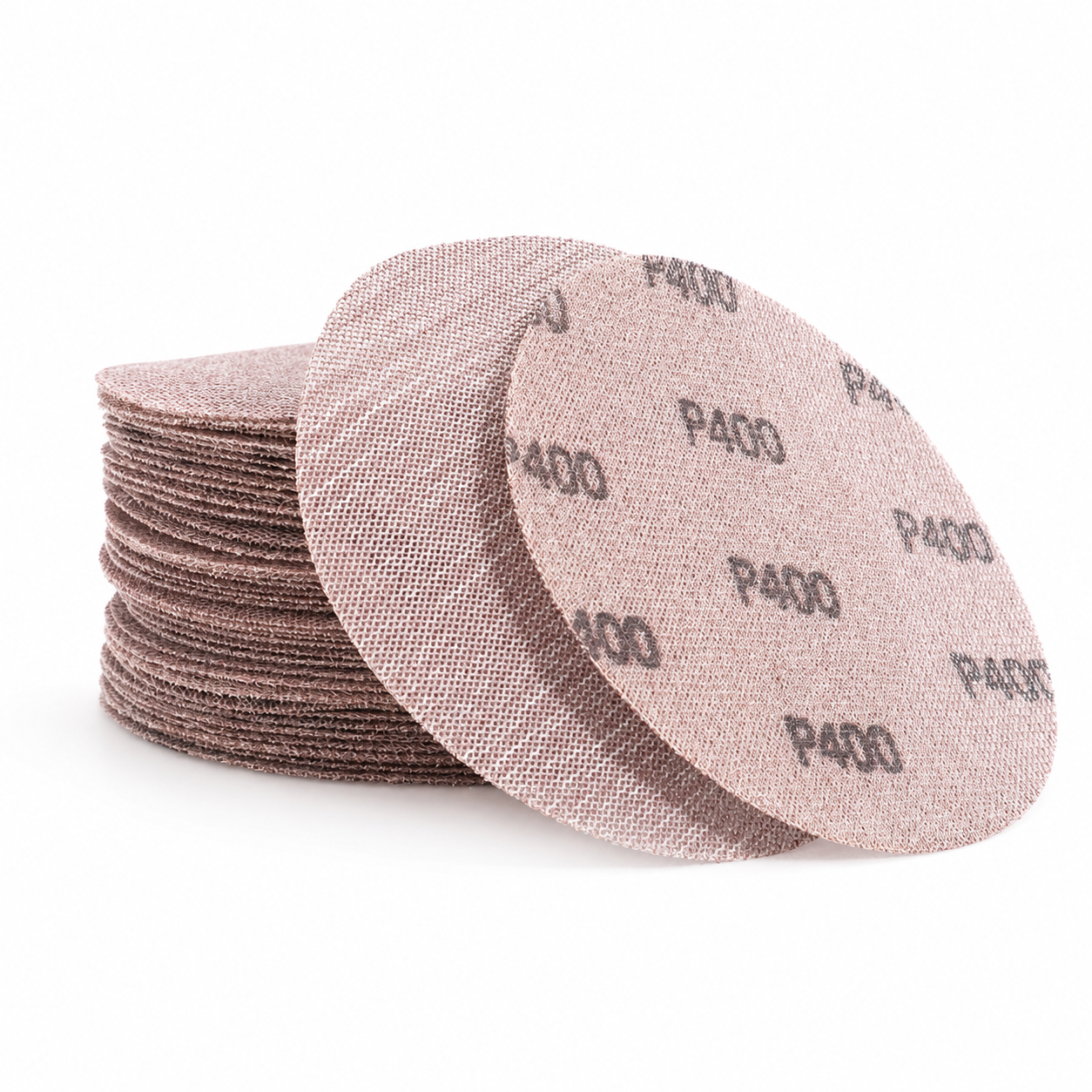
This is one of the most useful comparisons for automotive buyers.
| Selection Factor | Mesh Sanding Disc | Multi-Hole Film Sanding Disc |
|---|---|---|
| Backing Structure | Open mesh | Continuous polyester film with holes |
| Dust Extraction | Through open structure | Through extraction holes |
| Fixed Hole Alignment | Less dependent on individual holes | Hole pattern should match backing pad |
| Dust-Heavy Primer Work | Strong application | Strong application |
| Surface Support | Open structure | Continuous film support |
| Primer Leveling | Suitable | Suitable |
| Fine Primer Refinement | Depends on finish requirement | Strong application |
| Paint Preparation | Depends on process | Common application direction |
| Main Selection Priority | Dust transfer / loading control | Dust extraction + surface refinement |
The easiest way to understand the difference is:
Mesh focuses strongly on open dust flow.
Multi-hole film combines dust extraction with a continuous film-backed abrasive surface.
Neither one needs to replace the other.
Automotive panels are not completely flat.
Bumper corners, fenders, body lines, edges, and spot repairs require abrasives that can follow the shape of the panel.
A firm paper or film disc may concentrate pressure on a small area if the surface curves sharply.
Foam-backed abrasives add a compliant layer between the abrasive surface and the backing pad.
This helps distribute sanding pressure.
Aozhong currently offers 3-inch automotive refinishing foam sanding discs across fine grit ranges for primer sanding, spot repair, contour sanding, clear-coat work, and pre-polishing preparation.
Foam-backed sanding discs are useful for:
They should not replace a firm sanding block when the objective is to level a large flat panel.
Both methods exist, but they should not be treated as interchangeable.
Dry sanding works well with:
It also allows the technician to see the sanding process without introducing water to the repair.
For many body-shop workflows, dry sanding is the more practical primer-sanding method.
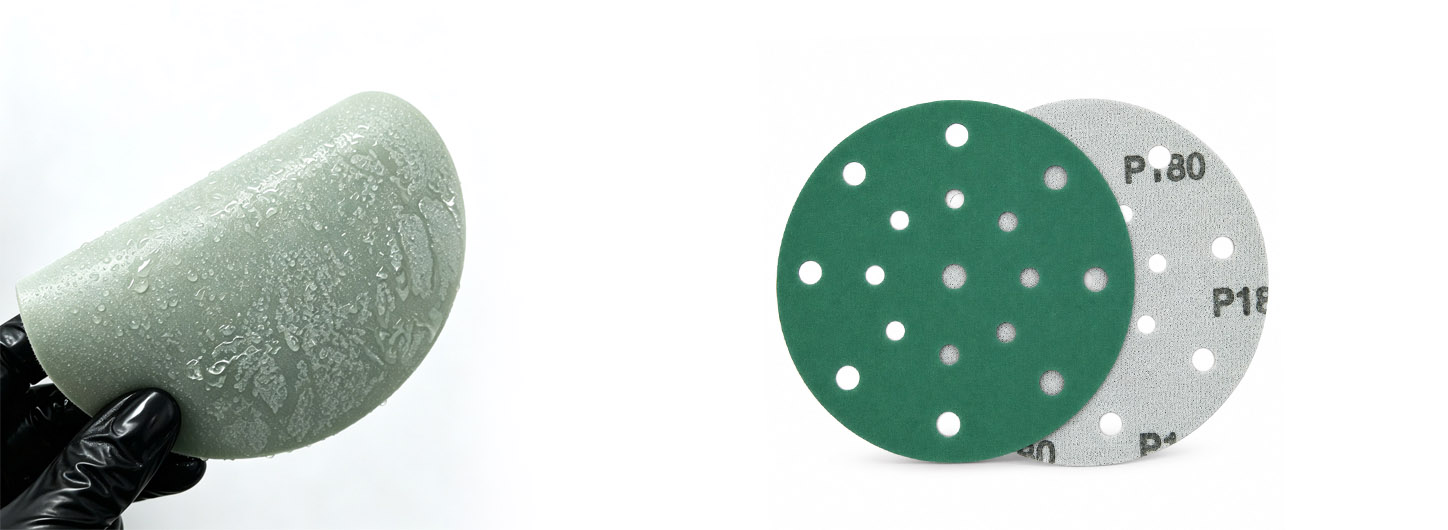
Some primer systems allow wet sanding.
Wet sanding can help control loose sanding residue and may be used during finer preparation, but the primer and complete abrasive system must be suitable for water exposure.
Aozhong also offers wet-and-dry Hook & Loop abrasive products for automotive primer, paint, clear-coat, and finishing applications.
Before wet sanding primer, confirm:
Do not assume every paper, film, or PSA abrasive is waterproof.
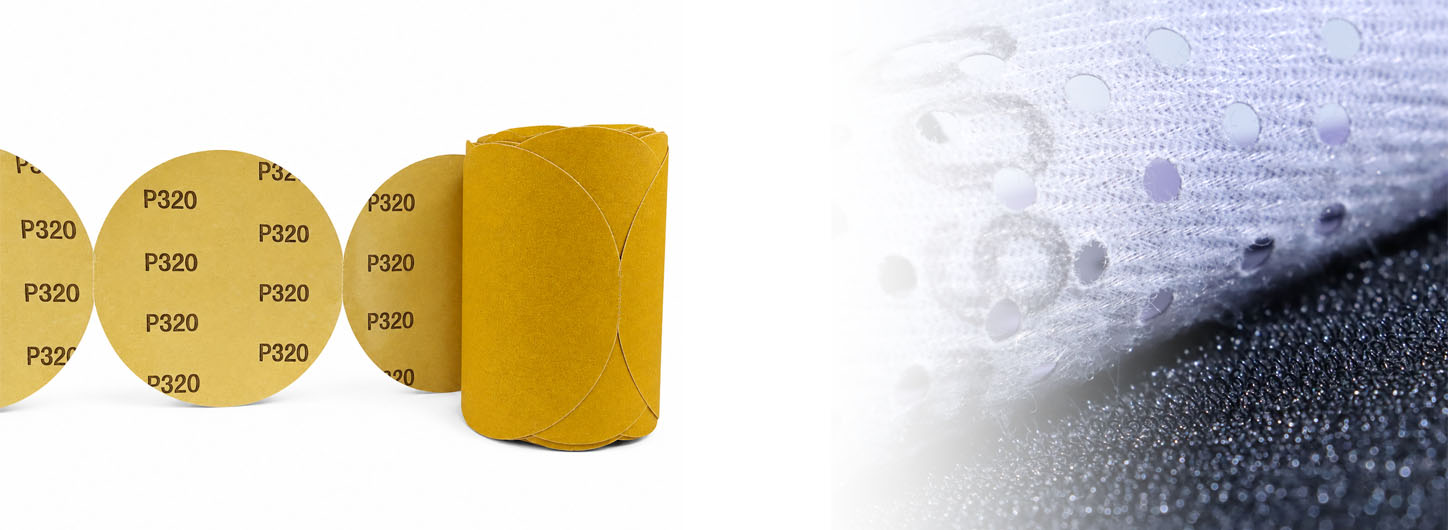
The attachment system also affects workflow.
| Comparison | Hook & Loop | PSA |
|---|---|---|
| Attachment | Mechanical hook backing | Pressure-sensitive adhesive |
| Grit Change | Fast | Slower |
| Reusing Partially Used Disc | Often possible | Usually limited |
| Multi-Step Primer Sanding | Convenient | Less convenient |
| Long Single-Grit Stage | Suitable | Suitable |
| Sanding Block Use | Available | Useful |
| Typical Primer Workflow | P320 → P400 → P500/P600 | Longer fixed-grit sanding stage |
Instead of asking only “What grit do I need?”, identify the problem first.
| Primer Sanding Problem | What to Check | Product Direction |
|---|---|---|
| Primer Texture | Grit and backing firmness | P320–P400 paper or film |
| Disc Loads Quickly | Dust extraction and primer cure | Mesh / multi-hole disc |
| Deep Previous Scratches | Grit progression | Return to suitable intermediate grit |
| Uneven Panel | Sanding method and block firmness | Firm block / controlled backing |
| Fine Random Scratches | Abrasive contamination or worn disc | Fresh film / fine abrasive |
| Edge Cut-Through | Pressure and backing stiffness | Foam-backed fine abrasive |
| Poor Dust Extraction | Pad and hole alignment | Correct multi-hole system or mesh |
| Surface Too Coarse Before Paint | Final grit selection | Film disc at coating-specified grit |
A complete primer sanding range does not need to use one abrasive structure.
Different products can be assigned to different stages.
| Primer Sanding Requirement | Aozhong Product Direction | Typical Grit Direction |
|---|---|---|
| General Primer Leveling | Paper Hook & Loop Sanding Disc | P320–P400 |
| Primer Dust Control | Mesh Sanding Disc | P320–P600 |
| Dust-Controlled Coated Abrasive | Multi-Hole Sanding Disc | P320–P600 |
| Primer Refinement | Polyester Film Sanding Disc | P400–P600 |
| Fine Paint Preparation | Film Sanding Disc | P500–P800 |
| Curves and Edges | Foam Sanding Disc | P600–P1000+ |
| Spot Repair | 3-Inch Film / Foam Disc | According to repair stage |
| Approved Wet Sanding | Wet & Dry Sanding Disc | According to coating system |
Aozhong's current automotive abrasive range includes paper-backed Hook & Loop discs, polyester film sanding discs, open mesh abrasives, foam-backed products, wet-and-dry discs, and customizable dust-extraction configurations.
The purpose of having several structures is not to make primer sanding more complicated.
It is to allow each abrasive to solve a different sanding problem.
Common questions about sanding grit selection, paper, film, mesh and foam abrasive discs for automotive primer preparation.
P320–P400 is commonly used for initial primer leveling, while P400–P600 is common for final preparation in many automotive paint systems. Always check the coating manufacturer's technical data sheet.
Yes, P400 is commonly used for primer refinement and can be part of the transition toward final paint preparation. Whether it is the final grit depends on the paint system.
P600 is commonly used as a final primer-preparation grit in many systems, but it is not universal. Some coatings require a different scratch profile.
Yes. Polyester film sanding discs are useful for primer refinement and paint preparation where backing stability and scratch control are important.
Yes. Mesh abrasives are useful when primer dust and abrasive loading are major concerns, especially with compatible dust-extraction equipment.
Mesh uses an open backing that allows dust to pass through the abrasive surface. Multi-hole discs use extraction holes punched through a coated paper or film backing.
Many body shops dry sand primer because it works well with guide coat and dust extraction. Wet sanding may be used when the primer system allows it. Follow the primer manufacturer's instructions.
Possible causes include poor dust extraction, sanding before the primer is fully ready, excessive pressure, abrasive structure, or a clogged extraction system.
Paper works well for general primer sanding and cost control. Film becomes more useful during refinement and paint preparation where backing stability is important.
Yes. Foam-backed discs are useful on curves, edges, bumpers and other shaped areas. They are not the first choice for leveling large flat panels.