












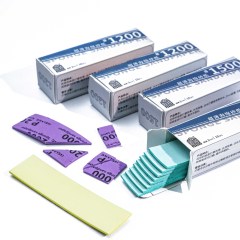
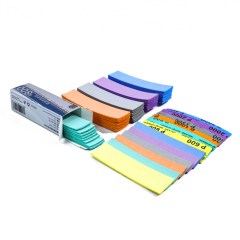


Flexible Foam Backing
Approximately 2 mm foam backing follows curves and shaped surfaces.
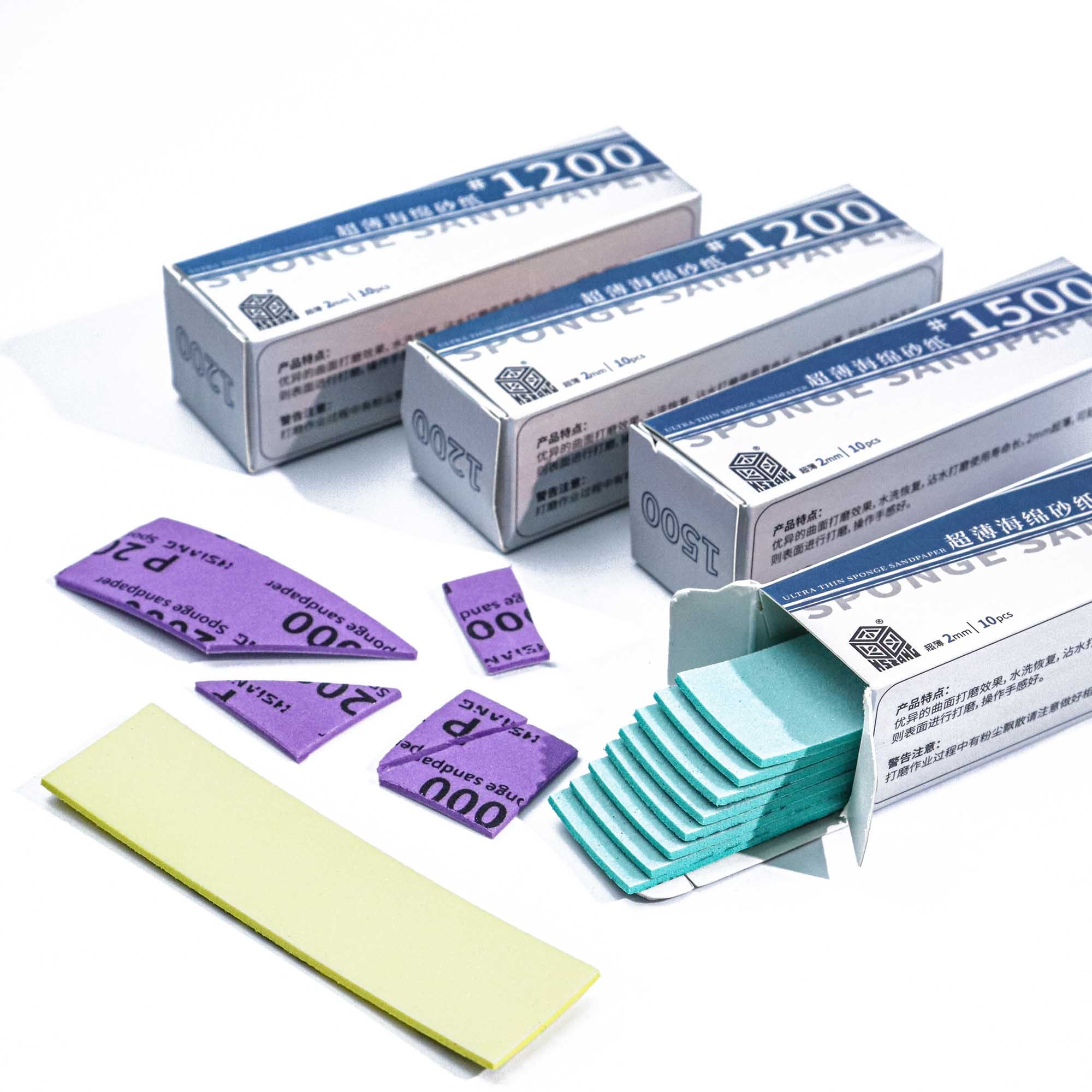
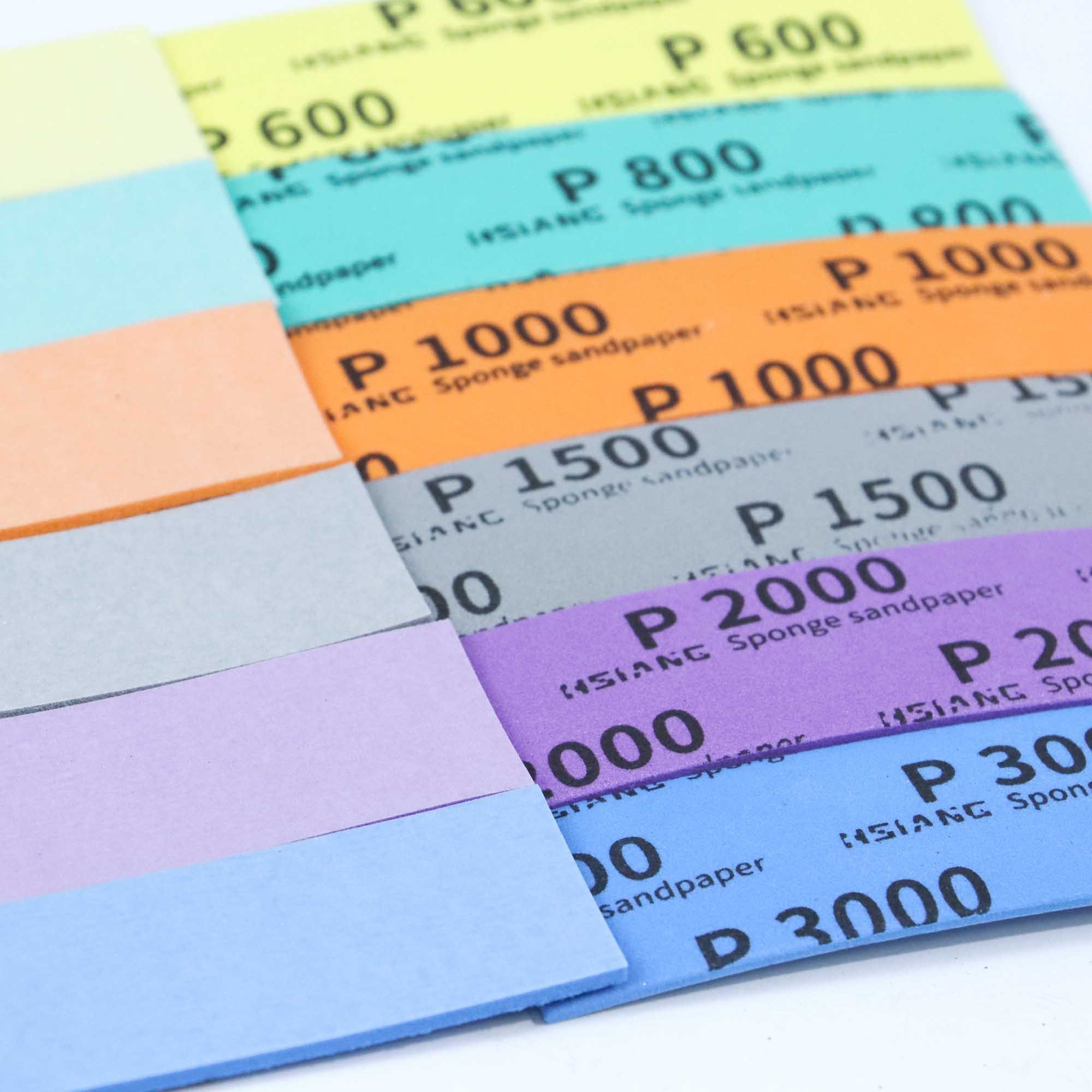

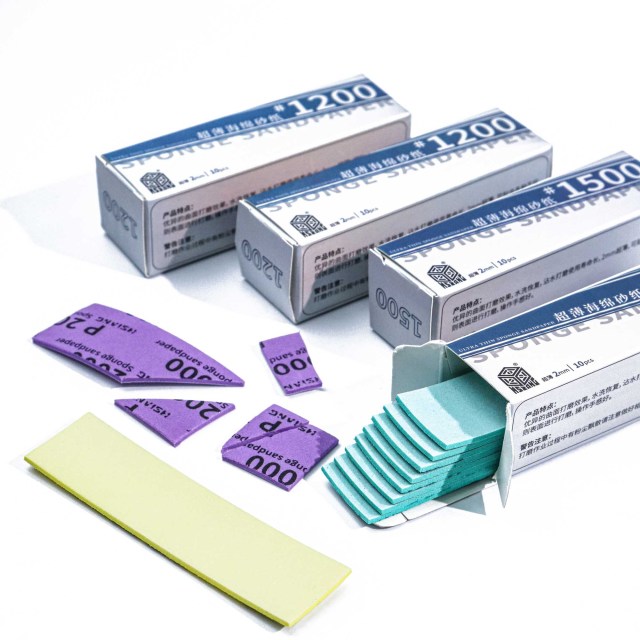
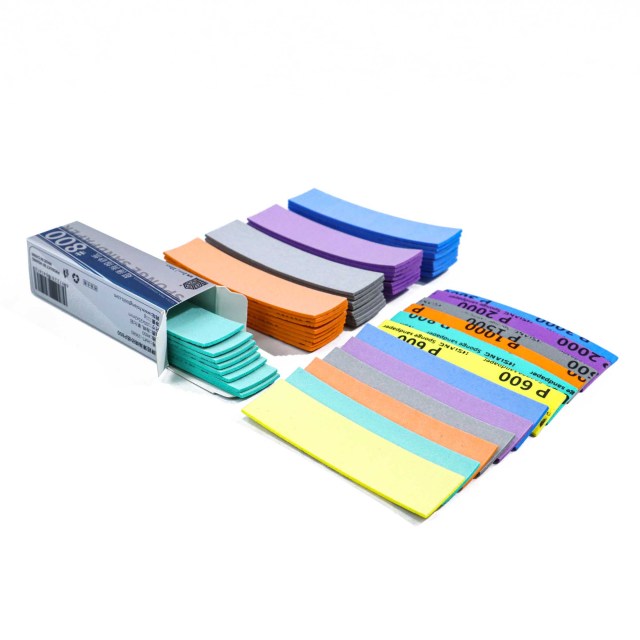


Foam-backed abrasive sheets for hand sanding model kits, figures, resin parts, miniatures, and 3D-printed components.
Aozhong Ultra Thin Foam Backed Sandpaper for Model and Figure Finishing is designed for hand sanding on curved surfaces, edges, contours, and detail areas.
The product combines an abrasive surface with an approximately 2 mm foam backing. The foam follows the workpiece profile and distributes hand pressure across the sanding area. It is used for removing mold lines, refining gate marks, leveling putty, sanding primer, and preparing painted surfaces for the next finishing step.
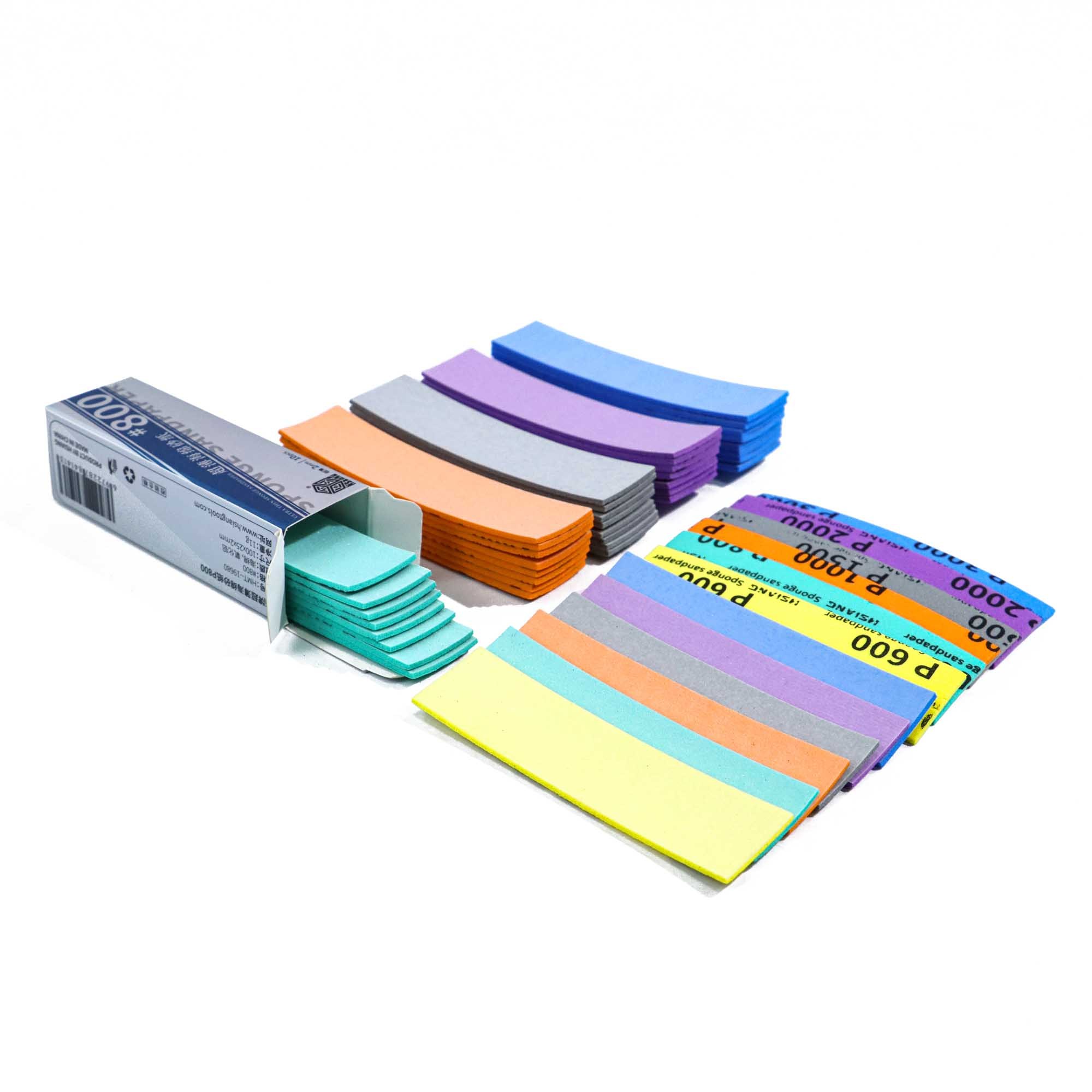
The available grit sequence shown for this product is P600, P800, P1000, P1500, P2000, and P3000. These grades cover the process from surface refinement to pre-polishing preparation.
Aozhong manufactures foam-backed sandpaper through abrasive material selection, laminating, cutting, grit marking, inspection, and packing. Size, grit assortment, color identification, printing, and packaging can be configured for distributors, model-tool suppliers, and volume users.
Flexible rectangular abrasive strips for multi-step contour sanding, surface refinement and workstation use.
Approximately 2 mm foam backing follows curves and shaped surfaces.
The available grit sequence supports multi-step sanding and progressive scratch refinement.
Rectangular strips can be used as supplied or cut into smaller pieces for detailed work.
Rounded corners reduce edge lifting during manual sanding and contour contact.
Surface markings support grit identification and process control at the workstation.
Foam construction distributes hand pressure when sanding curves, contours and shaped components.
Suitable for dry sanding and water-assisted sanding, subject to the confirmed product specification.
Grade colors support product sorting, workstation identification and stock control.
The product is supplied in 10-piece boxes as shown in the packaging configuration.
Size, grit combination, printing, color and packaging can be configured for OEM orders.
Process confirmation: Wet-use suitability depends on the abrasive coating, foam, adhesive, printing and other materials defined in the approved product specification.
Flexible foam-backed sanding strips for models, resin parts, 3D prints and fine coating preparation.
| Application Area | Typical Sanding Tasks | Application Guidance |
|---|---|---|
|
01
Figure and Garage Kit Finishing Detailed and curved components
|
|
The foam backing distributes pressure and follows curved figure surfaces. Select the grit according to the depth of the mold line, repair or surface mark. |
|
02
Scale Model Sanding Plastic and miniature parts
|
|
Use controlled pressure on thin sections, raised details and sharp edges. The strip can be cut into smaller pieces for localized sanding. |
|
03
Resin Part Finishing Cured cast and repaired parts
|
|
Use only on fully cured resin. Control sanding pressure and dust, and confirm the grit sequence on a sample before processing detailed parts. |
|
04
3D Print Post-Processing Printed-component refinement
|
|
Suitable for cured 3D-printed components. Excessive pressure or sanding speed can generate heat and change the surface of some plastics and resins. |
|
05
Primer and Coating Preparation Fine surface refinement
|
|
Fine grades can be used before painting or polishing. Test an inconspicuous area before sanding painted or coated parts. |
Test before production use. Material hardness, curing condition, part geometry, pressure and sanding method can change the resulting scratch pattern and surface finish.
Aozhong supplies abrasive products for distributors, private-label programs, model-tool suppliers, workshops and volume users.
| Production Stage | Manufacturing Controls | Control Purpose |
|---|---|---|
|
01
Material Configuration Abrasive and foam selection
|
|
Establishes the abrasive type, grit range, foam response and operating method required for the target sanding process. |
|
02
Lamination and Inspection Layer construction control
|
|
Controls layer adhesion, thickness tolerance, flexibility and pressure response during hand sanding. |
|
03
Product Conversion Size and shape processing
|
|
Confirms that strip dimensions, corners and edges comply with the approved drawing or control sample. |
|
04
Identification and Assortment Grit and color management
|
|
Supports workstation identification, grit-sequence control, inventory sorting and mixed-grade product sets. |
|
05
Packaging and OEM Supply Distribution-order support
|
|
Supports batch identification, private-label programs, product presentation and distributor shipping requirements. |
The confirmed specification provides a reference for production, outgoing inspection and buyer incoming inspection.
Information about samples, production consistency, OEM packaging, water-assisted sanding and repeat-order verification.
Yes. Samples can be prepared according to the selected grit, thickness, dimensions and packaging requirement. For repeat orders, the approved sample can be used together with the confirmed specification as the production reference.
Production control can cover incoming materials, lamination, thickness, cutting dimensions, grit marking, surface condition, packaging quantity and batch identification. Buyers should include required tolerances and inspection criteria in the purchase specification.
Yes. OEM options include product dimensions, grit assortment, foam color, surface printing, box design, label information, quantity per pack and shipping-carton configuration.
The packaging indicates water-assisted sanding and cleaning use. The permitted soaking time, cleaning method and water-resistance requirement should be confirmed in the order specification before production use. Material compatibility should also be tested on the workpiece.
Confirm the product code, P-grit, dimensions, thickness tolerance, foam hardness, abrasive grain specification, wet-use requirement, print, pack quantity and approved sample. Retaining the batch number and incoming inspection record supports repeat-order comparison.


