Wooden doors and cabinet components go through several sanding stages before painting, staining, or clear coating.
The same abrasive is not suitable for every step. Large flat panels need efficient leveling, MDF creates fine dust, veneer needs careful material control, and routed edges or decorative profiles require more flexible contact.
A practical abrasive selection method is:
Material → Sanding Stage → Surface Shape → Dust Requirement → Final Finish
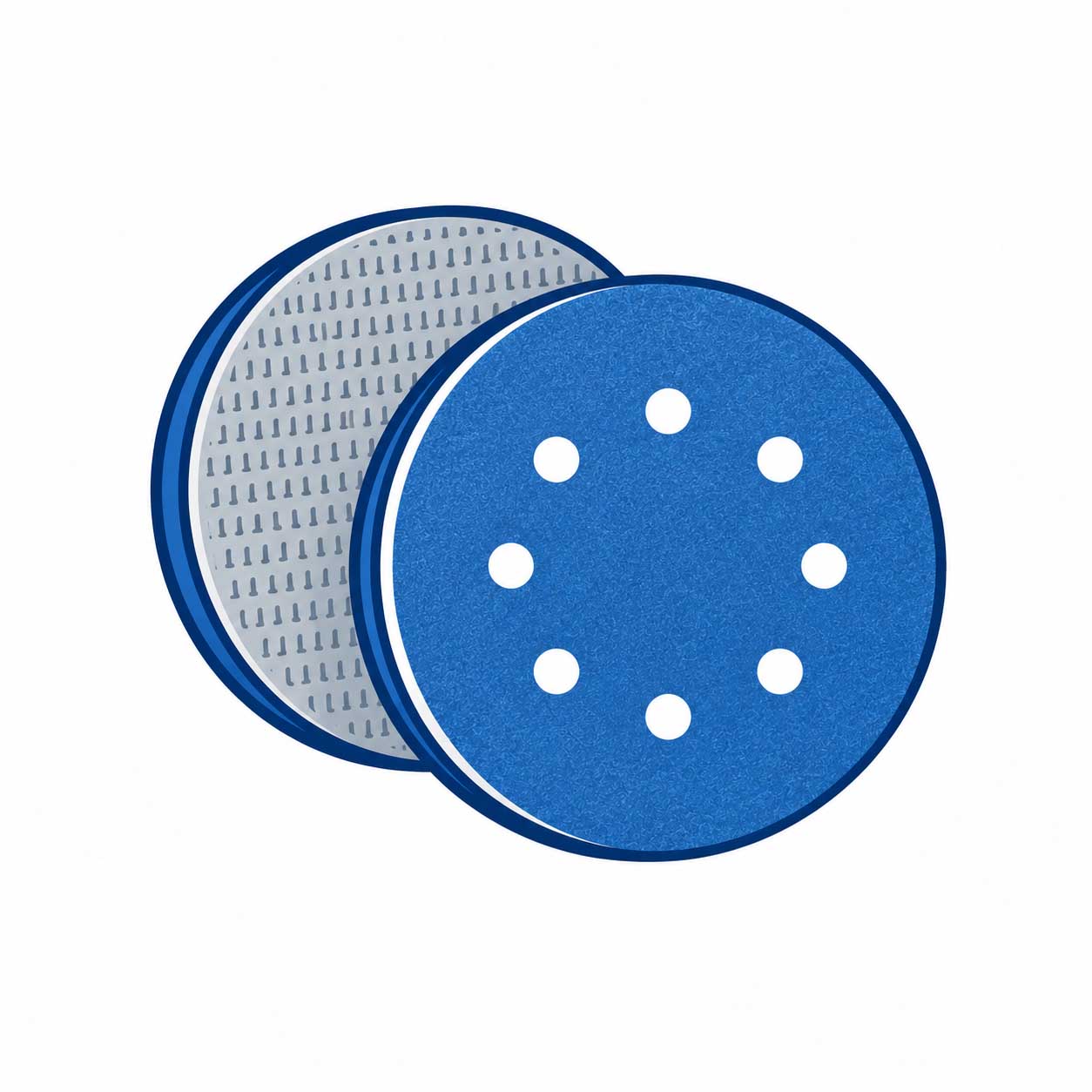
Aozhong provides Abrasive Belts, Hook & Loop Sanding Discs, Mesh Sanding Discs, Sanding Rolls, Sanding Sheets, Sanding Sponges, Foam Abrasives, and fine finishing products for different woodworking processes.
The goal is not to use the most aggressive abrasive.
The goal is to remove only what is necessary and leave the wood ready for the next finishing stage.
Door and cabinet factories may process several materials on the same production line.
Each material reacts differently to sanding.
| Wood Material | Main Sanding Challenge | Abrasive Direction |
|---|---|---|
| Solid Wood | Grain and scratch control | Belt / sanding disc |
| MDF | Fine dust and edge fibers | Mesh / fine abrasive |
| Plywood | Mixed grain direction | Controlled sanding |
| Veneer | Sand-through risk | Fine abrasive / low pressure |
| Primered MDF | Loading and scratch refinement | Mesh / film abrasive |
| Painted Cabinet Door | Fine surface correction | Fine sanding abrasive |
Solid wood can normally tolerate more material removal than veneer, but grain direction and scratch depth still matter.
Heavy scratches may remain visible after staining or clear coating.
MDF produces fine dust and can show rough fibers around edges.
The goal is usually to create a flat, consistent surface without damaging the board edge.
Veneer requires more control because the decorative wood layer is thin.
Aggressive sanding can expose the substrate.
A simple rule is:
The thinner the surface layer, the more important material-removal control becomes.
Cabinet doors, wood panels, and flat door components often contain large sanding areas.
For repetitive production, Abrasive Belts are useful on compatible sanding machines because they provide continuous abrasive contact.
Hook & Loop Sanding Discs are more suitable for orbital sanding, local correction, and smaller production areas.
| Application | Abrasive Belt | Sanding Disc |
|---|---|---|
| Large Flat Panel | Excellent | Good |
| Continuous Production | Excellent | Moderate |
| Local Repair | Limited | Excellent |
| Edge Correction | Machine dependent | Good |
| Scratch Refinement | Excellent | Excellent |
| Small Component | Machine dependent | Excellent |
Aozhong Abrasive Belts can be customized in size, grit, backing, abrasive type, and belt joint according to the sanding machine and production process.
For large panel work, buyers should provide:
The abrasive size should always be matched to the actual equipment.
Cabinet and wooden door components often include:
These surfaces cannot always be sanded efficiently with a rigid abrasive.
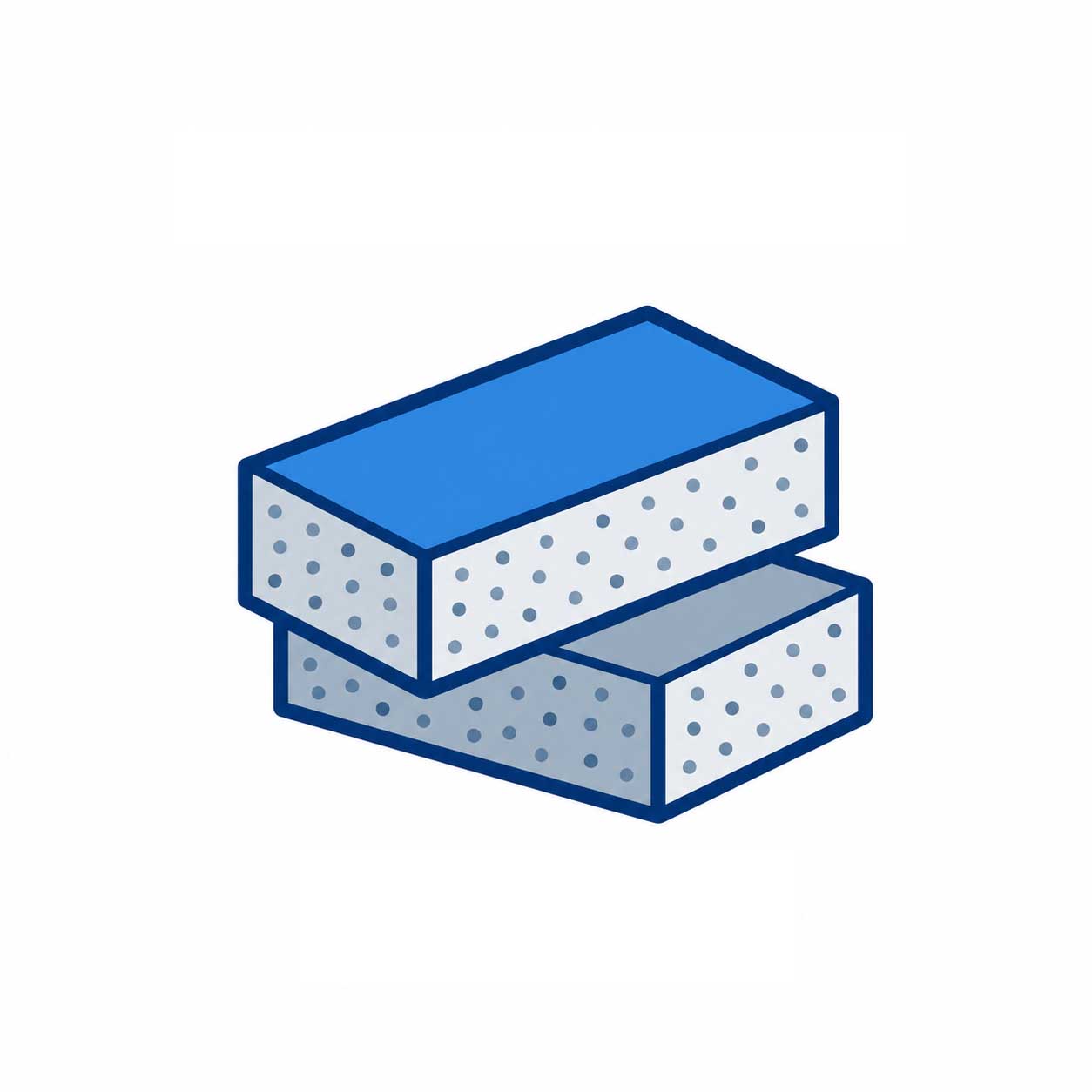
Aozhong Sanding Sponges, Foam Abrasives, Sanding Rolls, and Sheets are better suited to detail and profile work.
| Surface Shape | Main Requirement | Product Direction |
|---|---|---|
| Flat Panel | Maintain flatness | Belt / sanding disc |
| Rounded Edge | Follow curvature | Sanding sponge |
| Routed Profile | Flexible contact | Foam abrasive |
| Groove | Narrow access | Sanding sheet / roll |
| Decorative Molding | Pressure control | Sponge / flexible abrasive |
| Small Detail | Manual control | Sanding sheet |
The basic principle is:
Firm abrasive = leveling
Flexible abrasive = profile following
Flexible abrasives should not replace firm sanding when the surface still needs actual leveling.
They become more useful after the shape is already correct.
Wood sanding should usually follow a controlled grit progression.
Starting too coarse can create unnecessary scratches.
Starting too fine may reduce productivity.
The following ranges are general starting references.
| Sanding Stage | Reference Grit Range | Main Purpose |
|---|---|---|
| Heavy Defect Removal | P60–P80 | Remove rough marks or major defects |
| Initial Wood Sanding | P80–P120 | Level wood surface |
| General Refinement | P120–P180 | Reduce previous scratches |
| Fine Wood Preparation | P150–P220 | Prepare for stain, sealer, or primer |
| Primer / Sealer Sanding | P220–P400 | Refine coating before topcoat |
These ranges are not fixed rules.
The correct sequence depends on:
A practical rule is:
Each grit should remove the scratch pattern from the previous stage.
Large grit jumps may leave deeper scratches visible after finishing.
MDF sanding can generate a large amount of fine dust.
When dust stays between the abrasive and the board surface, it may contribute to:
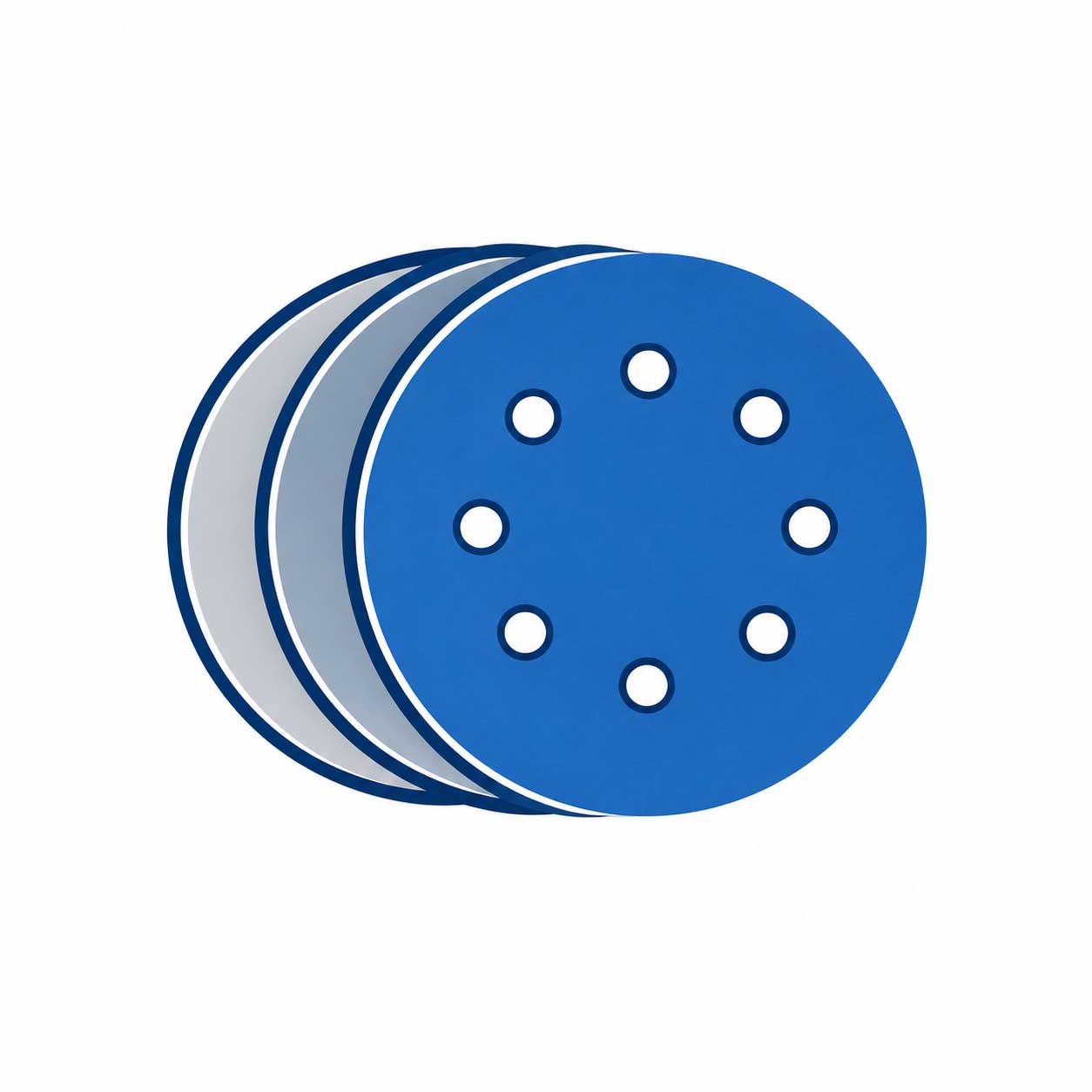
For compatible sanding systems, Aozhong Mesh Sanding Discs and Multi-Hole Sanding Discs can be used for dust extraction.
| Feature | Mesh Sanding Disc | Multi-Hole Sanding Disc |
|---|---|---|
| Backing | Open mesh | Conventional backing with holes |
| Dust Path | Through open structure | Through extraction holes |
| Hole Alignment | Less dependent on individual holes | Should match backing pad |
| Typical MDF Use | Dust-heavy sanding | General extraction sanding |
| Main Advantage | Open dust movement | Traditional abrasive structure + extraction |
Mesh does not make the process automatically dust-free.
The complete system matters:
Abrasive → Backing Pad → Sander → Hose → Dust Collector
For MDF factories, this should be considered together with workplace dust-control procedures.
After primer or sealer is applied, the sanding objective changes.
The process is no longer about removing raw wood quickly.
The main goals become:
A typical process may be:
Primer / Sealer → Sand → Inspect → Clean → Topcoat
A woodworking factory should not build its abrasive range around grit alone.
A better system covers the full production process.
| Manufacturing Process | Aozhong Product Direction |
|---|---|
| Heavy Panel Sanding | Abrasive Belt |
| General Wood Sanding | Hook & Loop Sanding Disc |
| MDF Dust Sanding | Mesh Sanding Disc |
| Edge Sanding | Sanding Roll / Sheet |
| Profile Sanding | Sanding Sponge |
| Curved Door Surface | Foam Abrasive |
| Primer Sanding | Mesh / Film Abrasive |
| Fine Coating Preparation | Fine Film Disc |
Wooden door and cabinet manufacturing requires different abrasives for different production stages.
Abrasive Belts are useful for large and repetitive panel sanding. Hook & Loop Sanding Discs provide flexibility for general sanding and local correction. Mesh abrasives help with dust-heavy MDF and primer sanding, while Sanding Sponges and Foam Abrasives are useful for edges, profiles, and curved surfaces.
A practical selection method is:
Material → Sanding Stage → Surface Shape → Dust Requirement → Final Finish
The best abrasive is not simply the one that removes wood fastest.
It is the abrasive that completes each stage efficiently while leaving the surface ready for the next sanding or coating process.
Yes. Different materials require different abrasive structures and sanding methods. Aozhong can provide Abrasive Belts, Sanding Discs, Mesh Abrasives, Sheets, Rolls, Sanding Sponges, Foam Abrasives, and fine finishing products according to the material and sanding stage.
Yes. Depending on the product, Aozhong can customize belt width, length, grit, abrasive type, backing, belt joint, and packaging. Buyers should provide machine dimensions, material, and sanding process when developing a belt specification.
Yes. Mesh Sanding Discs can be used in compatible dust-extraction systems for MDF and primer sanding. Buyers should provide disc size, grit range, backing-pad structure, sander type, and extraction requirements before confirming the product.
Yes. Depending on the product, sanding sponges can be customized in grit, dimensions, foam thickness, hardness, abrasive grain, shape, color, and packaging. Different sponge structures can be evaluated for profiles, edges, curved surfaces, and manual finishing.
Yes. Aozhong supports OEM and private-label programs for woodworking distributors, cabinet manufacturers, tool suppliers, and industrial buyers. Depending on the product, customization can include grit, size, backing, belt specifications, hole patterns, sponge structure, labels, printing, and packaging.