Casting parts rarely leave the foundry ready for painting, assembly, or final use.
Depending on the casting process, the part may still have gates, risers, flash, burrs, scale, rough surfaces, or grinding marks. These defects need different abrasive processes.
Heavy grinding is suitable for removing large amounts of unwanted material. Sanding abrasives are better for refining scratches. Non-woven abrasives are useful for light deburring, cleaning, blending, and surface conditioning.
A practical selection method is:
Casting Material → Surface Defect → Removal Requirement → Required Finish → Abrasive Format
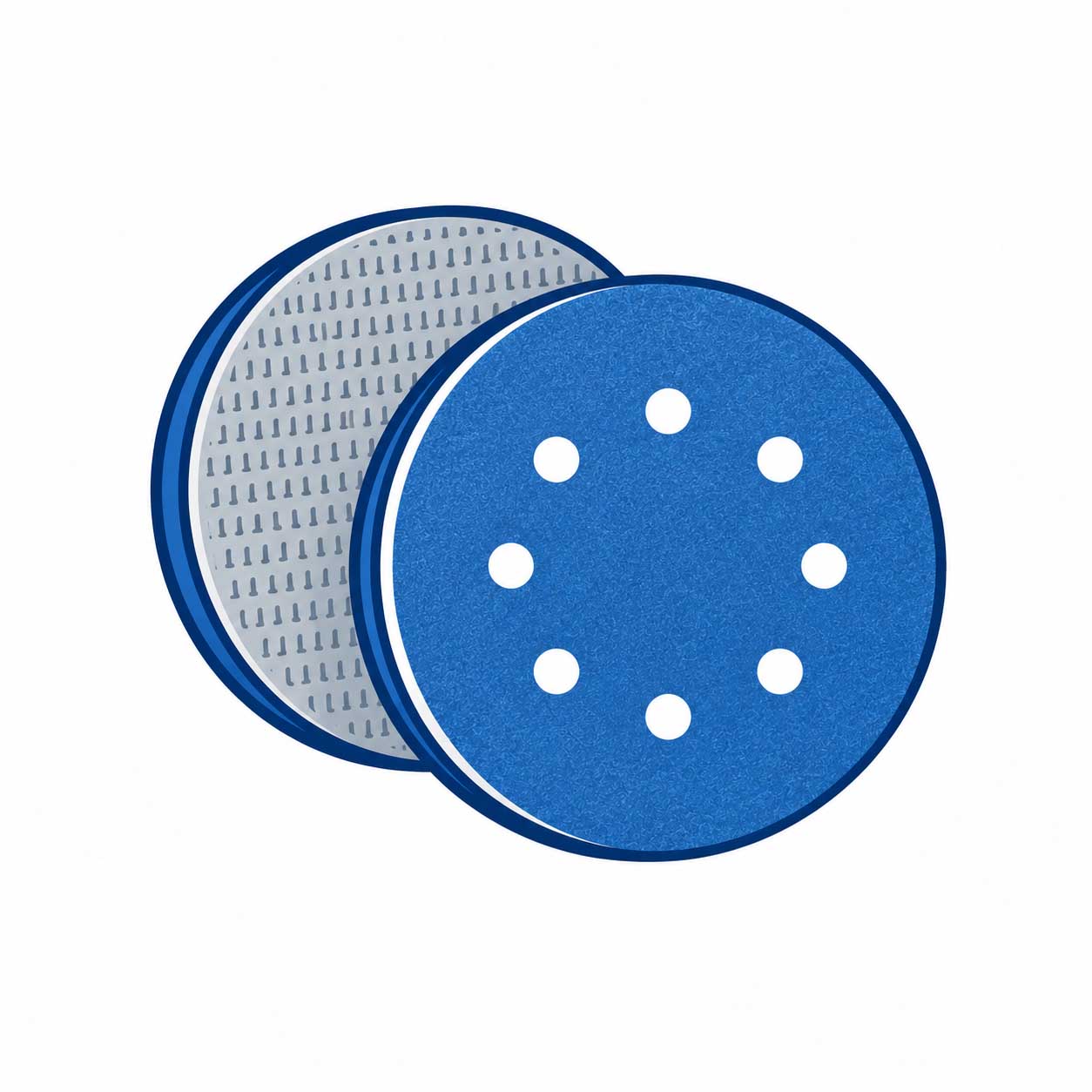
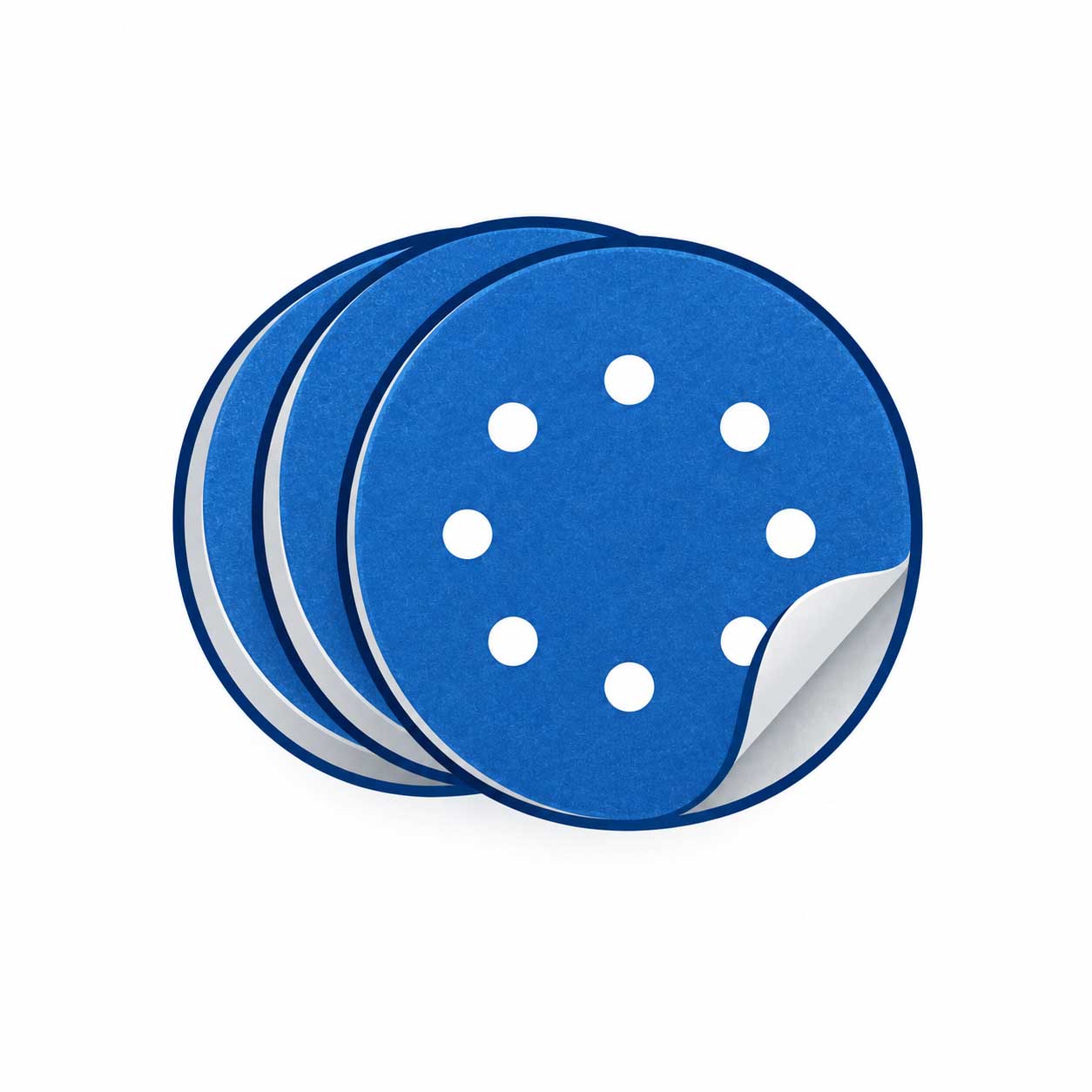
Aozhong provides Grinding & Cutting Products, Sanding Discs, Abrasive Belts, Sanding Sheets and Rolls, Non-Woven Abrasives, and other surface-finishing products for different industrial processing stages.
The first step is identifying what must be removed.
A large gate remnant and a light surface burr should not be treated with the same abrasive.
| Casting Condition | Main Requirement | Abrasive Direction |
|---|---|---|
| Gate / Riser Remains | Heavy stock removal | Grinding & Cutting Products |
| Heavy Flash | Fast material removal | Grinding abrasive |
| Medium Burrs | Controlled deburring | Coated abrasive |
| Grinding Marks | Scratch refinement | Sanding Disc / Belt |
| Light Burrs | Edge conditioning | Non-Woven Abrasive |
| Oxidized Surface | Cleaning / conditioning | Non-Woven / sanding abrasive |
| Pre-Coating Surface | Uniform refinement | Fine sanding abrasive |
The basic rule is simple:
Large defects require material removal. Small defects require surface refinement.
Using an aggressive grinding product for every stage may remove material quickly, but it can also leave deeper scratches that require more work later.
One of the most demanding parts of casting finishing is removing excess material left by the casting process.
Typical examples include:
These stages require high material-removal efficiency.
Aozhong Grinding & Cutting Products are more suitable for this type of heavy processing than fine sanding products.
A typical process may be:
Heavy Excess Material → Grinding → Rough Surface Correction → Sanding Refinement
The important point is knowing when to stop grinding.
Once the main defect has been removed, continuing with an aggressive grinding product may create unnecessary surface damage.
At that stage, it is usually better to move to a coated abrasive.
| Feature | Grinding Stage | Sanding Stage |
|---|---|---|
| Main Goal | Remove excess material | Refine the surface |
| Removal Rate | High | Medium to low |
| Scratch Depth | Deeper | More controlled |
| Typical Defect | Gate, riser, heavy flash | Grinding marks, surface scratches |
| Product Direction | Grinding & Cutting | Disc / Belt |
A useful principle is:
Grinding creates the shape. Sanding improves the surface.
Not every casting burr requires heavy grinding.
After the main gate, riser, or flash is removed, smaller burrs and sharp edges may remain.
The correct abrasive should depend on burr severity.
| Burr Level | Typical Condition | Abrasive Direction |
|---|---|---|
| Heavy | Large excess metal | Grinding Product |
| Medium | Casting seam / edge burr | Coarse Sanding Disc or Belt |
| Light | Small edge burr | Medium / Fine Sanding Abrasive |
| Very Light | Edge conditioning | Non-Woven Abrasive |
This staged approach helps avoid unnecessary material removal.
For example, a small edge burr may only require sanding or surface conditioning. Using aggressive grinding can change the part geometry or create a deeper repair area.
Aozhong Sanding Discs and Abrasive Belts are useful when the process has moved beyond heavy grinding but still requires controlled material removal.
Non-Woven Abrasives are better suited to:
They should not be treated as a replacement for heavy grinding.
After heavy grinding, the casting surface often contains visible scratches.
These scratches should normally be refined step by step.
A general sanding progression can be used as a starting point:
| Sanding Stage | Reference Grit | Main Purpose |
|---|---|---|
| Initial Scratch Removal | P40–P60 | Reduce heavy grinding marks |
| General Refinement | P60–P80 | Remove previous coarse scratches |
| Intermediate Sanding | P80–P120 | Improve surface uniformity |
| Fine Refinement | P120–P180 | Prepare for finer finishing |
| Pre-Coating Preparation | P180–P240+ | Process-dependent final preparation |
These grit ranges are general references.
The correct sequence depends on:
The most important principle is:
Each grit should remove the scratch pattern from the previous stage.
Skipping too far between grits may leave deep grinding scratches visible after painting or coating.
Casting material has a major effect on abrasive selection.
A product that performs well on cast iron may behave differently on aluminum.
| Casting Material | Typical Challenge | Abrasive Selection Focus |
|---|---|---|
| Cast Iron | Rough surface, scale, hard defects | Cutting efficiency |
| Carbon Steel Casting | Burrs, welds, scale | Grinding + sanding progression |
| Stainless Steel Casting | Heat and surface appearance | Controlled scratches |
| Aluminum Casting | Loading and smearing | Loading control |
| Other Non-Ferrous Castings | Material sensitivity | Controlled removal |
Cast iron finishing often requires strong cutting performance because the surface may contain rough casting texture, scale, or hard local defects.
Heavy defects may start with grinding, followed by coated abrasives for refinement.
Carbon steel castings can involve:
A combination of Grinding & Cutting Products, Sanding Discs, and Non-Woven Abrasives can cover different finishing stages.
For stainless steel, surface appearance becomes more important as finishing progresses.
Heavy defects can be removed first, followed by controlled sanding and surface conditioning.
Aluminum requires more attention to abrasive loading.
Soft material can build up on the abrasive surface and reduce cutting efficiency.
For aluminum casting finishing, abrasive structure, pressure, machine speed, and disc condition should all be considered.
A casting plant may process parts using both handheld tools and fixed sanding equipment.
This means abrasive format is just as important as grit.
Sanding discs are useful for:
Abrasive belts are more suitable for:
Aozhong can provide custom Abrasive Belts with different:
| Application | Sanding Disc | Abrasive Belt | Non-Woven |
|---|---|---|---|
| Local Repair | Excellent | Limited | Good |
| Large Repetitive Surface | Good | Excellent | Process dependent |
| Medium Deburring | Good | Excellent | Light only |
| Scratch Refinement | Excellent | Excellent | Fine blending |
| Handheld Tool Use | Excellent | Limited | Excellent |
| Surface Conditioning | Good | Limited | Excellent |
This is why a foundry abrasive program should not rely on only one product format.
Casting finishing should not stop when the surface “looks better.”
The final abrasive stage should prepare the casting for what comes next.
That may include:
For coating preparation, the main goal is usually to achieve a clean and consistent surface without deep unstable scratches or remaining scale.
A typical sequence may be:
Heavy Defect Removal → Scratch Refinement → Surface Blending → Cleaning → Coating
| Application | Sanding Disc | Abrasive Belt | Non-Woven |
|---|---|---|---|
| Local Repair | Excellent | Limited | Good |
| Large Repetitive Surface | Good | Excellent | Process dependent |
| Medium Deburring | Good | Excellent | Light only |
| Scratch Refinement | Excellent | Excellent | Fine blending |
| Handheld Tool Use | Excellent | Limited | Excellent |
| Surface Conditioning | Good | Limited | Excellent |
The coating manufacturer's surface-preparation requirements should always determine the final grit and surface condition.
Abrasive sanding is also only one part of industrial surface preparation. Some coating systems may require additional cleaning, blasting, chemical treatment, or other pretreatment processes.
Yes. Different casting stages require different products. Aozhong can provide Grinding & Cutting Products for heavier material removal, Sanding Discs and Abrasive Belts for scratch refinement and deburring, and Non-Woven Abrasives for light deburring, cleaning, blending, and surface conditioning.
Yes. Aozhong supports customization of abrasive belt size, grit, abrasive type, backing, belt joint, and packaging. Buyers should provide the sanding machine dimensions, casting material, application, and required finish before confirming the belt specification.
Yes. Abrasive selection can be adjusted according to the casting material and finishing stage. Cast iron may require stronger cutting performance, while aluminum requires more attention to loading. Stainless steel and decorative surfaces may require better scratch control. Sample testing is recommended before confirming large-volume specifications.
Yes. Sample testing is useful for comparing cutting performance, abrasive wear, loading, scratch depth, surface finish, and compatibility with the customer's equipment. Testing the abrasive on the actual casting material and production process gives more useful results than evaluating grit alone.
Yes. Aozhong supports OEM and private-label projects for industrial buyers and distributors. Depending on the product, customization can include grit, dimensions, backing, abrasive structure, attachment method, printing, labels, barcode, carton marks, and packaging. Product performance should normally be confirmed before the final private-label packaging specification is approved.