Wood floor sanding is not simply a matter of using coarse sandpaper first and fine sandpaper later.
A professional floor refinishing process may need to remove old finish, flatten uneven boards, refine scratches, sand edges, prepare bare wood for stain or finish, and sometimes lightly abrade an existing coating before recoating.
Each stage needs a different abrasive structure.
A practical selection method is:
Floor Condition → Sanding Stage → Machine Type → Grit Sequence → Final Finish
For flooring contractors and abrasive buyers, this is more useful than choosing a product only by grit number.
Aozhong's current abrasive range includes abrasive belts, sanding discs, sheets, rolls, mesh abrasives, sanding sponges and non-woven products, allowing different formats to be matched to different floor sanding and maintenance stages.
The first question should be:
What does the floor actually need?
A floor with deep scratches and worn finish requires a different sanding process from a relatively flat floor that only needs preparation for a maintenance coat.
| Floor Condition | Main Requirement | Abrasive Direction |
|---|---|---|
| Thick old finish | Coating removal | Coarse abrasive |
| Uneven hardwood floor | Flattening | Coarse belt / sanding abrasive |
| Normal worn floor | Finish removal + refinement | Medium grit progression |
| Bare wood with machine marks | Scratch refinement | Medium / fine abrasive |
| Edges and corners | Local controlled sanding | Disc / sheet |
| Fine surface before finishing | Scratch consistency | Fine abrasive |
| Existing finish before recoating | Light abrasion / cleaning | Fine or non-woven product |
Industry guidance from the National Wood Flooring Association recommends beginning with the finest abrasive that can still remove the existing coating and flatten the floor, rather than automatically starting with the coarsest available grit.
This helps reduce unnecessary wood removal and reduces the number of deep scratches that later stages need to remove.
Grit progression is one of the most important parts of wood floor sanding.
A coarse abrasive creates deep scratches. The next abrasive needs to remove those scratches before the floor moves to a finer stage.
A practical reference range is:
| Floor Sanding Stage | Typical Reference Range | Main Purpose |
|---|---|---|
| Heavy Finish Removal | P24–P40 | Remove difficult coating / heavy defects |
| Initial Floor Leveling | P36–P60 | Flatten floor and remove coarse marks |
| Intermediate Sanding | P60–P80 | Remove previous scratches |
| Fine Wood Sanding | P80–P100 | Prepare bare wood |
| Final Fine Sanding | P100–P120+ | Finish-system dependent preparation |
| Between-Coat / Light Refinement | P120–P180+ | Depends on coating specification |
These ranges are not a fixed recipe.
Wood species, floor condition, stain, finish chemistry and sanding equipment can change the correct final grit.
NWFA guidance emphasizes progressive sanding because each finer abrasive should remove scratches from the previous cut; excessive grit skipping can leave deeper scratches visible in the finished floor.
A simple working rule is:
Do not move finer until the previous scratch pattern has been removed.
And before staining or applying finish, follow the finish manufacturer's recommended final sanding grit. Recent NWFA industry guidance notes that different finishing systems may call for different final grit ranges.
Large wood floors require efficient material removal.
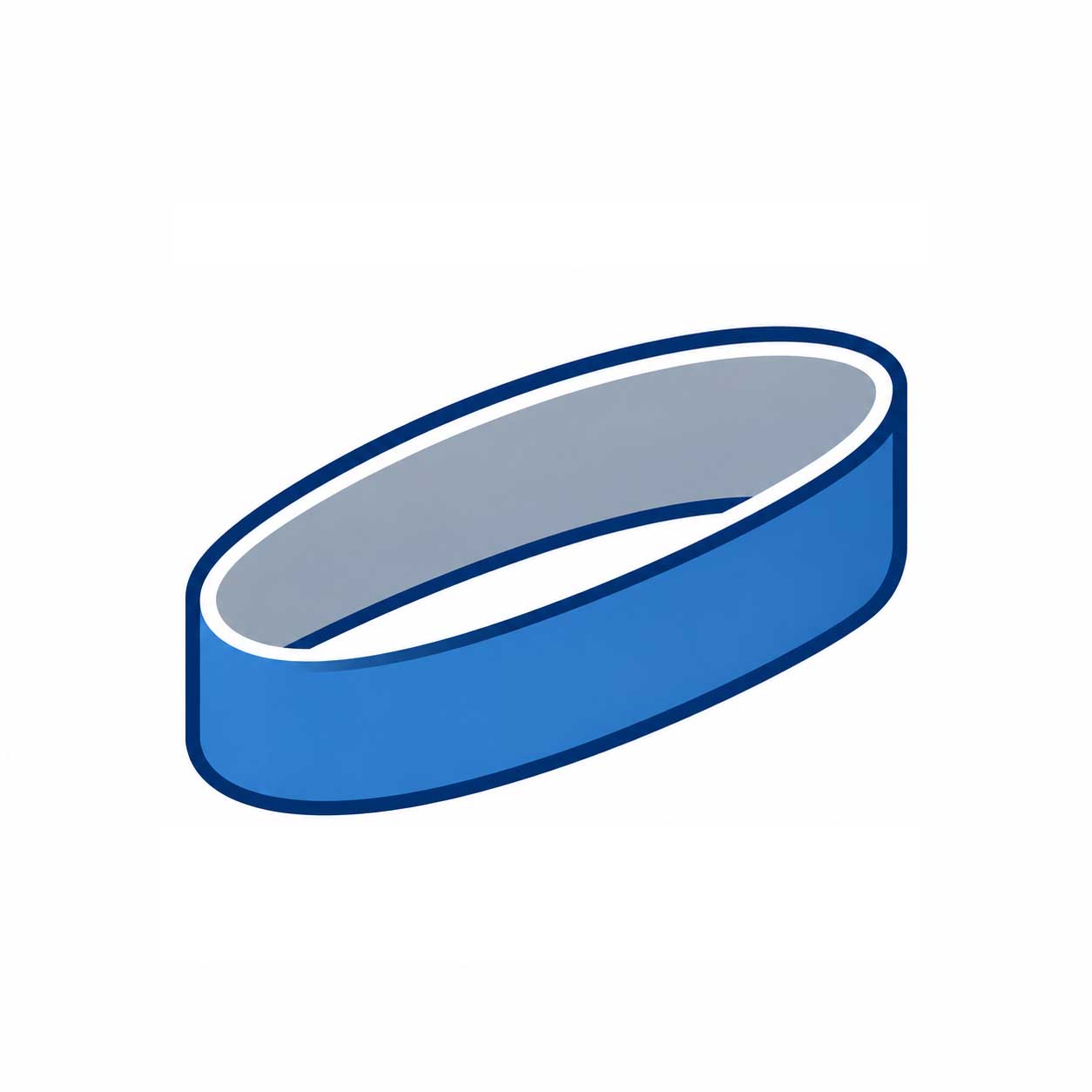
For compatible belt-type floor sanding equipment, abrasive belts are useful because they provide a large continuous sanding surface.
They are mainly suited to:
Aozhong Abrasive Belts can be customized in size, grit, backing, abrasive type and belt joint. The current belt range is designed for continuous sanding equipment and large-area contact applications.
For a floor-sanding buyer, the key specifications should include:
| Belt Specification | What to Confirm |
|---|---|
| Belt Size | Match floor sanding machine |
| Grit | Based on sanding stage |
| Backing | Strength and flexibility requirement |
| Abrasive Grain | Wood / coating requirement |
| Belt Joint | Machine and working condition |
| Surface Condition | Bare wood or coated floor |
The machine dimensions should always be confirmed before ordering.
A belt made for one sanding machine should not be assumed to fit another simply because the grit is the same.
A large floor sander cannot reach every part of the room.
Edges, wall lines, corners and local repair areas usually require a different machine or hand sanding method.
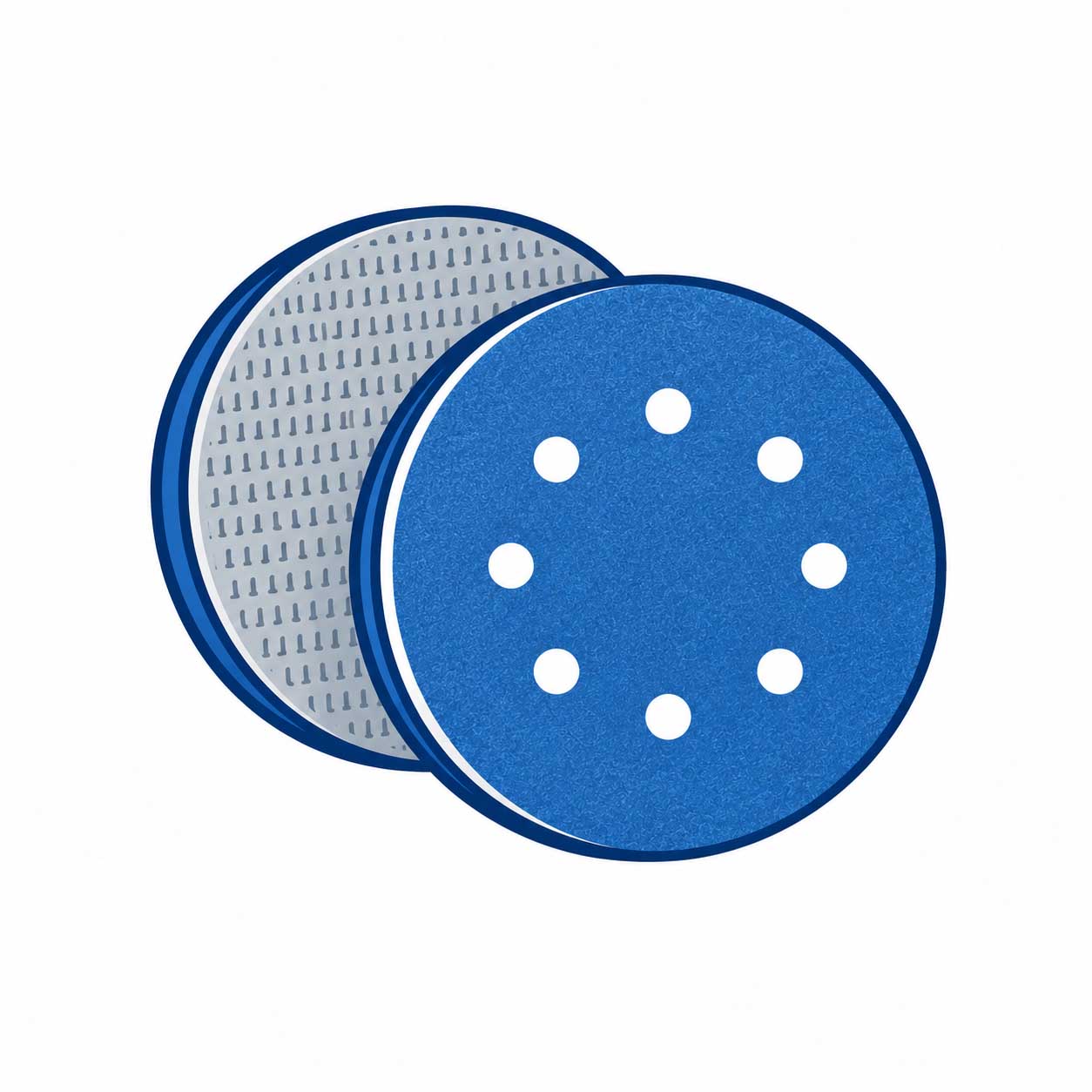
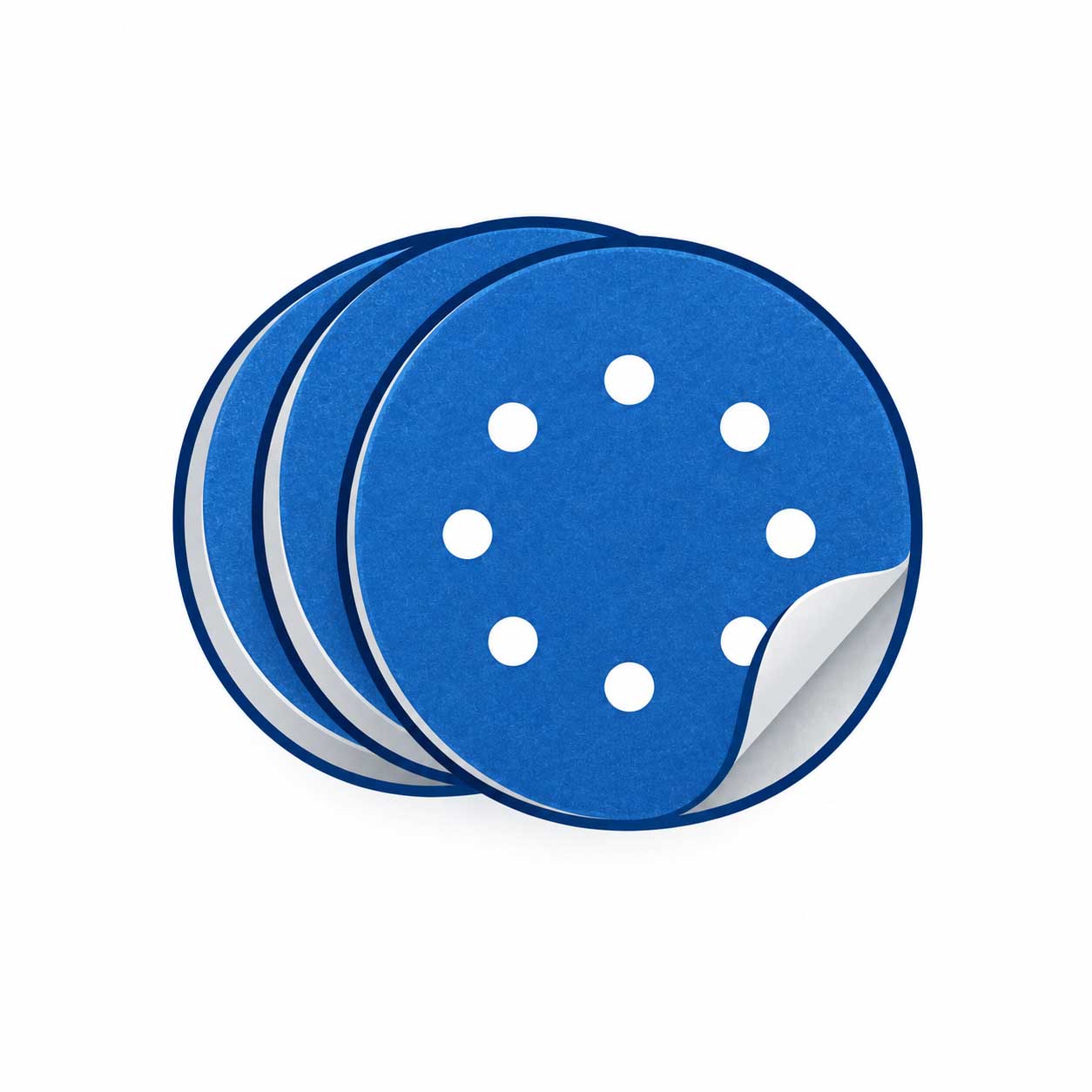
This makes sanding discs an important second product group.
Typical applications include:
Aozhong currently offers Hook & Loop, PSA, paper, film and mesh sanding formats with customizable grit, size and hole pattern.
One common problem is creating a different scratch pattern around the room perimeter.
If the main floor is refined to a fine grit but the edge area remains much coarser, the difference may become visible after staining.
The field and edge sanding processes should therefore move through compatible grit stages.
| Floor Area | Product Direction |
|---|---|
| Main Floor | Abrasive Belt / Large Machine Abrasive |
| Edges | Sanding Disc |
| Corners | Sanding Sheet / Detail Abrasive |
| Difficult Profiles | Sanding Sponge |
| Final Orbital Refinement | Fine Sanding Disc |
Wood floor sanding generates significant dust.
Old finishes can also load the abrasive surface, especially during the first sanding stages.
When the abrasive becomes loaded:
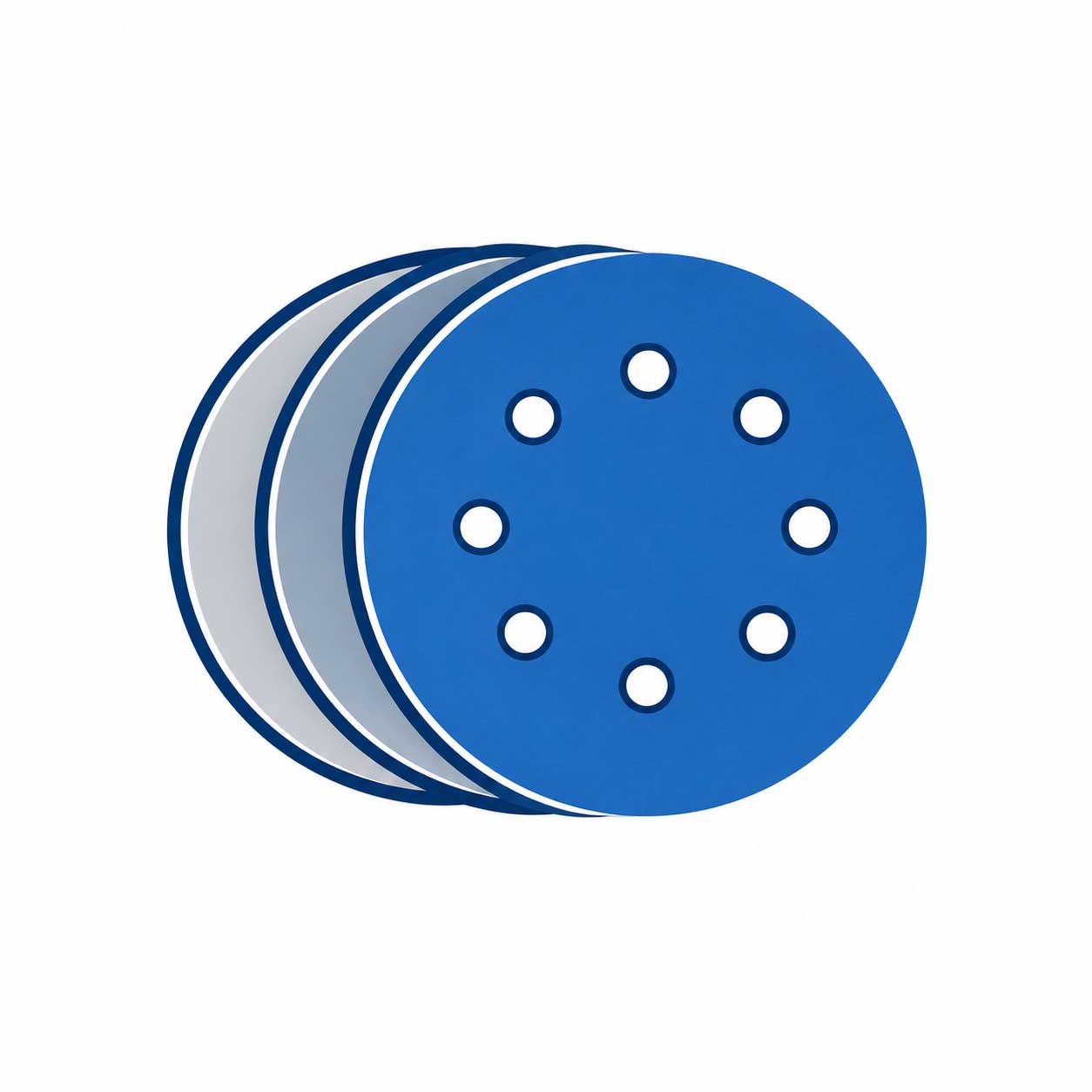
For compatible orbital or multi-disc sanding systems, Mesh Sanding Discs can be useful where dust extraction is a priority.
Aozhong's mesh abrasives use an open fiber or polyester structure that allows sanding debris to move through the abrasive surface toward a compatible extraction system.
However, mesh is not automatically the best product for every floor stage.
Heavy floor flattening may still require a stronger belt or coated abrasive structure.
A practical selection is:
| Sanding Requirement | Product Direction |
|---|---|
| Heavy Floor Leveling | Abrasive Belt |
| Heavy Finish Removal | Coarse Belt / Disc |
| General Wood Refinement | Sanding Disc |
| Dust-Controlled Orbital Sanding | Mesh Disc |
| Final Fine Sanding | Fine Disc / Sheet |
| Detail Sanding | Sponge / Sheet |
The abrasive is only one part of dust control.
Machine → Abrasive → Extraction Port → Hose → Dust Collector
all need to work together.
This is especially important for professional floor sanding.
Solid hardwood provides more wood thickness for sanding.
Engineered flooring has a hardwood wear layer over another substrate. The amount of material that can safely be removed depends on the thickness and condition of that wear layer.
NWFA notes that the number of times a floor can be sanded depends on factors including the wear-layer thickness, floor flatness, equipment and contractor skill.
For engineered flooring, buyers and contractors should therefore confirm:
Aggressive P24 or P36 sanding should never be selected automatically simply because the floor has scratches.
Sometimes a lighter sanding or recoating process is the more appropriate option.
| Floor Type | Main Risk | Abrasive Selection Focus |
|---|---|---|
| Solid Hardwood | Deep scratch pattern / over-sanding | Correct grit progression |
| Engineered Wood | Sanding through wear layer | Material removal control |
| Parquet | Different grain directions | Sanding direction and control |
| Previously Coated Floor | Abrasive loading | Coating condition |
| New Bare Wood Floor | Machine / installation marks | Flattening + refinement |
This distinction is useful for both contractors and distributors.
A floor that needs complete refinishing may require sanding back toward bare wood.
A floor in relatively good condition may only require cleaning, light abrasion and recoating.
NWFA distinguishes a maintenance coat from a full sand-and-refinish process: a maintenance coat can involve cleaning the existing finish, lightly abrading it and applying another finish coat, while deeper damage may require complete sanding and refinishing.
This is where different Aozhong products serve different purposes.
Use products such as:
Aozhong also manufactures Non-Woven Floor Scrubber Pads for disc-type floor cleaning and polishing machines.
These pads are available in multiple diameters, including 13–24 inch options and custom sizes, and are designed for cleaning, scrubbing, maintenance and surface treatment applications.
They should not be confused with aggressive floor-sanding abrasives.
| Process | Product Type | Purpose |
|---|---|---|
| Full Refinishing | Belt / Sanding Disc | Remove finish and wood |
| Scratch Refinement | Fine Abrasive | Reduce sanding marks |
| Light Surface Abrasion | Fine / Non-Woven Product | Prepare suitable existing finish |
| Floor Scrubbing | Non-Woven Floor Pad | Cleaning |
| Maintenance Cleaning | Floor Scrubber Pad | Remove dirt / residue |
| Polishing / Maintenance | Suitable Floor Pad | Surface maintenance |
This gives distributors a clearer product structure:
Floor Sanding Products ≠ Floor Cleaning Pads
Both belong to flooring applications, but they solve different problems.
For B2B buyers, a practical flooring abrasive line could be structured like this:
| Floor Application | Aozhong Product Direction |
|---|---|
| Heavy Hardwood Sanding | Custom Abrasive Belt |
| Old Finish Removal | Coarse Belt / Sanding Disc |
| Intermediate Sanding | Medium Abrasive Belt / Disc |
| Floor Edging | Sanding Disc |
| Orbital Final Sanding | Hook & Loop Sanding Disc |
| Dust-Controlled Fine Sanding | Mesh Sanding Disc |
| Corners / Detail Work | Sanding Sheet |
| Profiles / Difficult Areas | Sanding Sponge |
| Maintenance Scrubbing | Non-Woven Floor Scrubber Pad |
| Commercial Floor Cleaning | Floor Scrubber Pad |
Aozhong's broader abrasive range includes discs, belts, sheets, rolls, mesh products, sponges and non-woven products, with customization available for dimensions, grit, backing, abrasive structure and packaging.
For a flooring distributor, this makes it possible to build separate product lines for:
professional refinishing
and
floor maintenance
instead of treating all flooring consumables as one category.