Elevator manufacturing involves stainless steel panels, door panels, cabin interiors, frames, and other metal components. These parts may require weld grinding, edge finishing, surface sanding, brushing, or preparation before coating.
Each process has a different purpose. Removing weld marks requires material removal, while producing a brushed finish requires control over scratch direction and surface consistency. Using the same abrasive for every stage can increase processing time and create surface defects that require additional work.
At Aozhong, we approach abrasive selection by considering the metal, the processing stage, the required surface finish, and the equipment used.
This guide explains how to select abrasive belts, sanding discs, and non-woven abrasives for elevator manufacturing and stainless steel panel finishing.
Before selecting an abrasive, we need to know what the finished elevator component should look like.
An elevator cabin panel may require a brushed finish, while a door frame may need weld blending or surface preparation before coating. These processes require different abrasive choices.
A key point is that the final finish cannot be defined by grit alone. Abrasive type, machine settings, pressure, contact time, and the existing surface all affect the result. A reference sample should be agreed upon when a project requires a specific decorative finish.
Welds on elevator frames, door assemblies, and cabin components may need to be leveled before the surrounding surface can be finished.
The process normally includes three stages:
Weld Removal → Scratch Refinement → Surface Blending
At Aozhong, we recommend treating these as separate operations rather than using one abrasive throughout the process.
| Stage | Main Task | Product Direction | Main Risk to Control |
|---|---|---|---|
| Initial Grinding | Reduce weld height | Grinding Disc | Excessive base-metal removal |
| Intermediate Sanding | Refine grinding marks | Sanding Disc / Belt | Deep scratches |
| Weld Blending | Blend the processed area | Non-Woven Abrasive | Visible transition lines |
| Final Inspection | Check the surface | Visual inspection under consistent lighting | Remaining weld marks |
The main objective is to remove only the material required by the drawing or process specification.
Grinding too deeply can create a depression in the panel. Using an abrasive that is too fine during initial weld removal can also increase processing time.
For stainless steel components, contamination control matters as well. Abrasives and tools used on carbon steel should not be transferred to stainless steel without appropriate controls, because embedded contamination can lead to surface staining.
Brushed stainless steel is common in elevator interiors and door panels. The finish contains a directional scratch pattern, so the direction and consistency of sanding matter.
Abrasive belts and non-woven abrasives can be used for different stages of the process.
A coated abrasive belt can refine the surface and establish the scratch pattern. A non-woven abrasive can then be evaluated for blending or surface conditioning, depending on the required finish.
The process may follow this sequence:
Level the Surface → Refine Scratches → Establish the Grain → Inspect the Finish
Three factors need particular attention:
A brushed finish should be checked under consistent lighting. Small changes in scratch direction may be more visible on a large elevator panel than on a small component.
For production orders, we recommend confirming the target finish with a physical reference sample before selecting the final abrasive sequence.
Grit selection depends on the existing surface and the amount of material that needs to be removed.
Abrasive grades should be selected as a sequence. Each stage should reduce the scratch pattern left by the previous stage without creating unnecessary surface damage.
The following ranges are general starting points for process trials, not fixed requirements for every elevator component.
| Process Stage | Reference Grit Range | Main Purpose |
|---|---|---|
| Heavy Weld Leveling | P40–P80 | Reduce weld height and remove excess material |
| Initial Scratch Refinement | P80–P120 | Refine marks from grinding |
| Surface Refinement | P120–P240 | Prepare the surface for the next finishing stage |
| Fine Finishing | P240–P400 | Refine the scratch pattern where required |
The correct starting point depends on the weld size, stainless steel grade, panel thickness, and required finish. Some surfaces may need fewer stages, while visible decorative panels may require additional refinement.
Do not automatically use the finest available grit. A fine abrasive used too early may remove material slowly without correcting the deeper scratches left by the previous stage.
The final abrasive should be selected according to the agreed finish sample and the production process.
Both formats can be used in stainless steel finishing, but they serve different production needs.
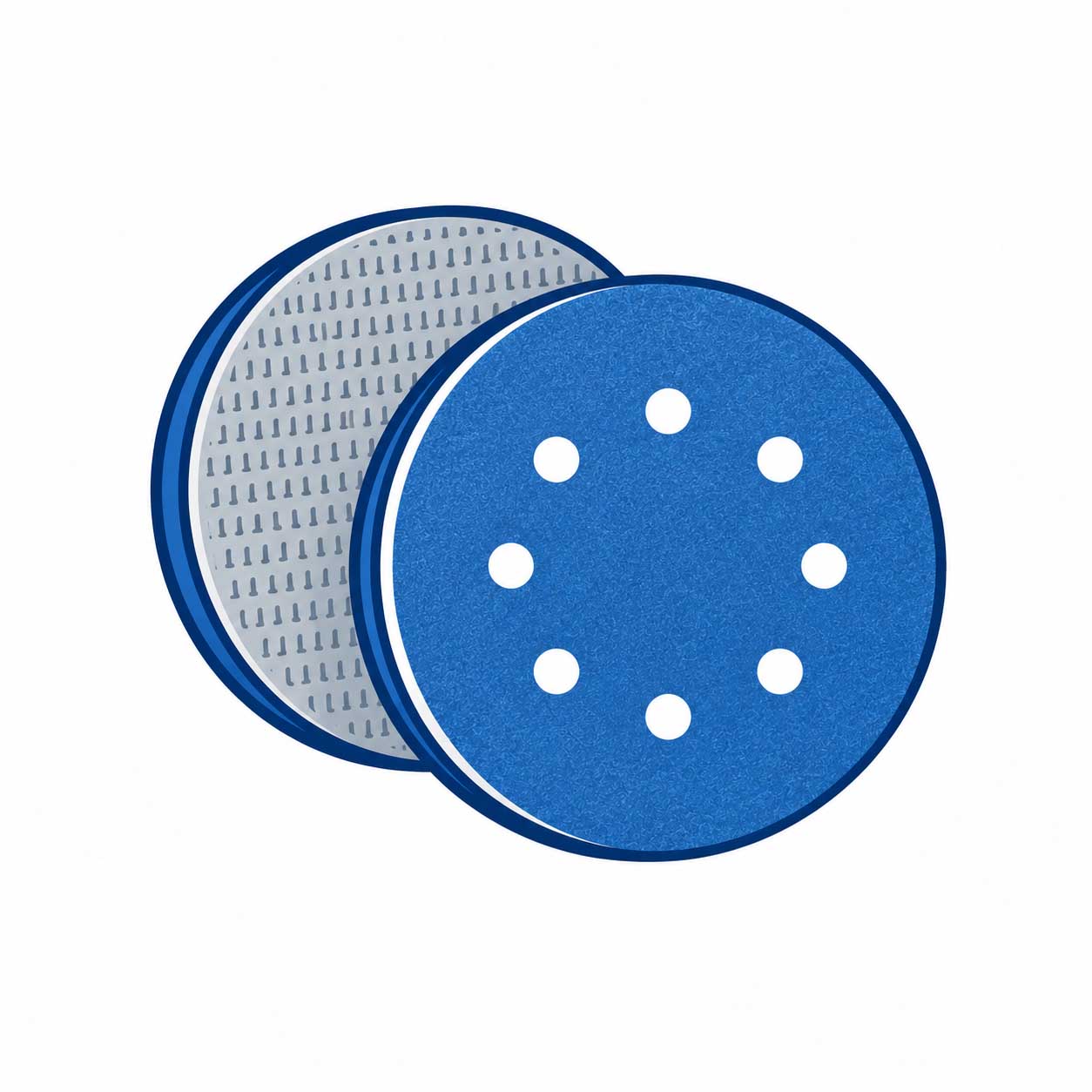
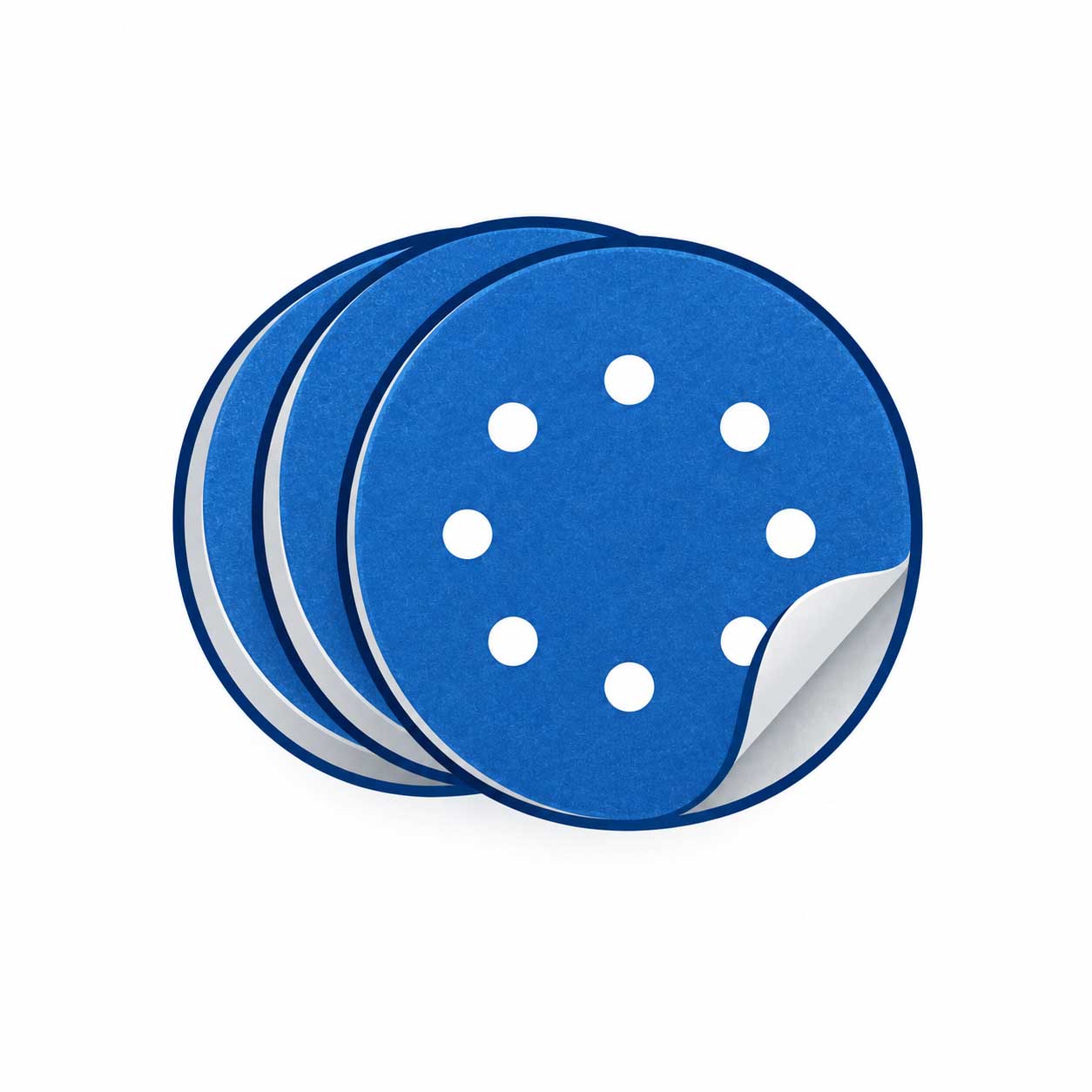
An abrasive belt is suitable for compatible belt machines and repeated linear processing. A sanding disc is useful for local correction, weld blending, and machine sanding.
| Comparison | Abrasive Belt | Sanding Disc |
|---|---|---|
| Main Application | Continuous or linear sanding | Local sanding and correction |
| Work Area | Long edges and compatible panel surfaces | Weld zones, corners and local defects |
| Production Method | Belt machine or compatible sanding equipment | Compatible rotary or orbital machine |
| Surface Pattern | Suitable for directional finishing | Depends on tool movement and abrasive |
| Main Specification | Length, width, joint and grit | Diameter, attachment, backing and grit |
| Main Selection Factor | Machine and workpiece geometry | Access, contact area and tool compatibility |
At Aozhong, we provide abrasive belts and sanding discs for metalworking applications, with customization options for dimensions, grit ranges, backing materials, and product formats.
For B2B buyers, the correct choice depends on the equipment and the process—not simply on which product removes material faster.
Surface defects often appear when the abrasive sequence, tool movement, or finishing conditions are not consistent.
Common problems include:
A practical inspection process should check the surface after each major stage rather than waiting until the final finishing operation.
| Problem | Possible Cause | Recommended Check |
|---|---|---|
| Deep Scratches | Coarse marks not removed by the next stage | Review grit progression |
| Uneven Grain | Changes in sanding direction or pressure | Standardize tool movement |
| Visible Weld Boundary | Incomplete blending | Inspect the transition area |
| Panel Depression | Excessive local grinding | Check removal depth |
| Surface Staining | Contamination or unsuitable handling | Review tools and cleaning |
| Different Panel Appearance | Different abrasive or process conditions | Compare against the reference sample |
For stainless steel, the objective is not merely to make the surface appear smooth. The processed area should also match the specified finish and remain suitable for the next manufacturing step.
For elevator manufacturers, metal fabricators, and abrasive distributors, product selection should begin with the component and its production requirements.
Aozhong offers grinding products, sanding discs, abrasive belts, non-woven abrasives, and polishing products for metalworking and surface finishing. Our manufacturing and converting capabilities also support custom product formats and OEM projects.
A useful product specification includes:
| Information | What Buyers Should Provide |
|---|---|
| Material | Stainless steel grade, thickness and surface condition |
| Component | Cabin panel, door panel, frame or welded assembly |
| Process | Weld removal, scratch refinement, brushing or polishing |
| Equipment | Belt machine, angle grinder or orbital sander |
| Abrasive Format | Disc, belt, non-woven abrasive or polishing product |
| Grit | Current specification or required trial range |
| Final Finish | Brushed, satin, polished or coating-ready |
| Order Requirements | Sample quantity, bulk volume and packaging |
Yes. We provide grinding products, sanding discs, abrasive belts, non-woven abrasives, and polishing products for metalworking applications. The appropriate product depends on the material, weld condition, equipment, and required surface finish.
Yes. Depending on the product, we can customize dimensions, grit, backing, attachment method, hole pattern, and packaging. Buyers should provide machine specifications and the required finishing process when requesting a quotation.
Yes. Samples can be used to evaluate cutting performance, abrasive life, scratch patterns, and the resulting surface appearance. We recommend testing samples on the actual stainless steel material and equipment before confirming the bulk specification.
Yes. We support OEM and private-label projects for industrial buyers and distributors. Customization options depend on the product and can include size, grit, backing, product format, printing, labels, and packaging.
Aozhong operates production and converting facilities for abrasive products. Our processes include abrasive lamination, backing adhesive application, slitting, die-cutting, hole punching, and finished-product packaging. We also support customized specifications and private-label projects for B2B customers.